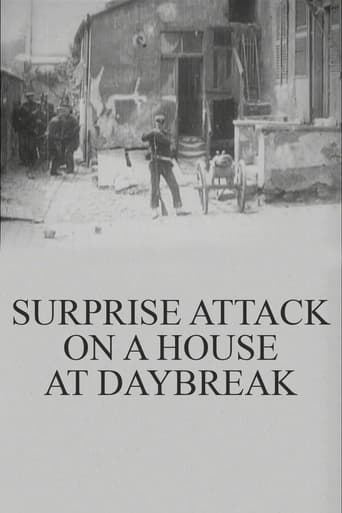
Surprise Attack on a House at Daybreak

Surprise Attack on a House at Daybreak 1898

4.90

Soldiers ambush a house. This is Gaumont's version, not to be confused with the less accessible Lumière of the same title from the same year. There is no director credited for this film, but the GP archives attributes it either to Gaston Breteau or to Georges Hatot (but not to Alice Guy). Since Gaston Breteau worked earlier for Lumiére and remade some of his films for Gaumont, he seems the most probable option.
1898

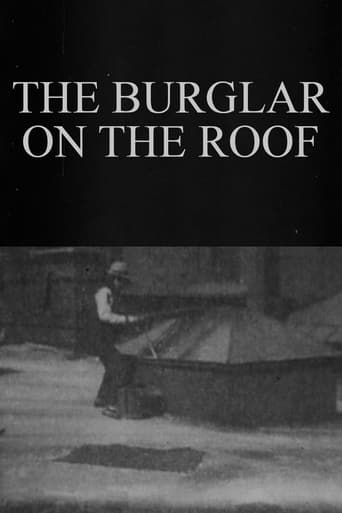
The Burglar on the Roof

The Burglar on the Roof 1898

3.30

There is a burglar on the rooftop of a Manhattan office building, and he is trying to break in. Two women spot him, and one of them begins beating him with a broom as they wait for help to arrive. Soon others do appear on the scene to help, but by now the burglar has decided that he is going to put up a fight in an attempt to escape.

1898

Landing Wharf at Canton

Landing Wharf at Canton 1898

4.00

It's a traveling shot from behind the railings. As the camera moves slowly along the harbor, we have a fine view of the rail. In the distance we spot harbor crafts until we come to the piece de la resistance, a bunch of folks standing around.

1898

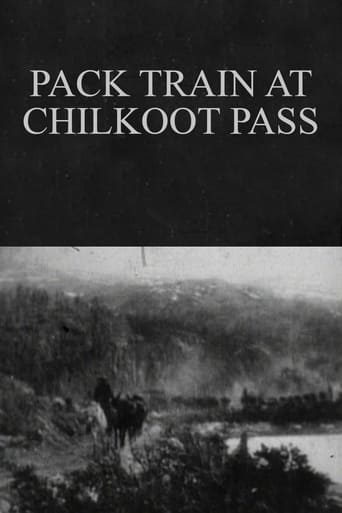
Pack Train at Chilkoot Pass

Pack Train at Chilkoot Pass 1898

4.10

During the Alaska gold rush, one way to reach the Klondike was over the Chilkoot Pass. A stationary camera is placed to see a ways down the curving trail. A pack train comes into view and passes in front of us, led by a man on horseback. Eight loaded mules follow, then another cowboy on horseback and a man walking, then eight more laden mules, another cowboy, then nine more mules, a cowboy, and still the pack train stretches as far as the eye can see. A solitary man watches from atop a hillock.

1898

After Launching

After Launching 1898

3.20

This film was shot near the Union Works, San Francisco, California. Great look at the pleasure yacht "Unadilla" with her decks loaded with passengers.

1898

Battle of Santiago Bay

Battle of Santiago Bay 1898

2.00

Vitagraph’s Battle of Santiago Bay (1898) blended real Spanish–American War footage with tabletop trickery. Albert E. Smith’s authentic San Juan material looked underwhelming, so he and partner J. Stuart Blackton staged the naval clash on a miniature set: cardboard ships afloat in shallow water, firecracker “explosions,” and clouds of smoke from cigars and cigarettes. Spliced together, the hybrid film was embraced as genuine by audiences and became one of the most popular war films of its day.

1898

Cinderella

Cinderella 1898

5.60

An adaptation of the folk tale.

1898

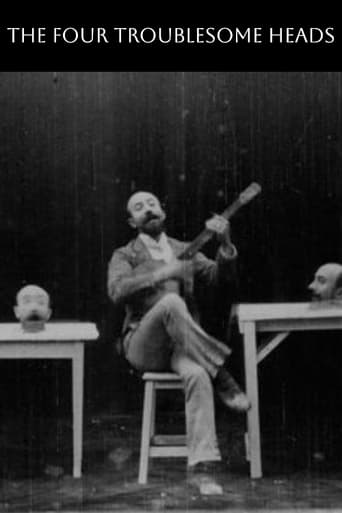
The Four Troublesome Heads

The Four Troublesome Heads 1898

7.22

One of the greatest of black art pictures. The conjurer appears before the audience, with his head in its proper place. He then removes his head, and throwing it in the air, it appears on the table opposite another head, and both detached heads sing in unison. The conjurer then removes it a third time. You then see all three of his heads, which are exact duplicates, upon the table at one time, while the conjurer again stands before the audience with his head perfectly intact, singing in unison with the three heads upon the table. He closes the picture by bowing himself from the stage.

1898

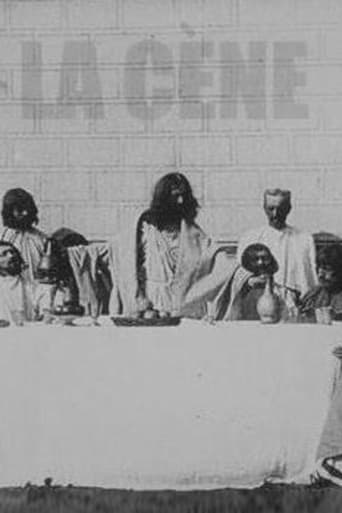
La cène

La cène 1898

3.80

Scene of the last supper.

1898

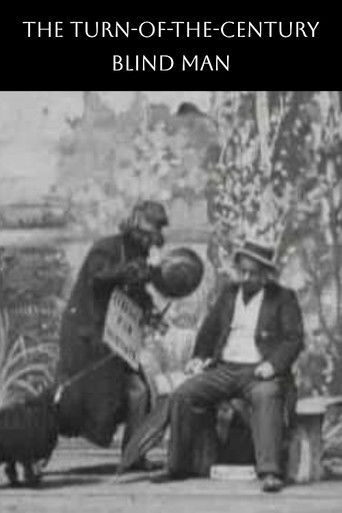
The Turn-of-the-Century Blind Man

The Turn-of-the-Century Blind Man 1898

5.00

A blind man begging for change tries to outsmart a cop. There is no known director for this film, although the attribution goes either to Georges Hatot or Gaston Breteau.

1898

Disappearing Act

Disappearing Act 1898

4.60

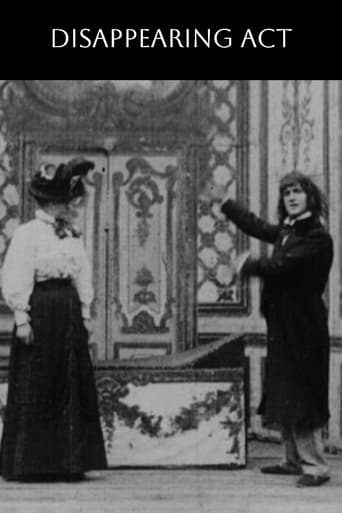
An illusionist makes a woman disappear in thin air. There is no credited director for this film, although three different persons get attributed, Gaston Breteau, Alice Guy or Georges Hatot.

1898

The Ball Game

The Ball Game 1898

3.15

The Reading's [Pennsylvania] pitcher has just let a Newark [New Jersey] batsman walk to first. Our camera is stationed about twenty feet from the bag, and the satisfied grin of the runner is great as he touches first and gets up on his toes for second. Next man cracks first ball pitched for a two-bagger, and races for the base with a wonderful burst of speed. First baseman just misses a put out. Very exciting. Man on the coaching line yells, and umpire runs up and makes decision. Small boy runs past back of the catcher close to the grand stand, where there is great commotion. A most excellent subject, treated brilliantly.

1898

Bluebeard

Bluebeard 1898

5.60

Film adaptation of the famous French folktale by Georges Hatot.

1898

The Damnation of Faust

The Damnation of Faust 1898

4.36

A lost film. Georges Méliès also directed a film entitled Faust aux enfers in 1903 that is frequently confused with this one, but it has little to do with the story of Faust.

1898