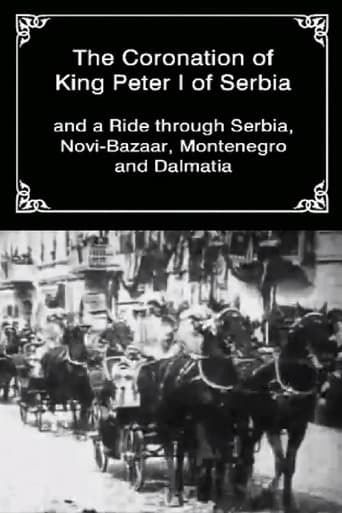
The Coronation of King Peter I of Serbia 1904
Belgradian parades and everyday street scenes.
Belgradian parades and everyday street scenes.
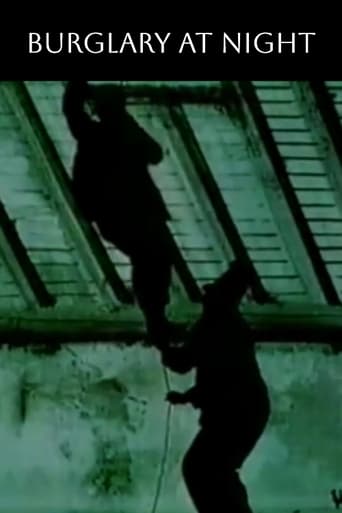
A man hides his valuables under his mattress before going to sleep, blissfully unaware of the two burglars on his roof.
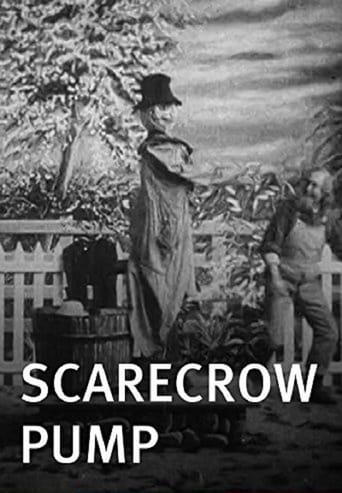
A pump stands outside a farmhouse, just inside a picket fence. A boy comes out of the house and dresses up the pump handle and its post as a scarecrow, so that he can play a practical joke on a drunken acquaintance when he passes by. The boy then hides and waits for him, but things do not turn out quite as he planned.

Through an invisible keyhole, the viewer peeps at the leisure activities of a carefree group of noblewomen who enjoy the water, as well as a hearty slice of emancipation.

A tramp kills a generous woman. In revenge, her husband tracks down and lynches the tramp.

1904 journalistic actuality.
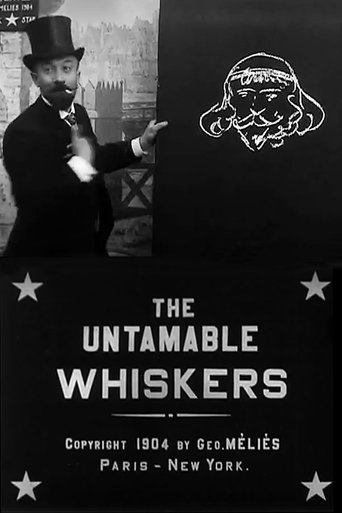
The background of this picture represents a scene along the beautiful river Seine in Paris. A gentleman enters, and taking a blackboard from the side of the picture, he draws on it a sketch of a novelist. Then, standing in the centre, he causes the living features of his sketch to appear in the place of his own, which is utterly devoid of whiskers. The change is made so mysteriously that the eye cannot notice it until one sees quite another person in the place of the first. Again another sketch is shown on the board, this one being that of a miser; then an English cockney; a comic character; a French policeman, and last of all, the grinning visage of Mephistopheles. It is almost impossible to give this film a more definite description; suffice it to say that it is something entirely new in motion pictures and is sure to please. (Méliès Catalog)
The Count de Cagliostro, who occupies his spare time in working magic, has invited one of his friends to be present at an exhibition which has for its aim the object of showing how much the sense of sight can be abused and deceived. In the center of three fans he arranges a rose-window, which there appears a young page who is suddenly transformed into a marquis of the time of Louis XV. The count brings a large frame, the marquise arranges herself in it, and it seems to the visitor that she is changed into a nymph. He then approaches it to verify the fact, but he perceives that it is the count in person who is in the middle of the picture. But in order to assure himself that he is not mistaken, he strives to grasp him but the latter disappears mysteriously, and the frame, in the center of which he finds himself, is absolutely empty. What he has seen was only a marvelous illusion.
A recently-released convict attempts to do right but struggles to support his wife and ailing daughter.
A married couple faces the demands of what Theodore Roosevelt called 'the strenuous life'.
A Jew who mocked Jesus on the cross is visited by a devil and an angel.
Numerous women stand at several rows of tables where they appear to be wrapping tape around some devices, presumably coils. Male supervisors walk down the aisles, observing the women's work.
The film depicts the assassination of the Russian minister in charge of the secret police. The bombing assault against the Chief of Police, Von Plèhve by a student named Sasanoff happened in Saint Petersburg on July, 29, 1904. It was reconstructed in Montreuil in the first days of August. For the sets, H. Laurent asked Touchard, director of exteriors to find newly dead horses, and a carriage from the year 1900. Laurent dismantled the carriage and burned parts of it and with a picture from the Petit Jornal Illustré, he recontructed the scene.

Faust and his love Marguerite are sentenced to Hell where they are showed the torture that awaits.
A weary clock-maker dozes off in a chair. While he is asleep, three women suddenly appear in the midst of his shop. They proceed to show the sleeping clock-maker some new kinds of clocks that they know how to make.
Boy swimmers upset a bench and throw lovers into a stream.
This series of tableaux-style vignettes taken from the much-storied life of France’s Louis XIV includes “Musketeers Fight”, “The Camp at Flanders”, “La Vallière’s Elopement”, “Louis XIV and the Iron Mask”, “Entertainment of the Court”, and “Night Festival in Versailles”, which features views of the palace’s Grand Fountains.
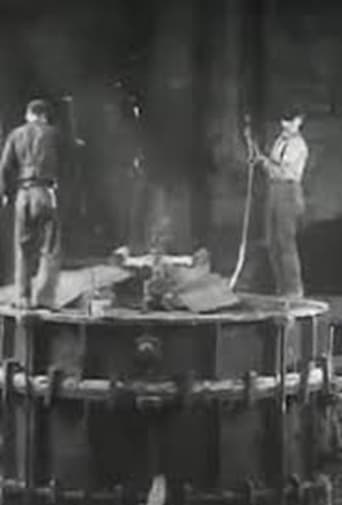
A large bucket full of molten material is poured into a large container, possibly a mold, by a group of men using machinery. Some other men stoke the fire under the container. When finished pouring, the men lift the bucket up from the container and take it away on a crane. Two men put prods down repeatedly into the container, while others lay covers on top of it.
A family moves out to the 'peaceful' suburbs where everything goes wrong, including the mother-in-law moving in.
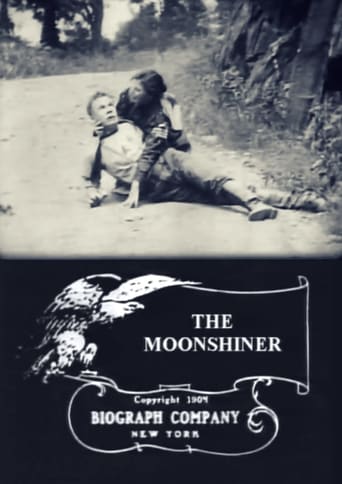
A mountaineer loads a shipment of moonshine whiskey onto his horse-cart, then goes to make a delivery. After he leaves, a revenue agent comes to the mountaineer's house to stake it out, and he soon observes some whiskey being traded for corn. The agent at once goes to alert other revenue officers, who arm themselves with rifles and then begin an immediate search for the moonshiner's still.
