Deus ex machina 1971
A description of two nude bodies.
A description of two nude bodies.
A Silvestre Byrón experimental short film.
A man, his garden of flowers and a salesman.


Ahmad Agha Shahr-e Farangi is facing a market slump. The existence of cinema and television has greatly reduced his customers. In order to earn a living, he goes to an unfamiliar village at the beginning of the protected area of Semnan province, which is not far from Tehran. Upon arrival, he encounters extreme poverty and sad stories in the village. The behavior of village’s children is not predictable for Ahmad Agha. Their fear of this stranger and his strange device does not prevent them from approaching it to arouse curiosity….
A chance meeting with contemporary dancer Ishi Kamamoto during a visit to London led to the filmmaker shooting the performer’s improvised dance in natural light alongside a canal which Crawford later edited when he returned to San Francisco. “With Window Dance I explored how any image contains aspects of a “surface” to look at and a “window” to look through.”
The Great Reaper pays a visit to an old lady, but she is too busy to deal with her visitor.
A short work by Si Fried, screened by the Ann Arbor Film Festival in 1972

Starting with a symbolic presentation of man's curiosity and his constant search of the mysteries of the unplumbed space, the film presents various scientists connected with the organised space research activities in Indian National Committee for Space Research (INCOSPAR) personally introducing their fields of research activities.
A televised film of Peter Stein's landmark 1971 production of Henrik Ibsen's Peer Gynt, staged at the Schaubühne. The staging, produced for broadcast by NDR Fernsehen, saw five actors (including Bruno Ganz) portraying Gynt over the two-evening, five-hour performance.
"Used as creative writing stimulus, elementary and high school. Has been likened to a journey into inner/outer space." -RS
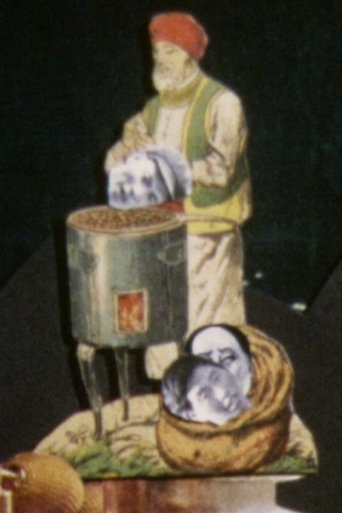
A Super8 of desecrating and captivating animation, made by one of the greatest representatives of the Italian "art film".

"A multiperson head, on the border between live action and animation, struggles to assert itself against the rapid succession of personal appearances. Made while I was a student at St Martin’s School of Art and featuring a lively collection of students from the time." -TH

Traditional music of the Trobriand Islands is played on a variety of flutes, from simple curving stems to panpipes. Songs (wosi) are also an important part of Trobriand music, and although everyone may compose and sing, people with special talents are encouraged to develop their skills. A range of songs are filmed and translated here: gardening and sailing songs, kula trading songs, songs of love and enticement, of grief and mourning. The film also reveals glimpses of everyday and ritual life: villages, gardens (and their magic), exchange, harvest dances, children in the rain.
The film follows two workers in industrial factories from Jena and Leningrad (modern day’s St. Petersburg) and asks them about their expectations for the future. There is a focus on the personal experience, but also politics and society are openly addressed.
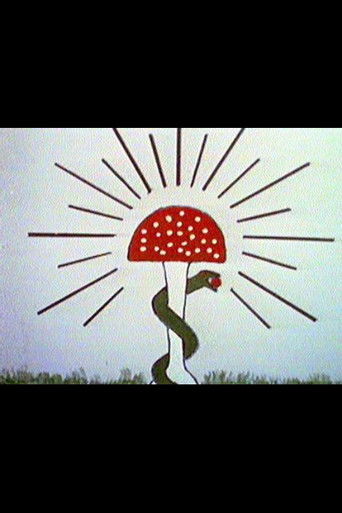
A film animation experiment in metaphoric imagery. This is a surrealistic garden where the earth seethes with strange, unusual shapes and activity, accelerated in movement, compressed in time. Insect-like creatures dart under and over the sand with elusive swiftness; Picasso-like faces stare momentarily upward, mutate, and disappear; wilted blossoms become suddenly animated. What happens on the screen is punctuated and accompanied by synthetic sound effects.
A lonely street musician meets a young soldier who has just deserted.
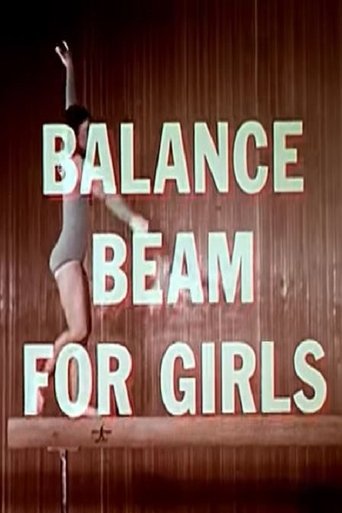
Portrays a combination of mounts, dismounts, floor skills and a variety of stunts ranging from beginning, medium to superior difficulty. Demonstrates spotting techniques. Includes combined movements for useful beam routines.