
Sea Sell Sea Sick at Saw Sea Soar 1971
A forty-minute black-and-white tape done in 1971. Fried is seated at a table, trying to run the gauntlet of choices while ordering in a restaurant. He keeps answering the waiter’s questions with more questions.
A forty-minute black-and-white tape done in 1971. Fried is seated at a table, trying to run the gauntlet of choices while ordering in a restaurant. He keeps answering the waiter’s questions with more questions.
Experimental film about the poet Jakob Michael Reinhold Lenz.

The documentary is a record of a marriage ceremony that took place in April 1971 and was performed in accordance with Ainu traditions at the request of the young bride. There were two hurdles to overcome in the realization of the ceremony: first, a group of Ainu had to be convinced, who were against a revival of the tradition. Secondly, there were only a few members of the community who knew the details of the ceremony at all, since most of them had already been celebrating a wedding in their own style for over 80 years.
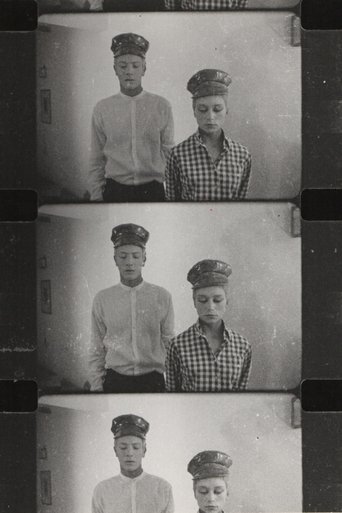
A film by Leo de Berardinis and Perla Peragallo.
A film by Pino Passalacqua.
A student discussion film regarding the economic, infrastructural, and environmental impacts of the American highway system
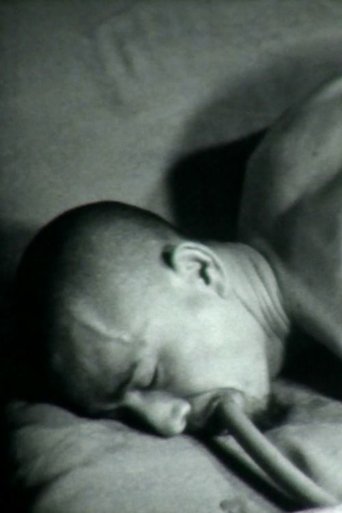
This film documents a performance by Taku Furusawa, acting as the Aoyama Outpost of the Kingdom of Lilliput under the influence of Matsuzawa associate Shō Kazakura. Furusawa also acted in the underground theatre group Theater Yakōkan (Night Theater), which had ties with Matsuzawa as well, and in his later years was active under the name Kubikukuri Takuzō, but this film is a valuable document of his early convulsive performance.
The film you are about to see is the outcome of a two-semester high school art project. It was made by a seventh grade art class at Charles Evans Hughes Junior High School in Woodland Hills, California. After seeing it, we felt it should be shared with other classes and other teachers.
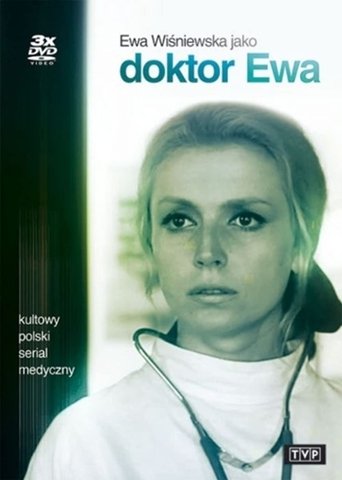
Doctor Ewa Lipska, an attractive young woman just after graduation, with interesting professional prospects for the future, chooses the job of a village doctor. Brought up in a big city, she settles in the small town of Międzybórz in the Łódź Province. She is forced not only to overcome the daily difficulties resulting from medical practice in a rural health center, but also to learn to talk to people of a different mentality and gain the trust of her patients.
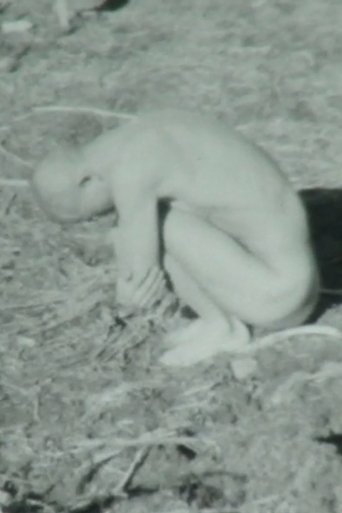
Camera person unknown, 1971, B&W, silent, 18 min. Courtesy of Kumiko Matsuzawa. This film documents actions performed for World Uprising by Taii Ashizawa and Taku Furusawa, who worked together as Satsuma Workshop. According to the art magazine Bijutsu Techō, Ashizawa acting on behalf of the Interstellar Vibration Association and conducted an Earth Sound Transmission Ritual consisting of three parts. In Ritual One, four people respond to the four fundamental elements (fire, water, earth, air) and emanate earth sounds through psychokinesis. In Ritual Two, the sound of the earth is transmitted via radio waves. Ritual Three shows the sound of the earth extinguished in a fire on an altar, and reproduced and transmitted into outer space through the wisdom of a fire deity. The film documents Ritual One, as well as Taku Furusawa is performing Ritual One / EVENT at the same site and going into convulsions.
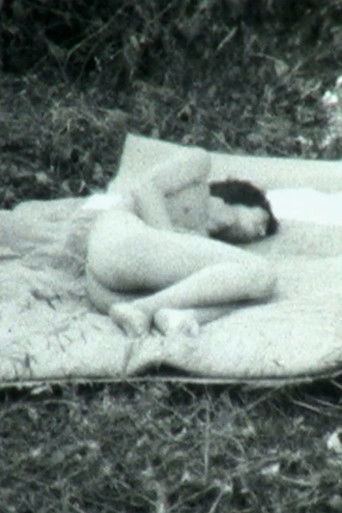
This film documents actions performed for World Uprising by Ikuo Shukusawa, Sanzō Tanaka, and Shigeru Hanagata, who collectively worked as Shikata Kōbō (Death Type Workshop). Camera person unknown, 1971, B&W, silent, 3 min. Courtesy of Kumiko Matsuzawa.
In "Run", Avraham filmed filmed himself running from point to point, and then edited the film layer by layer. The result is a chromatic intruiguing film.
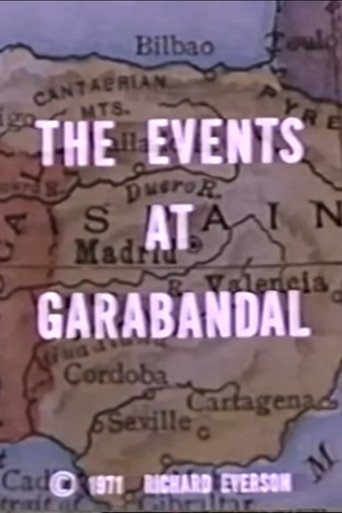
This documentary by Richard Everson marked the first groundbreaking attempt to depict the events of Garabandal in color 16MM film.
"Bruce Benton's four‐minute “Sympathy for the Devil” uses the classic Rolling Stones recording to lend a sort of frayed irony to a collage of news reel shots of President Nixon, the Vietnam war, Gov. George C. Wallace, riots, Billy Graham and lots of other ducks that aren't sitting as much as they are lying down, exhausted." - Vincent Canby, New York Times, Nov. 19th, 1971
"People with an abiding interest in what young America is thinking today will be happy to learn that with perhaps one exception all the movies in the Whitney Museum's current Teen‐Age Filmmakers program are concerned with nightmare visions. The one exception is “Quiet Snow,” a nature study by Rob Hahn and Corey Kaup, which earns its “perhaps” because after several minutes of pastoral imagery it ends with about 30 seconds of mere blackness accompanied only by noise. For all I know, that may be a nightmare." - Roger Greenspun, New York Times, Oct. 19th, 1971
"An elaborately structured and miserably acted unveiling of how ruinous people are, it looks like nothing so much as a rich kids' meditation on the vanity of life—from the point of view of a posh Manhattan townhouse." - Roger Greenspun, New York Times review Oct. 19th, 1971 David Wise, the son of Electronic Arts Intermix founder Howard Wise and producer Barbara Wise, was a child prodigy whose pre-adolescent films led him to be described by Jonas Mekas as "the Mozart of Cinema." The young Wise would be trained in stop frame animation by Stan Van der Beek, before going on to his later career as a successful writer of science fiction film and television.
