The Wrecked Cinema

The Wrecked Cinema 1971

1

"In Germany, I bought an old 35mm Debrie camera. I spent several weeks working with this camera and found that its mechanics were marvelously thought out and that the way the camera was made was proof of the skilled craftsmanship back then. I developed a procedure which also allowed me to use the camera as a printing machine. The printing process is not so different from the filming process, as far as the transport of the film goes . . . It was a lot of fun to try to exhaust the possibilities of the Debrie. It was not only the mechanics that were exciting, like the works of a wonderful old clock, but the numerous possibilities for the realization of the second part of the film, too. This consists mainly of what has already been shot, but offers at least 50% more experimental manipulations in the printed part." (HHK)

1971

The Haunted House

The Haunted House 1971

1

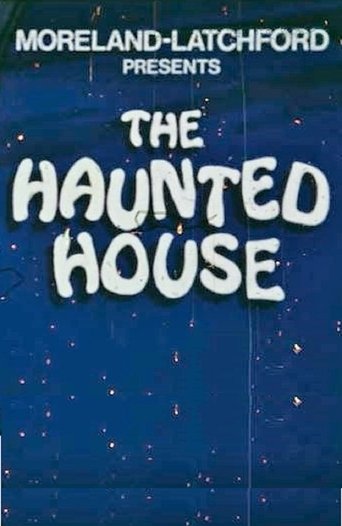
Follows the experiences of two brothers and their little sister as they explore the inside of a large empty house which is rumored to be haunted.

1971

Maypops

Maypops 1971

1

A boy, a girl, several horses, a mother, and a nursing baby provide the central focus for a study of movement.

1971

CBS-Lily and Cleaver Tapes

CBS-Lily and Cleaver Tapes 1971

1

The Videofreex had several experiences with the Black Panther Party, including interviewing Illinois Chapter Deputy Chairman Fred Hampton and New Haven Minister of Information Cappy Pinderhughes. In this tape, recorded on March 5th 1971, the Videofreex one-person camera crew Bart Friedman is walking the hallways of CBS, trying to find out where a video statement by Black Panther Eldridge Cleaver is located. The shots are mostly close up on people’s torsos and there is some image loss, but the sound is intact. The tape has an eerie espionage feel. There is a conflict between station personnel and Bart: they keep telling him, “You can’t tape in here.”

1971

Abstraction

Abstraction 1971

1

"Abstraction deals with the interpretation of abstract form as found in the combination of the nude body, landscape, and objects. Imagery is achieved through visual distortion dealing with reflective surfaces, as well as the superimposition of subject matter. The rhythmic structure focuses on a pulsating expansion and contraction that simulates a life force. An attempt has been made to reveal the basic concepts of a painter's approach to the distillation of reality." —Rosalind Schneider

1971

Portraits

Portraits 1971

1

Live action and animation combination by Kathy Rose

1971

Phosphene

Phosphene 1971

1

Phosphene features colorful negatives of erotic imagery. Scenes in the film display flashes of sexual intercourse and vibrant inkblots (similar to those seen in Inkaboos). During the creation of this film, Byron was fascinated with the degenerated images in old film footage. He went on to obtain pornographic films shot in 8mm. He photographed individual frames using a still camera with high magnification and further exaggerated the grain and the contrast. Prints of these frames were re-photographed on kodalith negatives and then fastened like animation cels. Colored gels were placed beneath the kodaliths on a light box and the sequences re-animated. The film was screened at the 9th Ann Arbor Film Festival in 1971; however, it was nearly rejected due to its erotic imagery. The music in this film is from the Grateful Dead song, “Viola Lee Blues”, and can also be heard in Fotogrammar. -Chicago Film Archives

1971

No More Leadershit

No More Leadershit 1971

1

Macdonald lays out his theory of anarchy—in its purest sense of a rejection of hierarchy—in this seriocomic short he argues that protesters, police, and soldiers alike are not the perpetrators of violence but are victims at the hands of leaders.

1971

Festival of Cyclists

Festival of Cyclists 1971

1

This film appears to focus on the female body in an artistic and colorful manner through the use of superimposition and flashes of repeated scenes. The film begins with two females in the nude, chatting, smoking, and eating saltines. Other scenes include two females in the nude and in a variety of positions: slouching, standing, sitting, etc. They are displayed in many colors and patterns, purple in one scene and polka dots the next. At one point, the women appear to be colorful cutouts moving jaggedly around the screen. In this film and in Hexagrams, Byron re-uses some of the same film scenes to create original content. Festival of Cyclists was created using a film technique invented with a Bell and Howell Film 16mm camera. In this technique, a short loop of film is repeatedly printed onto the camera roll. Byron wrote and published an article in Filmmaker's Newsletter about the technique. In 1972, Festival of Cyclists was shown at the 10th Ann Arbor Film Festival.

1971

Na torach

Na torach 1971

1

A short documentary showing people working on railway tracks.

1971

Faces

Faces 1971

1

“Sociological cinematic observation about the life of young people.” About hippies and other informal communities.

1971

The Birth of Electronic Music: Part I

The Birth of Electronic Music: Part I 1971

1

This installment covers "electronic" music from 400 BC to 1950, including analog techniques such as the "soundhouses" of the 17th century to the glass harmonica, before finally moving along to early electronic instruments such as the Dynamophone and the Ondes Martenot.

1971

F.H.A.R.

F.H.A.R. 1971

4.63

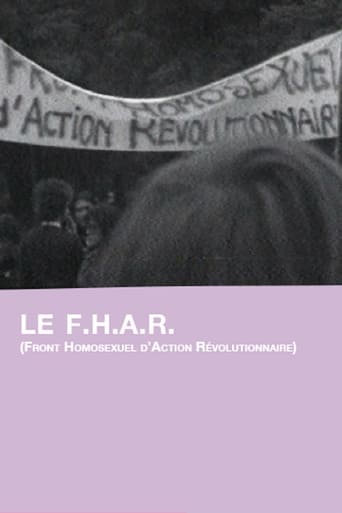
Demonstration by FHAR, the Homosexual Revolutionary Action Front, the 1st of May 1971. People discuss at the University of Vincennes and show a common determination to break prejudice and open minds. They refuse to hide anymore, and talk about this revolution of desire.

1971