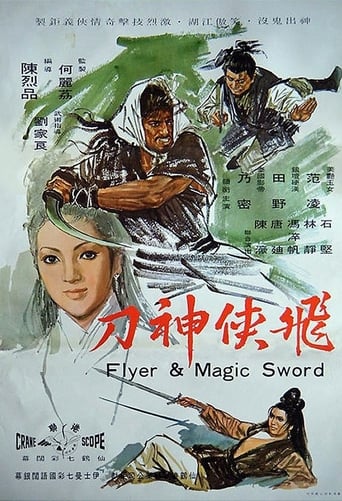
Flyer & Magic Sword 1971
Flyer & Magic Sword is a Hong Kong Martial Arts movie starring Stanley Fung.
Flyer & Magic Sword is a Hong Kong Martial Arts movie starring Stanley Fung.

The story revolves around a woman who becomes pregnant, and the mystery surrounding the father of her child.
Delusions dominate Souad's mind and she believes that she can be with the person she loves through magic, so she puts a piece of sugar for her boyfriend that she brought from one of the charlatans in his cup of tea
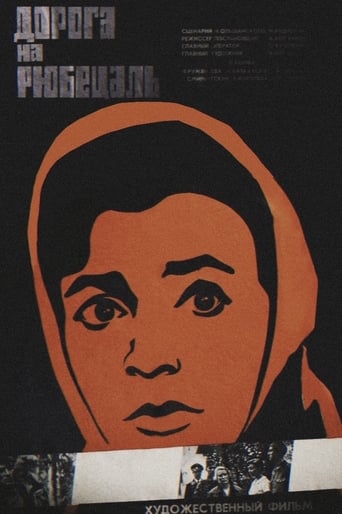
The German anti-fascist Max in 1939 emigrated to the USSR. During the Great Patriotic War, he fought in the Soviet partisan detachment and died, performing a responsible mission. After many years, her companion in guerrilla warfare, Lyudmila, was able to realize their common dream — to climb to the top of Mount Rübezahl.
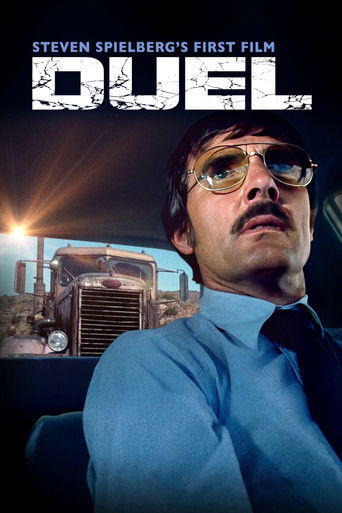
Traveling businessman David Mann angers the driver of a rusty tanker while crossing the California desert. A simple trip turns deadly, as Mann struggles to stay on the road while the tanker plays cat and mouse with his life.
A collection of the classic morality tales narrated by Bill Cosby as "Aesop" that have been passed down from family to family for thousands of years. Every story has a lesson.
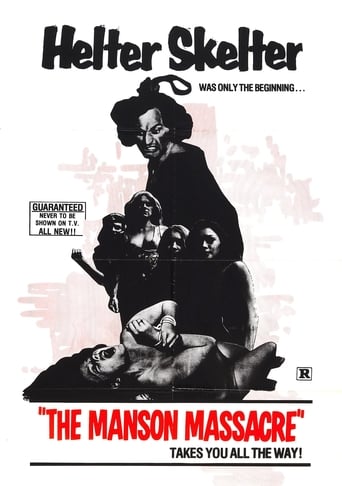
A monk-robed Manson-like cult leader who lives in a coffin, is transported around in a black hearse. At times he gets sadistic with his girl followers. Ivor, the cult leader , is taking in various young woman and seducing them before sending them out to do his evil acts. We also get to see flashbacks of the early Cult family and the start of his madness.
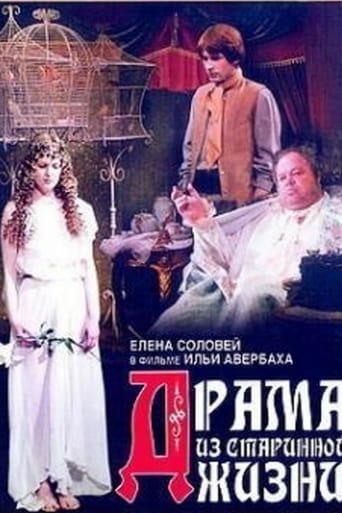
A love story between a barber and a serf actress who find themselves in an environment that combines savagery with a veneer of enlightenment. Based on Nikolai Leskov's short story "The Toupee Artist".

Comedy about the "Husarenstreich", the 1757 Berlin raid during the Seven Years' War.
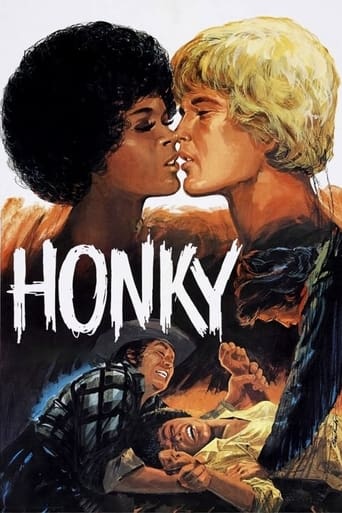
Sheila, an affluent black teenager, begins dating working class white teen Wayne, and asks him for help to sell a kilo of marijuana.
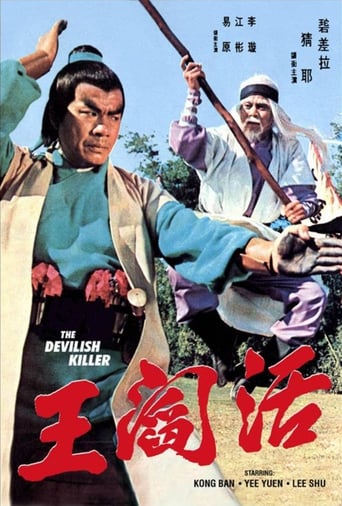
The Devilish Killer is the most dangerous fighter that ever lived...After defeating all of China’s martial art factions in a grand battle, he decides that his victory cannot be complete unless he possesses the two Thunderbolt Swords. The leader of the Thunderbolt Sword clan sends his two sons into hiding knowing that sooner or later the Devilish Killer will come for them and destroy his clan. After the two sons leave, taking the Thunderbolt Sword with them, fate leads them to meet a young swordswoman who owns the other Thunderbolt Sword and together they unite their swords and train for the ultimate showdown with the Devilish Killer.
A man who works as a driver for Dinesh, a smuggler who likes helping the poor, abandons him upon learning his truth. However, he is soon killed by a group of criminals.
Jwala (transl. Flame) is a 1971 Indian Hindi-language action film directed and produced by M. V. Raman and written by Chandliyan. It stars Madhubala (in her final, posthumous film appearance) and Sunil Dutt, with Sohrab Modi and Pran in pivotal roles. The film's music was composed by Shankar–Jaikishan.
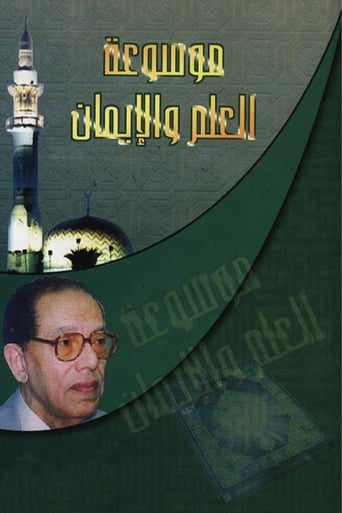
The science and faith programs is a TV program presented by the late d. Mustafa Mahmoud for twenty-eight years on Egyptian television, and he aimed to address science on the foundations of faith. The program reached a large degree of fame and Dr. Mustafa Mahmoud presented more than 400 episodes over twenty-eight years.
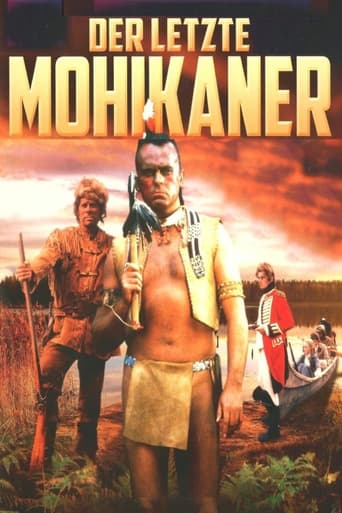
The adventures of Natty 'Hawkeye' Bumppo and his Indian companions, caught in a war between the French and English in upstate New York in 1757.
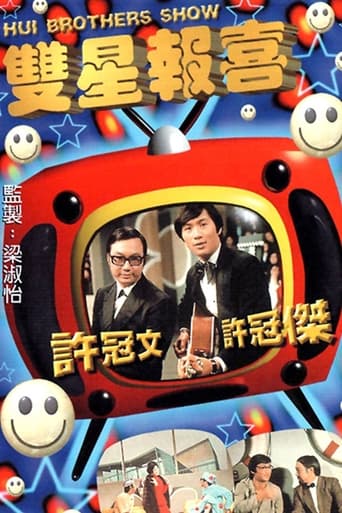
The Hui Brothers Show is a Hong Kong sketch comedy television series produced by TVB and hosted by and starring brothers Michael Hui and Samuel Hui that ran for 52 episodes from 1971 to 1973.
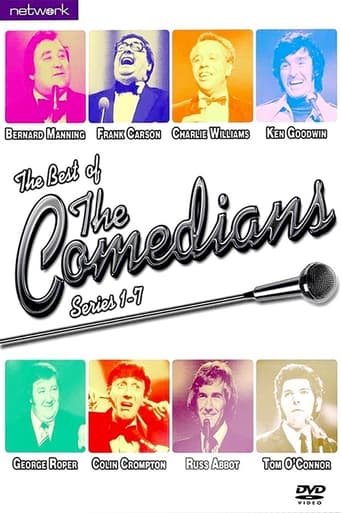
The comedians is a British television show of the 1970s produced by Johnnie Hamp of Granada Television. The show gave a stage to nightclub and working men's club comedians of the era, including Russ Abbot, Lennie Bennett, Stan Boardman, Jim Bowen, Jimmy Bright, Duggie Brown, Mike Burton, Dave Butler, Brian Carroll, Frank Carson, Mike Coyne, Jimmy Cricket, Colin Crompton, Pauline Daniels, Charlie Daze, Vince Earl, Steve Faye, Eddie Flanagan, Stu Francis, Ken Goodwin, Jackie Hamilton, Jerry Harris, George King, Bobby Knutt, Bernard Manning, Mike McCabe, Paul Melba, Mick Miller, Hal Nolan, Tom O'Connor, Tom Pepper, Bryn Phillips, Mike Reid, George Roper, Harry Scott, Sammy Thomas, Johnny Wager, Roy Walker, Charlie Williams, Lee Wilson and Lenny Windsor. Also featured on the TV show, were Shep's Banjo Boys, a 7-piece band comprising Charlie Bentley, John Drury, Andy Holdorf, John Orchard, John Rollings, Graham Shepherd and Howard Shepherd. In 1973, the line up was Mike Dexter, Tony "Tosh" Kennedy, Ged Martin, Tony Pritchard, Graham Shepherd and Howard "Shep" Shepherd.
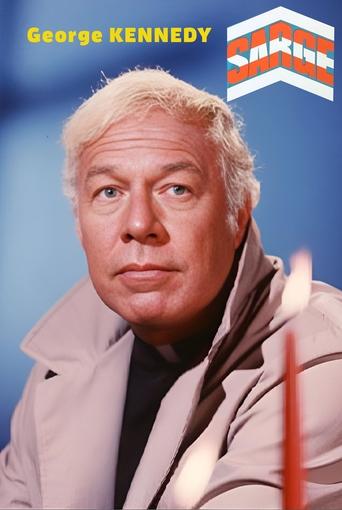
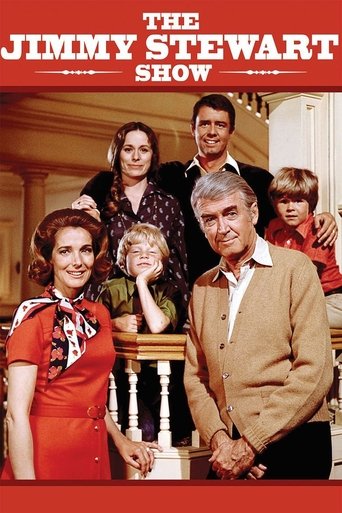
The Jimmy Stewart Show is an American sitcom starring James Stewart. Twenty-four episodes of the show were broadcast in the 1971–1972 season on the NBC network's Sunday night schedule, under the sponsorship of Procter & Gamble.
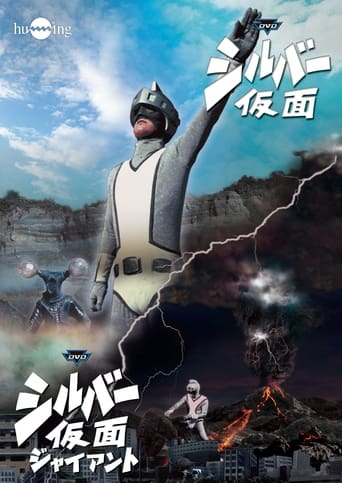
After Professor Kasuga is killed by fiendish aliens for plans to a super-rocketship, his children trek across Japan, protected by the second-oldest brother, Koji, who transforms into the super-cyborg, Silver Mask.
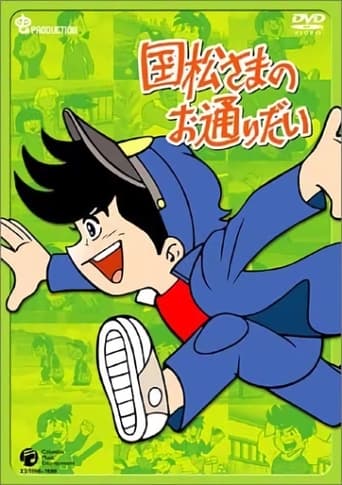
A comedy about a group of kids forming a school baseball team, with the leader being very stubborn and argumentative.
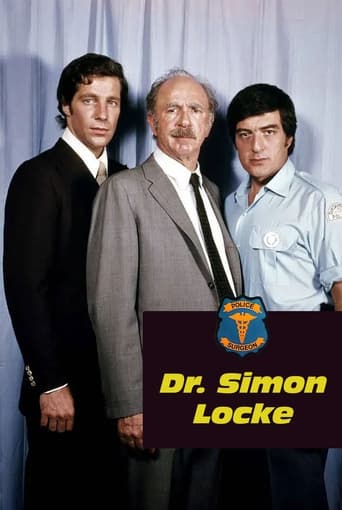
Doctor Simon Locke was a Canadian medical drama The series was initially a medical drama that originated from the fictional rural town of Dixon Mills, where a young physician, Dr. Simon Locke, arrived in town to assist veteran physician Dr. Andrew Sellers. The plot lines were more fitting for a big city medical drama, including a typhoid epidemic, child abuse, and even a murder. In 1972 the series was renamed as Police Surgeon, where Dr. Locke moved back to the city and worked for the police department's emergency unit, where he assists the cops in solving crimes that require medical research.
An anthology series wherein the ten commandments are interpreted in contemporary scenarios by different writers. It was transmissioned from 30 March to 1 June 1971 on ITV Yorkshire.
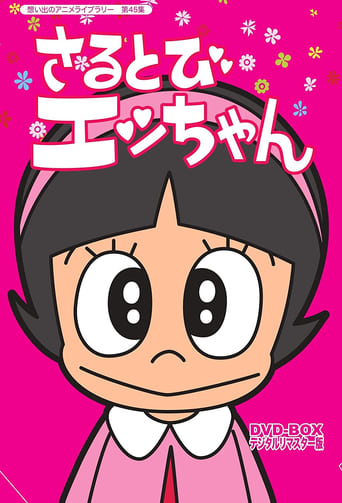
Sarutobi Ecchan is a magical girl manga series by Shotaro Ishinomori. It was originally named Okashina Okashina Ano Ko, but was changed in 1971 when Toei Animation adapted it into an anime called Sarutobi Ecchan. The anime lasted 26 episodes. It has been recently released on DVD as a part of the DVD ANCIENT SERIES.
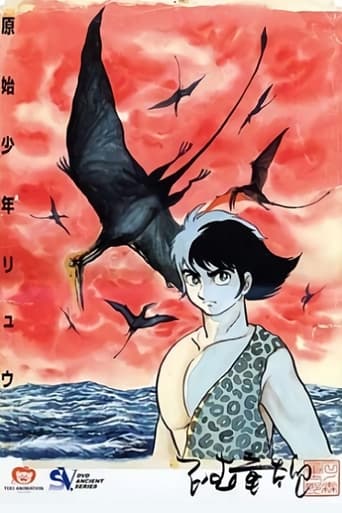
When Ryuu is born his tribe tries to sacrifice him to a Tyrannosaurus named Shirano because of the color of his skin. He is however saved by a monkey who raises him as her own son. Meanwhile Ryuu's mother has left the tribe and is out on a quest to find Ryuu. 16 years later Ryuu meets a girl named Ran who was sold to the tribe Ryuu originaly came from. The tribe is not happy to see Ryuu alive and tries to sacrifice him again, this time by burning him alive. Before they can get the deed done the tribe is massacred along with Ryuu's adoptive mother by Shirano. Ryuu then sets out on a quest together with Ran to find his mother and Ran's brother Don.
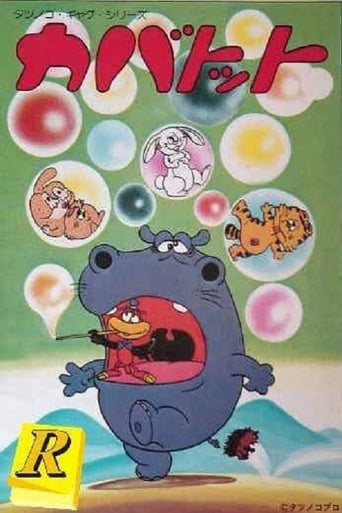
Hyppo and Thomas is an anime created by Tatsunoko Production. Thomas is a cunning bird who sponges on Kaba, the good-natured hippopotamus. Although Thomas is a dependent, living in Hyppo's big mouth, he always acts lordly and tries to outsmart his simpleminded host. However, their basic friendship and cooperation endures despite their frequent quarrels.
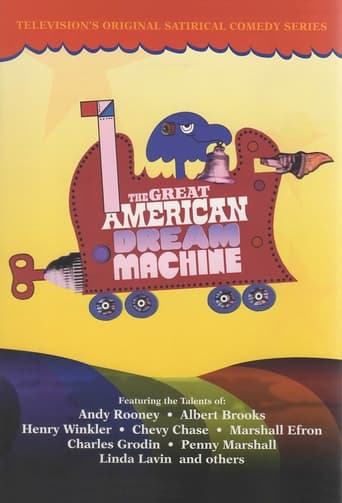
The Great American Dream Machine was a weekly satirical variety television series, produced in New York City by WNET and broadcast on PBS from 1971 to 1973. The program was hosted by humorist and commentator Marshall Efron. The show centered around skits and satirical political commentary. The hour and a half long show usually contained at least seven different current event topics. In the second season, the show was trimmed down to an hour. Other notable cast members included Chevy Chase. Contributors included Albert Brooks and Andy Rooney. Some of the skits would later be revamped for the movie The Groove Tube. There were also occasional short films presented on the show, most of them "experimental" or documentaries about artistic endeavours. Some of these were subtitled.
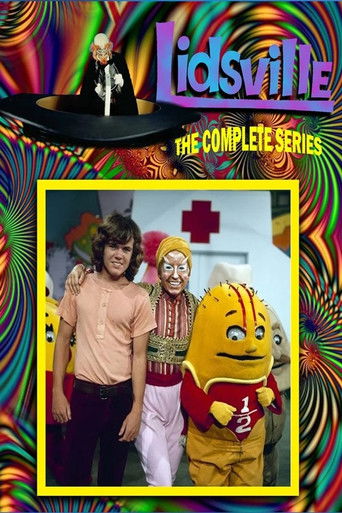
Lidsville is Sid and Marty Krofft's third television show following H.R. Pufnstuf and The Bugaloos. As did its predecessors, the series combined two types of characters: conventional actors in makeup filmed alongside performers in full mascot costumes, whose voices were dubbed in post-production. Seventeen episodes aired on Saturday mornings for two seasons, 1971–1973. The opening was shot at Six Flags Over Texas.
