
The Eye 1978
When Dr. Lovro Furato accidentally fails to treat the injured eye of the peasant Barisa Surac, the whole silent conflict between the two worlds, rich urban and backward rural, will emerge to the surface.
When Dr. Lovro Furato accidentally fails to treat the injured eye of the peasant Barisa Surac, the whole silent conflict between the two worlds, rich urban and backward rural, will emerge to the surface.

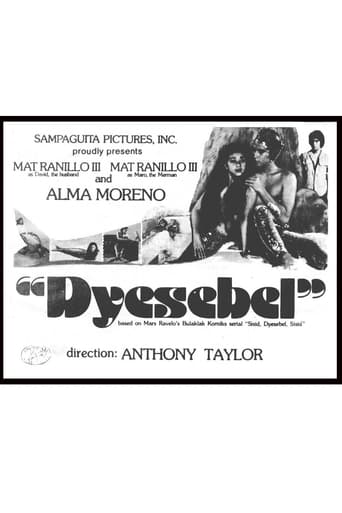
Dyesebel is unique among the merfolk for she is the only mermaid born of human parents from the surface world. A mermaid from birth, she is shunned by the superstitious due to her physical form. After her father is killed by an angry, superstitious mob, Dyesebel is taken to the ocean by her mother where she is sent into exile since her chances for survival are greater there than on land. The young girl-mermaid is found by Banak who adopts her and takes her to their kingdom where she is welcomed into their community.
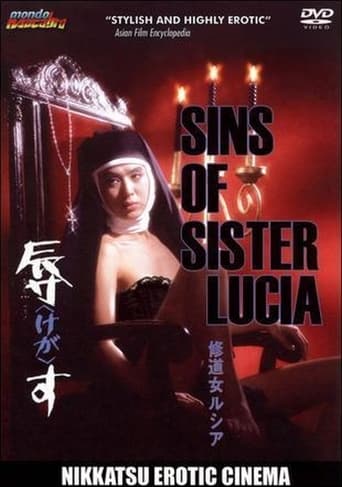
Rumiko is a misbehaving girl who got caught stealing the cash her father had at home for bribes. Father would not accuse her of that, but when he caught her having sex with her English teacher, he was justified in sending her to a monastery, where the nuns try to force her to become a good girl. However, after a few days in forced piety, Rumiko (now Sister Lucia) discovered that her sins were nothing in comparison with those of other Sisters, and Mother Superior's.

Happy go-lucky teen Billy Duncan discovers an otherworldly laser gun in the southern California desert, making him the target of a pair of aliens who had recently executed its previous owner.
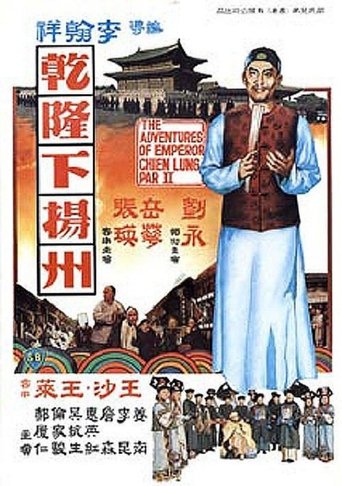
In the 18th century, Emperor Chien Lung makes a journey into Southern China.

Kanno is a Yakuza. He had to kill Matsuoka who betrayed their boss. Kanno knew Matsuoka had a 3-year-old daughter named Youko. Before he gave himself to the police, he asked his trusted man to take care of her. While in prison, Kanno kept sending letters to Youko, disguising as an uncle in Brazil. 15 years later, Kanno is released. He is determined to live legitimately, however the Yakuza has not forgotten his wicked deed!
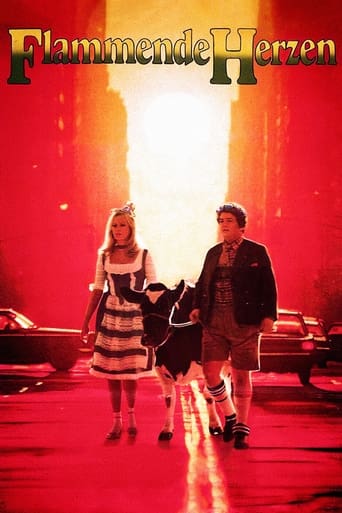
When Peter Huber the proprietor of a Bavarian corner newsstand, wins a free trip to New York City in a magazine contest, he is overjoyed. Filled with romantic ideas from the movies, his actual encounter with the gritty realities of the Big Apple are sobering. Nonetheless, he is in for the adventure of his life. First, he meets Karola Faber, the German wife of a U.S. G.I. who has found life in the States not all it's cracked up to be: she has left her husband and makes her living through prostitution. Peter and Karola visit the local German emigré community's Oktoberfest, and win the festival's King and Queen crown. Their prize is a cow, which accompanies them on their further journeys in New York City.

Eighth movie in the Torakku Yarō series

An impotent husband hires a photographer, a professional SM mistress and his driver to kidnap his wealthy but unfaithful wife. After she is photographed while being sexually abused, she is blackmailed into giving control of her estate to her husband. Put in the basement she suffers an endless series of humiliations and indignities. But fate has some cruel twists in store.

It is a wooden silver-retrieving sluice, thus light-catch awash with something like "cheek and jowl clippings of Argentine bulls" (as Hollis Frampton reminds us) and many chemical residues of earth. My mind has grown TREE out of the forest of all of it.

Three young boys drunkenly rape a woman named Emiko, the wife of a man they've developed a friendship with. She dies of heart failure during the attack. Her chicken farmer husband, incapable of dealing with her death tends to her corpse as though it were still alive completely unable to accept her demise.

The former head of the Institute of Science - Professor Molnar, returns to the Institute to seek treatment for his heart condition. The new director of the Institute, and his former assistant, Dr. Egberg had a falling out with Molnar after the latter considered his research unethical. However, after waking up from surgery, Molnar makes a horrifying discovery; Egberg has swapped their brains!
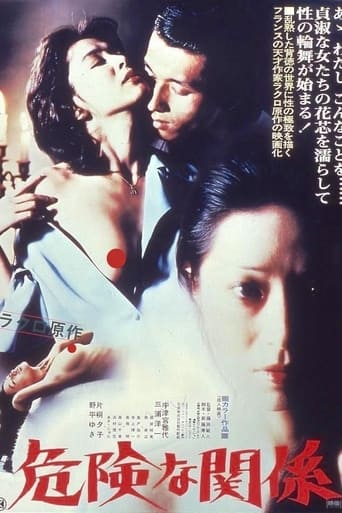
Pierre Choderlos de Laclos' 18th-century epistolary novel 'Les Liaisons dangereuses' is adapted to a contemporary setting. An abominable and burning jealousy and an evil relationship between a man and a woman unfold in the nature of a game. Eventually, jealousy will deeply hurt the true love of a chaste married woman.
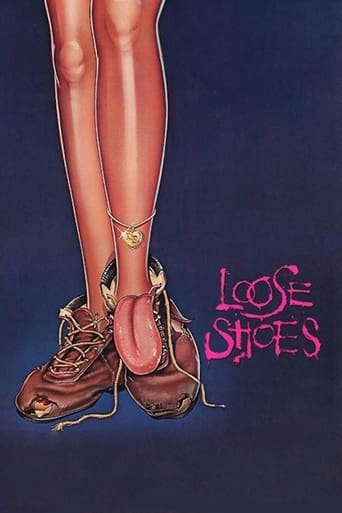
Broad satire and buffoonery presented as a series of movie trailers. Among the titles and subjects are: "The Howard Huge Story", "Skate-boarders from Hell", "The Invasion of the Penis Snatchers", Woody Allen (pre-Mia), movie trailer come-ons, Charlie Chaplin, war movies, Billy Jack. The source of the title is presented about an hour into the film.

A movie based on Saikaku Ihara’s “Five Women Who Loved Love”, which depicts women such as strippers and married women becoming hostesses in a pink salon.

Jaded night club owner stages the comeback of an ex-teen idol for revenge.
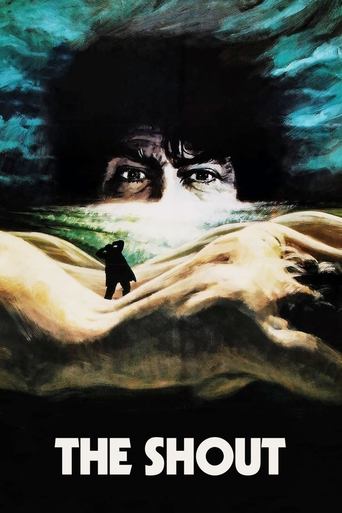
A traveller by the name of Crossley forces himself upon a musician and his wife in a lonely part of Devon, and uses the aboriginal magic he has learned to displace his host.

Hiromi Go plays a high school student who needs a role model in his life badly. He's raised by his older sister played by Keiko Matsuzaka who is a hostess at a night club. She meets a man who becomes her boyfriend. He races in a off-road car rally professionally. The same man becomes Go's role model and teaches him sophisticated car driving techniques. One of the techniques taught is 'double clutch' ( Thus the movie's title Double Kuracchi ) to make gear transition smoothly between shifts. Hiromi Go was a big pop idol in Japan when this movie was created. Both Go and Matsuzaka still enjoys high celebrity status in Japan.
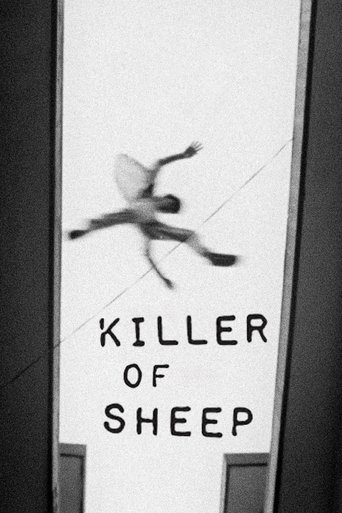
An African-American man working at a slaughterhouse in the Watts area of Los Angeles leads a dissatisfied and listless existence.
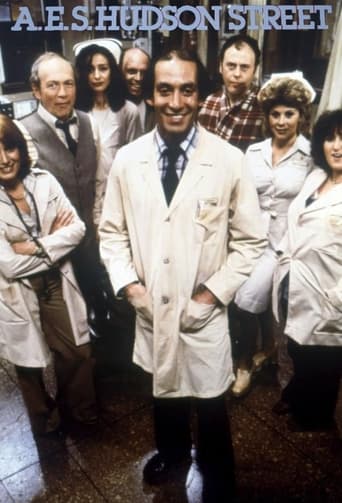
A.E.S. Hudson Street is an American comedy television show that aired on ABC in 1978 on Thursday night from 9:30 pm to 10:00 pm est.

A weekly sit-down with Hermann Schreiber and Peter W. Jansen with a figure of German cinema.

"Al-Aqdar" (Fate) is a 1978 Kuwaiti drama that follows Khalifa, a man torn between tradition and change as he considers a second marriage to fulfill his dream of fatherhood. Set amid Kuwait's transformation following the oil boom, the series explores family conflicts and the impact of modernization on personal and generational values.

Wattoo Wattoo Super Bird is a French cartoon series created in 1978. Consisting of 60 five-minute episodes, the series was intended to teach morals to children.

Italian mini series
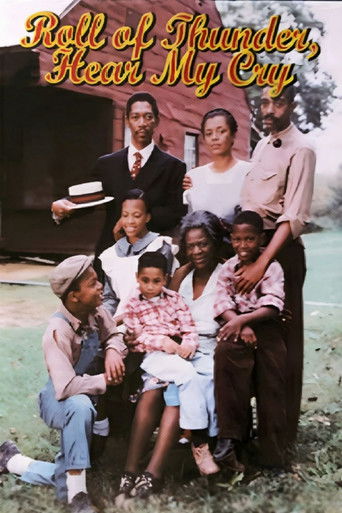
A three-part drama telling the story of a black girl and her family who try to hold onto their land during the Depression.
The Bass Player and the Blonde was a television play in the ITV Playhouse series, first broadcast 14 June 1977. It was followed up with a three-part serial with the episodes given the names of musical terms: Rondo, Allegro, and Andante. In the play and the series, George Manghan, a middle aged, debt ridden bass player in a Jazz band, falls in love with the wealthy and much younger blonde singer Terry, much to the distress of her father.
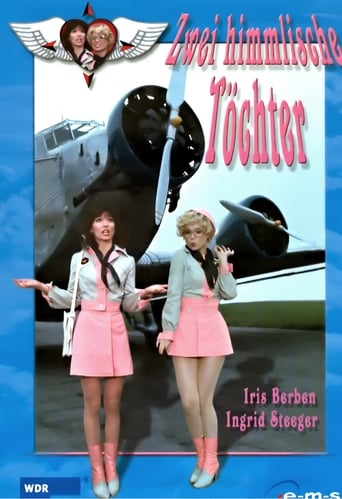
Zwei himmlische Töchter is a German television series.
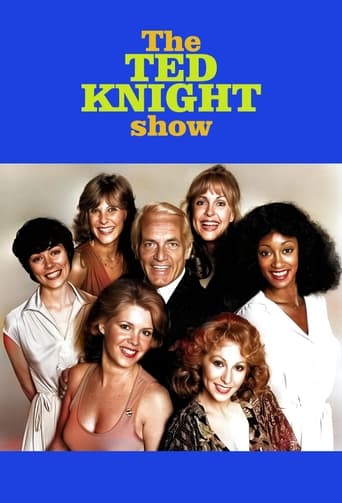
The Ted Knight Show is a 1978 United States comedic television series starring Ted Knight which centers around the owner of an escort service in New York City. The show aired between April 8, 1978, and May 13, 1978.
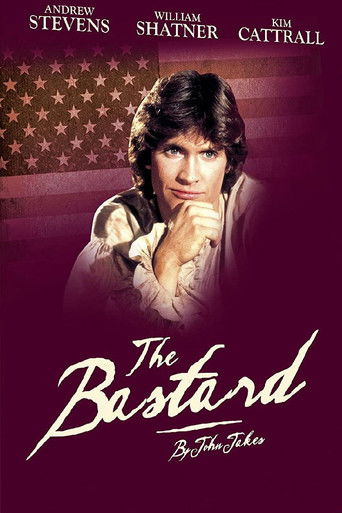
Phillipe Charboneau is the illegitimate son of an English duke. When he travels from France to England to claim his inheritance, he incurs the wrath of his father's family and is forced to flee to America, where he becomes involved in the events leading to the American Revolution.

Based on novel 1962 "Kyukei no Koya" by Seicho Matsumoto. A serial murder occurs around the heroine Kumiko because she finds evidence that her father, who should have died, was "alive." Set in 1945, near the end of WW II, Kenichiro Nogami is reported to have died in a Swiss hospital. In fact, he is working behind the scenes to save Japan from destruction. For this cause, Kenichiro Nogami has left behind his wife and nation to work in hiding.
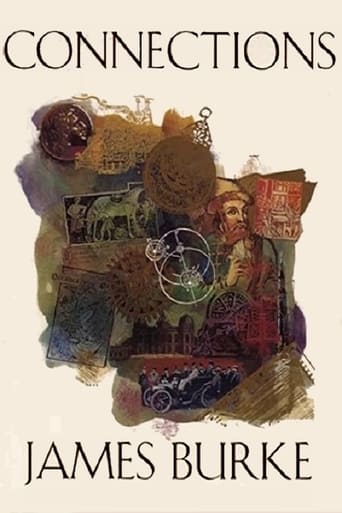
Taking an interdisciplinary approach to the history of science and invention, Connections explores an "Alternative View of Change" that rejects the conventional linear and teleological view of historical progress. To demonstrate this view, Burke begins each episode with a particular event or innovation in the past (usually ancient or medieval) and traces a path from that event through a series of connections to a fundamental and essential aspect of the modern world.

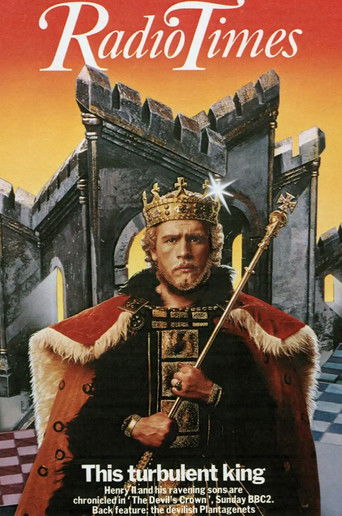
The Devil's Crown was a BBC limited series which dramatised the reigns of three medieval Kings of England: Henry II and his sons Richard the Lionheart and John. It was broadcast in thirteen 55-minute episodes between 30 April and 23 July 1978. Henry Plantagenet (latterly Henry II), sees his opportunity to seize the crown of England and create a kingdom of law and order. He cuts a deal with King Stephen in which Stephen will name him his heir, excluding his sons Eustace and William in exchange for a fragile truce. Stephen's sudden death elevates Henry to the throne. He may have been King of England, but the bulk of the Angevin Empire was in France, and it was this that Henry regarded as the Jewel in his Crown, maintained through a series of political marriages and complex allegiances. Henry pays homage to Louis VII, King of the Franks, for these lands, but it is clear that Henry is the shrewder and more ambitious of the two kings, having married Louis' ex-wife Eleanor of Aquitaine.
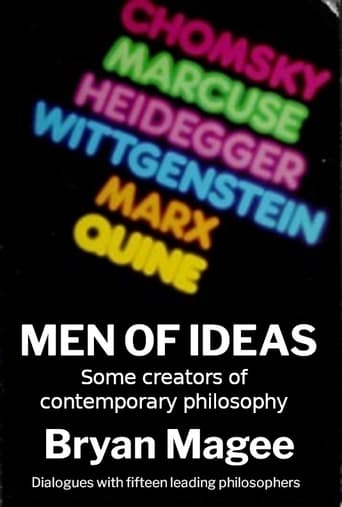
A captivating voyage into the world of intellectual exploration, where host Bryan Magee engages in illuminating dialogues with some of the most distinguished thinkers of the last century. Join Magee in riveting conversations with eminent guests like Herbert Marcuse, A. J. Ayer, John Searle, Noam Chomsky, Iris Murdoch, and W.V. Quine, as they unravel the complexities of philosophy, language, politics, and culture. From the radical reevaluation of Marxism by Herbert Marcuse to the profound insights on language by John Searle and Noam Chomsky, this series presents a tapestry of thought that has shaped our understanding of existence. With each episode, "Men of Ideas" offers a unique window into the minds of these leading philosophers, making it an intellectually invigorating experience for both avid scholars and curious minds alike.
