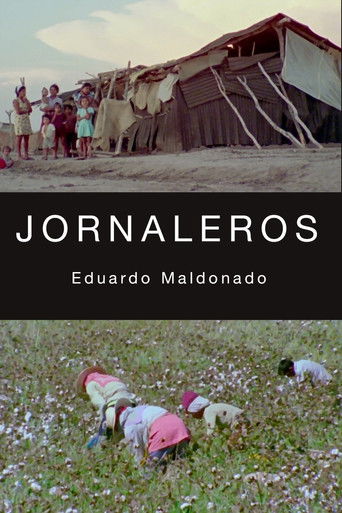
Labourers 1978
It narrates the situation of the countryside in Mexico and in particular about agricultural laborers, who move from one region to another.
It narrates the situation of the countryside in Mexico and in particular about agricultural laborers, who move from one region to another.
Juxtaposition and editing are used in this meditation on the human/environmental act of skating and its component parts.

A series of exemplary visual elements unfold in many generations of images. The erotic scene which initiates this swirl maintains its persistent and non-consumable essence in the clash with nostalgia and fears, facts and dreams, memory’s debris. Ode to the invincible Eros.

In May 1974 a group of Mohawk activists reoccupied a part of their ancestral land and proclaimed it Ganienkeh. This abandoned territory was reclaimed by the Mohawks on the basis of a treaty with the State of New York enacted in the late 18th century.


Dansité is the visualization, in cinematic space and time, of two bodies in motion; mobile, immobile, intertwined, broken, tense, restrained, suspended between heaven and earth, sand and rock, they suddenly stop, fixing the eternity of the moment.
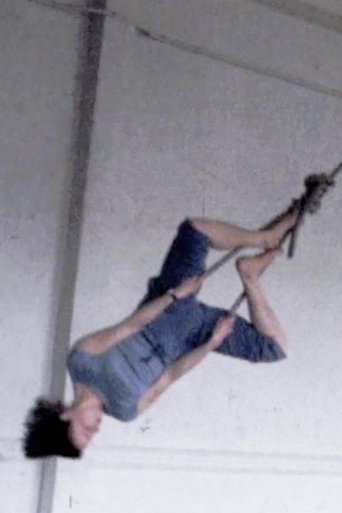
Ellen on the Rope is an energetically expressive study of performer Ellen Fisher working out on the rope in her Lodge Hall rehearsal space, itself a handsome room of classical proportions and lighting. Sousa’s film studies Fisher’s strenuous activity from a series of vantage points, creating a strobing rhythm by crossing the camera’s shutter speed with the rate of the rope traversing its frame. Unlike other athletic film studies, usually focused on body properties or close-ups of muscular exertion, Ellen on the Rope directs our attention more towards physics, tracing the dynamics and energy of Ellen’s patterns through space with a camera that progresses from tripod stillness to sympathetic motion. A simple exercise, this film offers a fine example of two artists working out together on rope and celluloid.” B. Ruby Rich, Chicago Reader, 1979

A parody of feminist criticism on found footage covered by humoristic chisellings, signs or hasty figurative elements. Sometimes, chisellings are fine, and sometimes they are treated in large shots (razor tears, acid, cutting the film itself, wide spraying, thick stamps). A bedsheet is used as the final screen from which various women's evocations are represented.


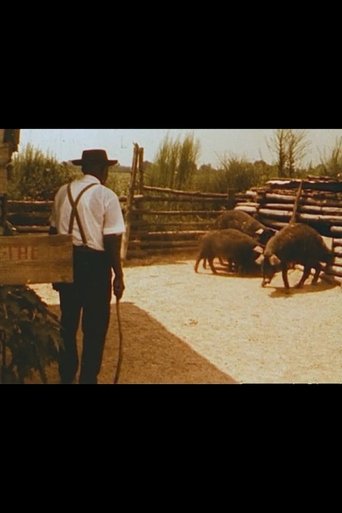
Meet Tom Johnson and his praying pigs. "Been fooling with them hogs for 35 long years," Johnson says in the film as he rocks on the porch of his modest residence near Bentonia, Mississippi. "It's just an idea that I took up. It's a play thing. And it put me into something that I didn't get out of too easy and so soon." The pigs, taught to stand beside their brimming slop trough with heads bowed while Johnson prayed over their food, dug in with gusto when he finally released them to eat. Johnson died in 1980, but the four minute film is a lasting reminder of his special pig training talents.

Yet another instructional short about seventies kids from California being prepared for emergencies.

The invention of the cinematograph by Louis and Auguste Lumière in 1895 marked the culmination - synthesis, standardisation and industrialisation - of various research carried out in previous years on the decomposition and illusion of movement through a series of fixed shots (Demenÿ, Reynaud, Muybridge, Londe, Marey...). These images are now being reworked by the generation of "post-structuralist" filmmakers, for whom the magic of the device lies in the articulation of two images, which in no way are neutral.
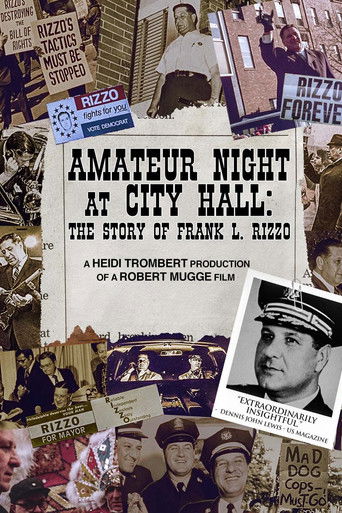
The meteoric rise of Frank L. Rizzo from cop on the beat, to law and order police commissioner, to controversial mayor.
Educational film that deals with proper conduct of army officers.

With the help of his grandfather and a friend, a teenager learns to cope with his parents' divorce.
Documentary film.
