
.Yl 1982 - 273
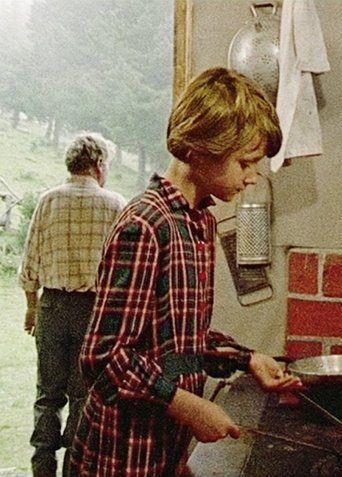
Kribus - Krabus - Domine 1982
In this short, cracks appear in the idyllic concept of ‘Heidi in the Alps’. Lisa is eight and spending the summer with her parents in the mountains. But the much-vaunted beauty of nature provides the young girl with little comfort in the sparse Alpine landscape. Instead, it seems eerie. Her father is often away and her mother is always busy with washing and doing the dishes. Lisa watches and fantasises about being far away – ideally in Persia. In the South Tirolean dialect, “kribus krabus” means “topsy turvy”. The “domine” in the title stands for the opposite, for God, control, and power. (Berlinale)
The Big Green House on the Corner 1982
No-budget, silent, Super 8 horror-comedy filmed some time in the early '80s about a suburban cannibal who lives in the titular Big Green House on the Corner.

Fesseln spürt, wer sich bewegt 1982
A documentary film about a "village of huts" that was erected in a section of forest near Frankfurt am Main in 1980 to demonstrate against the planned construction of Runway West. It was built by a large number of Frankfurt citizens together with various citizens' movements.

Snig 1982
A young woman shakes eels out from between the sheets of a bed. She sews the eels on to a sheet, then cuts them away and they fall to the ground. A dilemma. Jayne Parker discovered film as a medium when she was a sculpture student at Canterbury College of Art (1977-80). In early works, objects, performance and gesture were combined by the camera to explore space, duration and the physical body. The images in these early films were both literal and metaphoric, depicting exact events but also creating physical and personal associations for the viewer. Ideas are evoked in images rather than words; ordinary actions are also enigmas.

Task 1982
A closeup of a woman's hands ironing a piece of clothing.
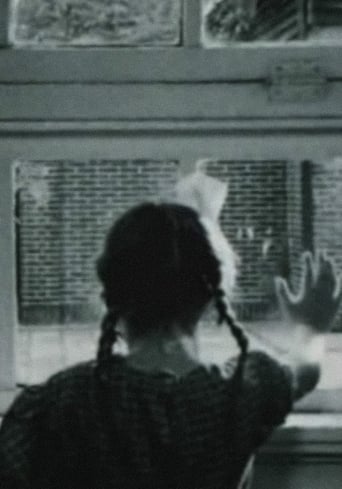
Distance to Nearby 1982
A very impressive film is Barbara Meter's 'Distance to Nearby.' The film is a dramatic reconstruction of memory. The memory of the alienation and solitude of a (half) Jewish child -the filmmaker- while in hiding, dramatized in restrained but touching imagery. For instance the looking through corridors and rooms, which should have given the feeling of protection. D. Ouwendijk, Trouw, 1982
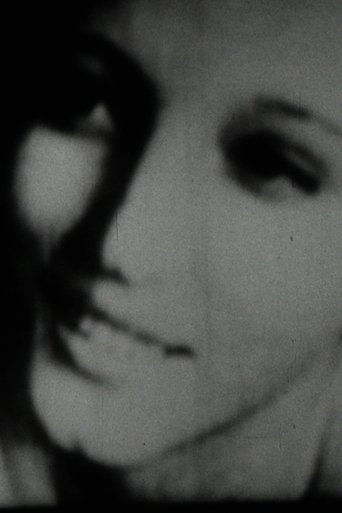
Lie Back & Enjoy It 1982
Lie Back & Enjoy It is a dialectical film about the politics of representation. Its image track consists of technologically manipulated images of women, and some printed titles. Its soundtrack consists of a dialogue between a Man (a filmmaker) and a Woman (of whom he's going to make a film).
Swish 1982
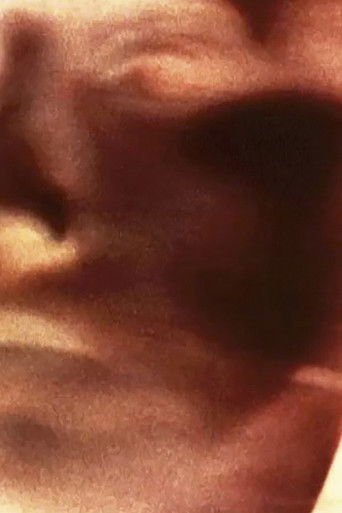
This film deals with the physical properties of the film medium, and pushing those distinctive features to their limit. The subject of the film is motion, and it is an attempt to get inside of it. It was made with a moving subject and a moving camera with an open shutter, the result being that each frame is unique, without the smooth continuity that is expected in film. The subject, a female body at close range, provides an intimacy and eroticism. At the same time it can be seen as a modern version of Futurist simultaneity.
In/Side/Out I 1982
Various geometric lines are put out of their figurative context into a set of multiple oppositions, all articulated with respect to the edge of the frame. It was built as a self-contained, intentionally short-lived whole.

Adventures in Paradise 1982
A classic time capsule of surfing from master filmmaker, Scott Dittrich. Follow the world's greatest surfers to the world's greatest beaches. Featuring Mike Ho, Shaun Tomson, Bobby Owens, Larry Bertlemann and more. Plus bodyboard action.

Just Another Girl 1982
With the single-minded attention to detail of a teenager preparing for the prom (or an actress preparing for an award) but augmented by the boisterous camaraderie of friends, a group of San Francisco men pluck, primp and transform themselves into women for a performance (or perhaps an evening on the town). Rock Ross described this sped-up snapshot, which he set to a mash-up/spoken word slice by Malcolm McLaren, as "made for a time capsule." Was he referring to the poignant fact that youth and beauty don't last forever or something else altogether? - Michael Fox
Asiam 1982
A look at how the director perceives people sometimes see him, and he them.

La familia Orozco 1982
In this Peruvian look at the beginning of the 20th century in Lima, the life of a fictitious leftist labor organizer Vicente Orozco (Humberto Cavero) is traced back to 1900 to illustrate the conditions that led to his radicalization. This background and Vicente's efforts to unionize his fellow workers are thoroughly explored in the 140-minute running time.
Magindanao 1982
Official entry to the first Metro Manila Film Festival in 1982 directed by Diego Cagahastian and starred Mohamad Faizal, Rhoy Flores, Rex Lapid, Charlie Davao, Philip Gamboa, Laarni Enriquez, Paquito Diaz, Romy Diaz, Dick Israel, Tony Carrion, Joaquin Fajardo, Willy Dado, Amay Bisaya, and Max Alvarado.

The Garden of Ages 1982
This film from the human fascination with immortalié stone, described by Roger Caillois in his book STONES. A cult of the stone has a long history in Asian countries like China and Japan. Moving from the mountain to the sea, the film unfolds like a dream incantatory which is the theme: In China, a mountain of Tséchouan, it is said that there was once a stone that had children. Beyond their age difference and the distance between them, those who dream of one stone are in constant contact. Fascinated by the same stone, their thoughts, their gestures, their desires end up merging. One day they will be reunited in a garden called the Garden of the ages. It describes the garden as the meeting in the same place and the same time the four seasons of life: the birth of spring, summer childhood, fall of man becomes an adult, the old man winter. This garden is both in and out, like a large house containing its own garden.
The Five Legged Rabbit 1982
This movie is set at the start of World War II, with little shepherds on the green slopes of an Albanian mountain range featured as intrigued, distant observers of the Italian army and their prey, the partisan fighters who are hiding in the homes of the villagers. Even the Albanian police who are supposed to be helping the Italians do not betray the resistance fighters when they see them. The children watch as the hunter and hunted play out their drama below, not understanding that the scenes are more real than their own hunt for the five-legged rabbit that is supposed to be living in these hills. As the tragedies of war mount, the children start to become more involved - at one point they steal the weapons from some drunken Italian soldiers, nearly leading to a disaster on their part. Time and events rapidly unfold, and it soon becomes apparent that their innocence will not last for long because their own existence is threatened in a way they are just beginning to understand.
The Blacksmith 1982
Eldsmiðurinn (The Blacksmith) is a film about an eighty year old craftsman and inventor, who lives alone on the east coast of Iceland. He claims to have made the first multi-gear bicycle and he has also converted a clock into a calendar. This remarkable personality is seen at work and talking about his world views. The film also shows the point of contact between simple craftsmanship and more developed technology in areas like transport, wind-generators etc. It also represents the collision between world-views as represented in the news media (TV, radio) and traditional ways of thought, often tinged with mysticism, in isolated areas of the countryside.
Potya and Potiha 1982
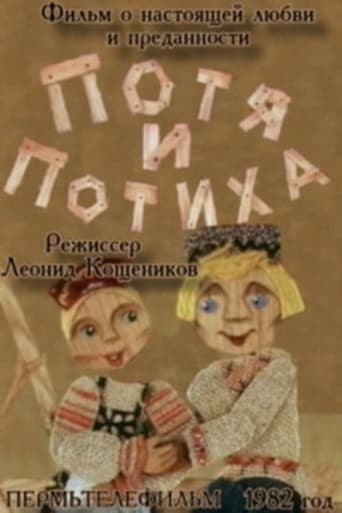
Potya and Potiha are newlyweds. Potya is a big eccentric, but his wife lovingly forgives him for all his stupid deeds.
