
ABC
Strictly Dancing 1970
Strictly Dancing is an Australian television show that aired between 2004 and 2005 on ABC TV. Hosted by Paul McDermott, the show is a form of dance competition, with each episode featuring four dance couples from around Australia and New Zealand. The competition has three rounds, each consisting of two similar dance types. The styles range from basic traditionals, such as Cha-Cha and Rumba, to modern styles of Hip-Hop, to strange hybrids. Competitors are picked via auditioning, which is done around Australia before each season. Chosen competitors are alerted three weeks in advance of their appearance of their dances and competition date. Whilst the actual show is only a half-hour segment and appears to be live, the creation takes over eight hours and competitors usually have ample time to return home and watch themselves on TV, and as such are made to sign a contract forbidding them from revealing their final position. Scoring is done by three judges, with the score out of 10 for each dance, with the average of the three being the score being an average of the three. All scores are then added up. On top of the dance score, the judges award the dances at the end of the show with an X-Factor score. This score has no relation to the technical side of the dancing, but relates to the other factors that improve the dance, such as dancers compatibility or energy. This makes things more interesting as a technically better dance couple may lose to a couple who appeared more captivating or simply 'worked better' together. The winner of the round qualifies for the semi-finals. The winner of the finals receives a cash prize and a flower bouquet. The runners up receive a cash prize of half the first prize amount.
About Faces 1960
About Faces is an American game show that aired from January 4, 1960 to June 30, 1961 that was created by Ralph Edwards. The host was Ben Alexander and the show's announcer was famed game show host Tom Kennedy.
Break the Bank 1948
Break the Bank is an American quiz show which aired variously on Mutual Radio and ABC, CBS and NBC television from 1945 to 1957.
Court Martial 1965
Court Martial is an ITC Entertainment and Roncom Productions co-production crime drama television series set during World War II. The series details the investigations of a Judge Advocate General's office. It aired for one 26-episode season from September 5, 1965 to April 4,1695 on London's Associated Television (ATV). Twenty episodes were shown on ABC in the United States between April 8 and September 2, 1966. The series had its genesis in a two-part episode of NBC's Kraft Suspense Theatre, "The Case Against Paul Ryker", which was later re-edited into a 1968 theatrical feature, Sergeant Ryker. The series won the1966 British Society of Film and Television TV award for Best Dramatic Series.
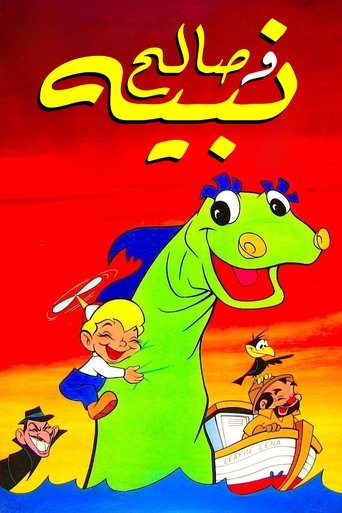
Beany and Cecil 1962
Beany and Cecil first appeared as a hand puppet TV show in the late 40's created by Bob Clampett. It later became an animated cartoon series under the Warner Brothers aegis. The puppet show, entitled Time for Beany, originally aired in 1949, with the animated series first appearing in Matty's Funday Funnies in 1959, later renamed Matty's Funnies with Beany and Cecil and finally Beany and Cecil in the USA. Another season was produced in 1988. In its original form of hand puppets, the show conveyed a greater sense of personal communication than did the animated series which followed. The hand puppets were extensively marketed and did well as a merchandising function.

Sunset Beat 1990
A team of Los Angeles cops goes undercover posing as motorcycle bikers to nail street crime and other disorder in town.

I Survived a Japanese Game Show 2008
American contestants with larger-than-life personalities compete in a wacky, over-the-top Japanese-themed game show. Host Rome Kanda, den mother Mama-San and the poker-faced Judge Bob referee the hilarity as the contestants compete for the big cash prize.
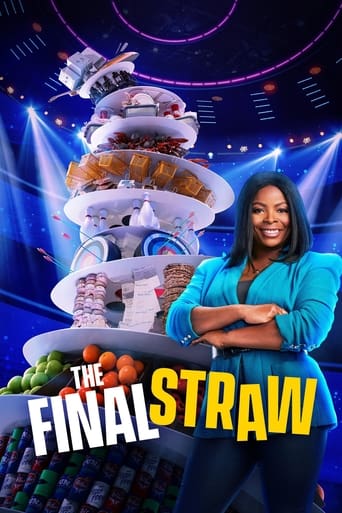
The Final Straw 2022
The stakes are high as four teams of colorful contestants face off to combat tremendous tipping towers.
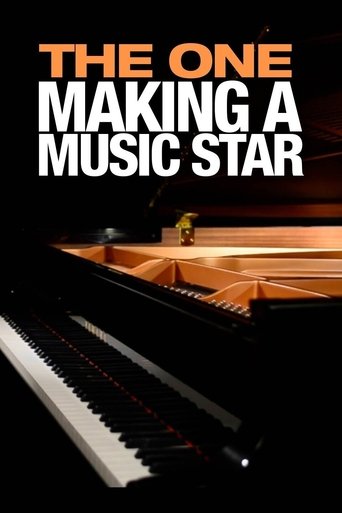
The One: Making a Music Star 2006
The One: Making a Music Star is an American reality television series that aired in July 2006 on ABC in the United States, and CBC Television in Canada. The show was hosted by George Stroumboulopoulos, the host of CBC's The Hour. It was advertised as being superior to American Idol and Rock Star with the twist that contestants "live together in a fully functioning music academy", with their actions documented similar to the Big Brother format. Reportedly the most expensive summer series in the history of the ABC network, its first episode, on July 18, 2006, scored the lowest audience ever for a premiere episode on a major U.S. broadcast network, with an estimated 3.08 million viewers. Subsequent episodes had even fewer viewers. The series was cancelled after two weeks with the final results undecided on July 27, 2006. The show's website proclaimed "there are no plans for additional episodes".
Our World 1970
Our World is an American television news series that ran for 26 episodes, from September 25, 1986 to May 28, 1987. The show was anchored by Linda Ellerbee and Ray Gandolf. Each episode of the series examined, through the use of archival film and television footage, one short period in American history. Our World aired on ABC. Our World grew out of an earlier ABC News special called 45/85, whose producer, Avram Westin, would go on to produce Our World. Each episode was produced on a budget of $350,000, less than half of the budget of a typical hour of prime time programming at the time. Our World premiered to indifferent critical response but as the series progressed critics became effusive with their praise. Despite being critically well received and profitable for the network, Our World performed poorly in the Nielsen ratings, as its first half-hour was programmed against the extremely popular The Cosby Show. ABC canceled the show after one season. Ellerbee tried to move the series to PBS but was unsuccessful.
Kids Are People Too 1970
Kids Are People Too was a television series that ran on Sunday mornings from 1978 to 1982 on ABC. The series was a variety/news-magazine show oriented towards kids with the intention of recognizing them as people. During its four-year run, the series was nominated for five Emmy Awards and won the 1978 Emmy for Outstanding Children's Entertainment Series. The series included celebrity interviews, cartoons, music, and other information that appealed to kids.
Wonderbug 1970
Wonderbug is a segment of the first and second season of the American television series The Krofft Supershow, from 1976 to 1978. It was shot in Hollywood, Los Angeles, California. The show was rerun as part of ABC's Sunday morning series.
Miracle Workers 2006
In this tearjerker reality series, doctors use their expertise combined with the latest technology to help people with debilitating medical conditions. Cutting-edge medical procedures, performed on folks who might not otherwise be able to afford them.
Treasure Hunt 1956
Treasure Hunt is an American television game show that ran in the 1950s, 1970s, and 1980s. The show featured contestants selecting a treasure chest or box with surprises inside, in the hope of winning large prizes or a cash jackpot.
Brave New World 1999
An exploration of how science, technology, and new thoughts challenging our social systems are changing the world before our eyes.
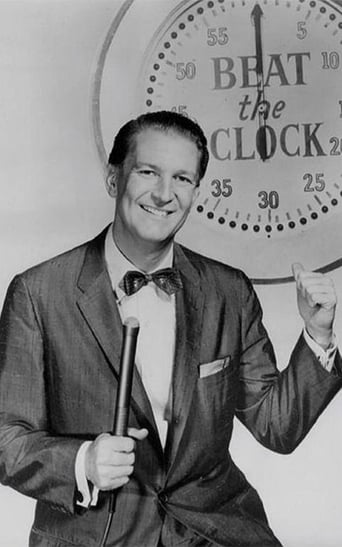
Beat the Clock 1950
Beat the Clock is a game show hosted by Bud Collyer that ran on CBS from 1950 to 1958 and ABC from 1958 to 1961.
Starring Boris Karloff 1949
Starring Boris Karloff (also known as The Boris Karloff Mystery Playhouse) is an American radio and television anthology series broadcast for 13 weeks, September–December 1949, on the ABC network. Boris Karloff was the host and occasional star, with music by organist George Henninger. Produced and directed by Charles Warburton, the series adapted short stories of mystery and suspense.
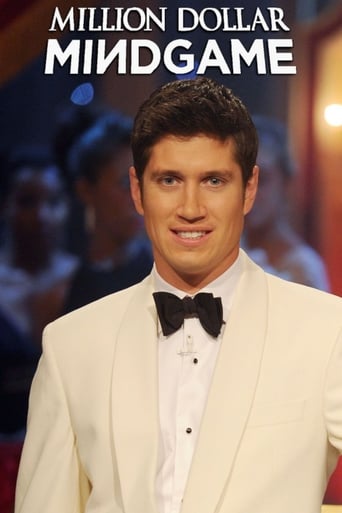
Million Dollar Mind Game 2011
In this game of reasoning and smarts, teams comprised of six people who all know each other – co-workers, friends, teammates, etc. – will need to tackle a series of logic-based questions. The more questions the team answers correctly, the more money they will earn towards a grand prize, potentially earning them $1 million.
Laff-a-Lympics 1970
Laff-A-Lympics is the co-headlining segment, with Scooby-Doo, of the package Saturday morning cartoon series Scooby's All-Star Laff-A-Lympics, produced by Hanna-Barbera Productions beginning in 1977. The show was a spoof of the Olympics and the ABC television series Battle of the Network Stars, which debuted one year earlier. It featured 45 Hanna-Barbera characters organized into the teams which would compete each week for gold, silver, and bronze medals. One season of 16 episodes was produced in 1977–78, and eight new episodes combined with reruns for the 1978–79 season as Scooby's All-Stars. Unlike most cartoon series' produced by Hanna-Barbera in the 1970s, Laff-A-Lympics did not contain a laugh track.
