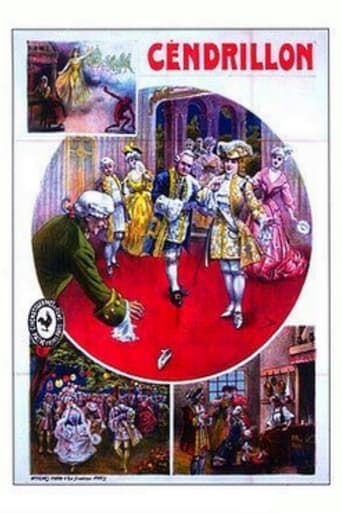
Cinderella or the Glass Slipper 1907
This is a compact telling of the Cinderella fairy tale and the film is elaborately staged.
This is a compact telling of the Cinderella fairy tale and the film is elaborately staged.
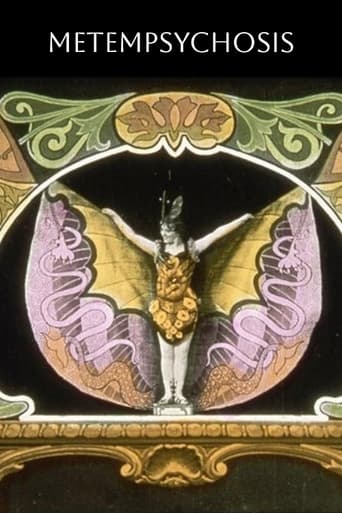
Stencil-coloured version of Segundo de Chomón's Les roses magiques (1906).
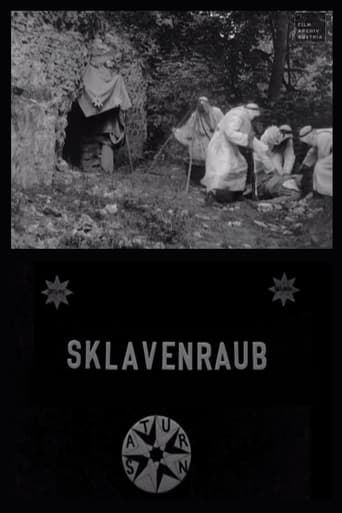
Four Arab men in white burnouses, two women in grey, and one female cook in striped burnous, are sitting in front of a cave in a forest path.

Desperadoes cause trouble and attempt to push settlers from their property. A cowboy, motivated by justice, decides to get involved in the situation. The cowboy confronts the villains, leading to a showdown where the terror is "shot or disposed of in some equally satisfactory way," thus delivering justice and helping the homesteaders.
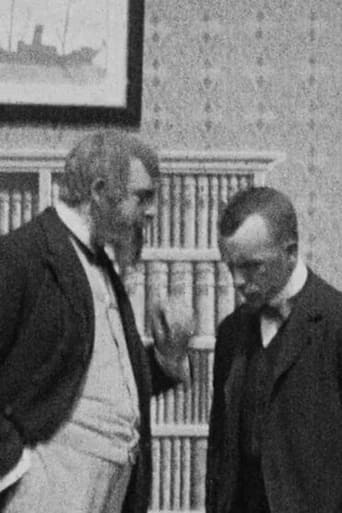
The film is incomplete and there are no preserved programmes which explain the story. The fragment consists of the following scenes: Scene 1: An older and a younger man are talking in a living room. Scene 2: The young man is courting a woman and is rejected on account of another suitor. Scene 3: The older man receives a telegram about a shipwreck. The news almost drives him to take his own life. Scene 4: The two men are now standing outside a shop and seem happy again. A woman is sitting with a child on her lap, perhaps belonging to the young man and the woman he previously pursued. The film was directed by Viggo Larsen, who, as far as we know, directed all films for Denmark’s first film company, Nordisk Films Kompagni, in the period between 1906 and 1909. Viggo Larsen also plays the young man in the film. -Stumfilm.dk
In front of a round tent, a pasha is sitting on the grass; to the right of the tent's door, covered with a patterned blanket, is a flagpole - on top of which is an 8-pointed star [Saturn-Film's logo]. The pasha claps hands, and a servant comes to his bid. The lord is going to smoke from his water-pipe while he buys some new slave girls. The servant calls the seller and his two henchmen, who bring forth four girls in patterned burnooses.

In the midst of the Civil War, a wife saves the day by swapping places with her captured and soon-to-be-executed husband.
Boy tricks his father into drinking castor oil. The latter is obliged to defecate in a series of unlikely places, to the evident disgust of members of the Parisian public. The status of this film is rather unusual, since it's not listed in the Pathé catalogues and never appeared in the French press of the time, but a surviving copy is preserved under the German title 'Der Kleine Schlaumeier'. It should not be confused with Gaumont's version "C’est papa qui prend la purge" by Louis Feuillade.
Jim, a robber, is in love with the chief’s bride Clara, who firmly rejects his many advances. In revenge, he snitches on the entire gang of robbers to the police, who immediately imprison the chief and his men. Clara kills the treacherous Jim and sets out to free her lover from prison. (Stumfilm.dk)

A middle-aged woman in rural dress and a young woman in a smarter dress are picking up herbs in a forest. The workload and the sunny day call for a halt for refreshment. The young girl disrobes, and enters the nearby river in the nude, followed by the mature woman who simply fathers her long skirts up to her waist, revealing her naked thighs and white-slip covered buttocks. The camera follows them to the right, capturing the water movement, and their splashing about. (A white sunflower stands alone in the midst of the water creeks - hinting at the Production company's logo, an 8-pointed star.) A fisherman arrives and starts throwing his hook at the fish, with no results; so, he moves to the right, and throws the hook again, this time capturing the heavy mature woman who comes from behind the curtain of willows, complaining of pain in the lower of her back. A policeman in city uniform and white casket appears, to expel both the fisherman and the woman from the place.
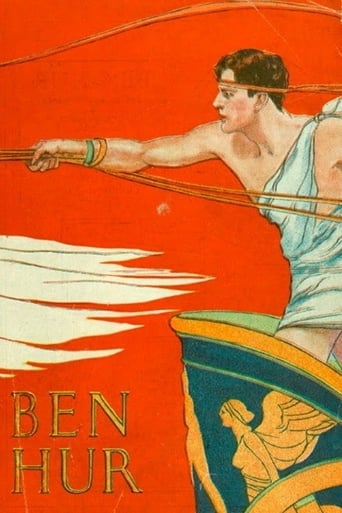
The first adaptation of Lew Wallace's novel, Ben-Hur: A Tale of the Christ.
It is love at first sight when Armand Duval meets the courtisan Marguerite. They move in together and live happily until Armands father secretly pays Marguerite a visit to tell her that her questionable reputation has put Armand's entire family in disrepute. She sacrifices herself and leaves Armand, who – in the belief that she left of her own free will – embitters by grief and anger. But destiny wants them to meet again. (stumfilm.dk)
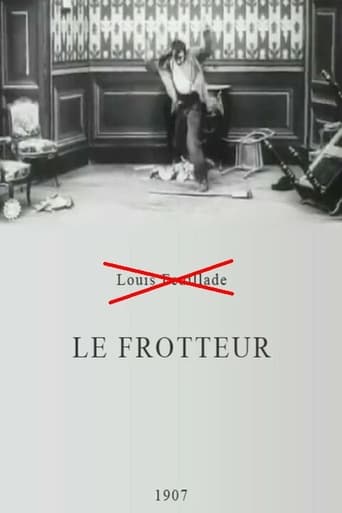
An extremely clumsy man tries to clean a woman's house with disastrous results.
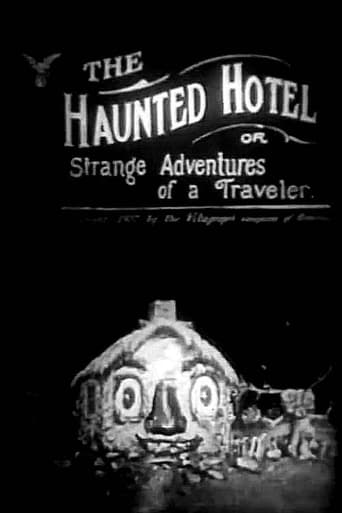
A traveler stays the night at a rural inn, but gets no rest as he is tormented by various spectres and mysterious happenings.
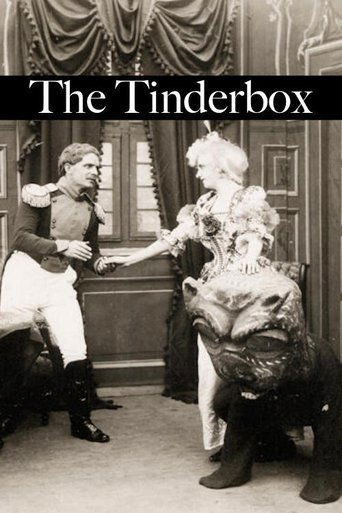
Viggo Larsen’s adaptation of Hans Christian Andersen's famous fairy tale about the soldier who gets hold of a magic tinderbox capable of calling forth three dogs with big eyes that can fulfill all his wishes. When the soldier has one of the dogs transport a sleeping princess to his room, he is arrested and sentenced to death. But his adventure, as we know, does not end here.

Two clowns perform acrobatic routines with each other, but suddenly start fighting. One of them finds and hides inside a large canvas sack that turns out to have magic properties. (stumfilm.dk)
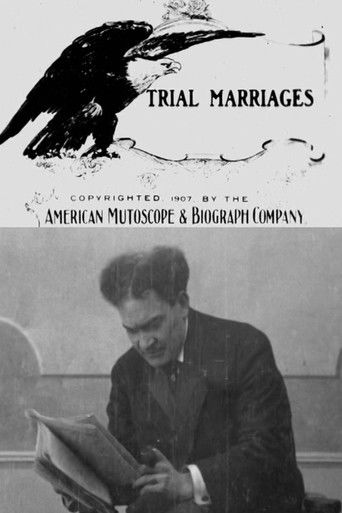
A man attempts a series of 'trial marriages' with various women, and eventually gives up on marriage altogether.

The artist is presented, with his board: his only appearance. The hand rapidly outlines a human head, into the chalky jaws of which it inserts a cigarette. The chalk head smokes, and finally eats, the cigarette. The head of a woman is drawn, which gradually fills and becomes undoubtedly human. —Urban-Eclipse catalogue

Polichinelle the servant (called Harlequin in the English language version) rescues his girlfriend from a gang of decadent aristocrats, who have transformed her into a mechanical doll.
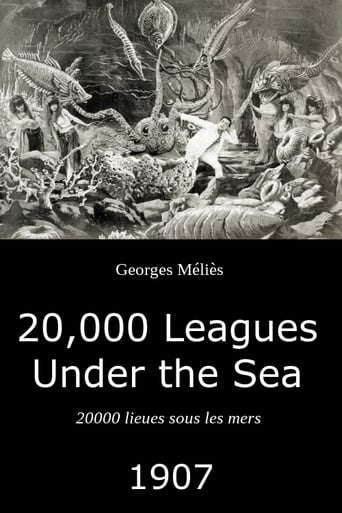
The film, a parody of the novel Twenty Thousand Leagues Under the Sea by Jules Verne, follows a fisherman, Yves, who dreams of traveling by submarine to the bottom of the ocean, where he encounters both realistic and fanciful sea creatures, including a chorus of naiads played by dancers from the Théâtre du Châtelet. Méliès's design for the film includes cut-out sea animals patterned after Alphonse de Neuville's illustrations for Verne's novel.

