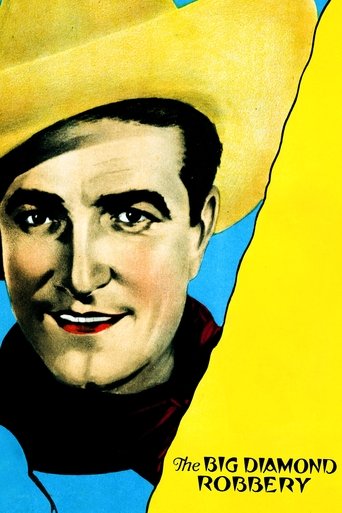
The Big Diamond Robbery 1929
A ranch foreman is assigned to escort his employer's daughter from the big city back to the ranch. The girl is carrying the valuable Regent diamond and the pair become the target of a gang of thieves.
A ranch foreman is assigned to escort his employer's daughter from the big city back to the ranch. The girl is carrying the valuable Regent diamond and the pair become the target of a gang of thieves.
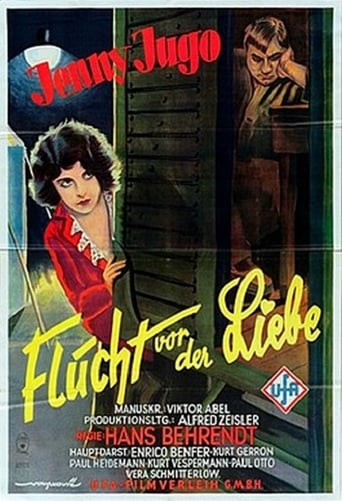

Juan is summoned by Goldenberg to offer him a job in the cheap business. To get away from him, Pardo evades his proposals justifying himself by saying that he must consult with his partner; who, in reality, does not exist. As the story progresses we can see how this partner, who is called Mr. Davis, takes on a life of his own inside Juan's mind.

A flapper unwittingly falls for the boss' son.
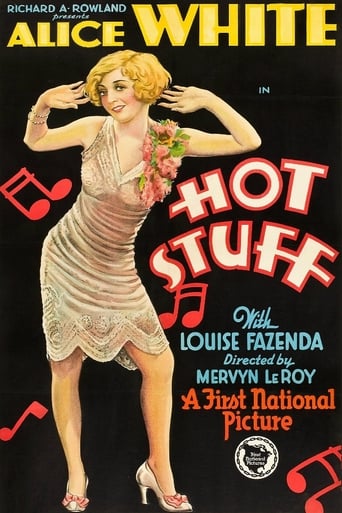
An uptight society aunt sends her too sexy niece to college so she can land a man.
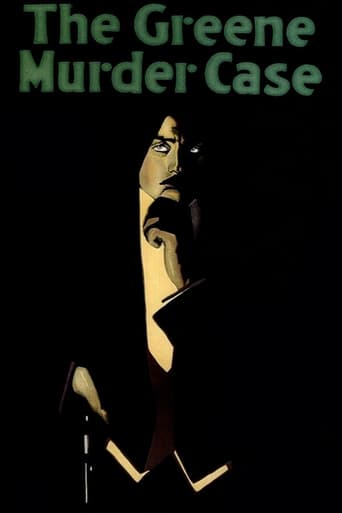
Philo Vance investigates when a murderer preys upon members of a wealthy family on New York's Upper East Side.

During the Florida land boom, the Marx Brothers run a hotel, auction off some land and thwart a jewel robbery.
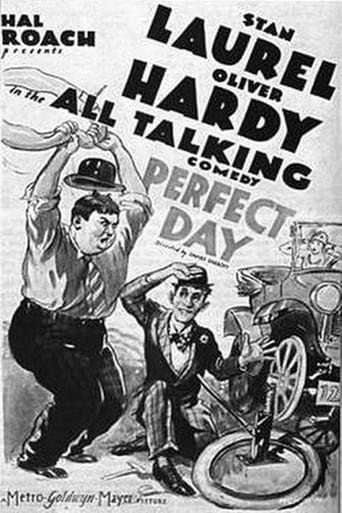
Two families embark on a pleasant Sunday picnic but manage to run into a variety of issues with their temperamental automobile. Each incident requires repeated exits and reboardings by Laurel, Hardy, their wives and grouchy, gout-ridden Uncle Edgar.
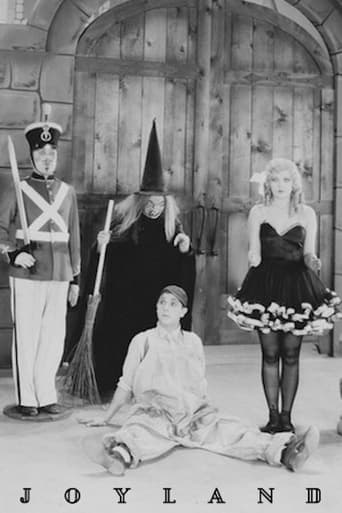
At a toy hospital, an apprentice deals with a trouble-making boy and his clueless mother. After they leave, he is forced to work late, falls asleep and dreams of a castle where the toys in the shop come to life.
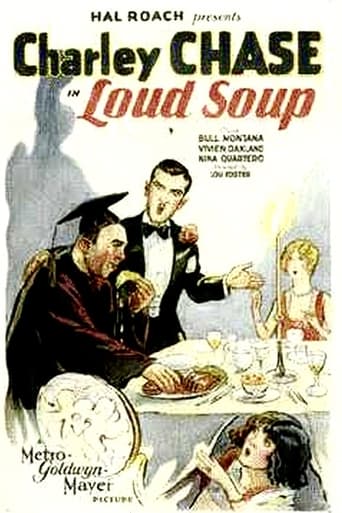
Loud Soup is a comedy short
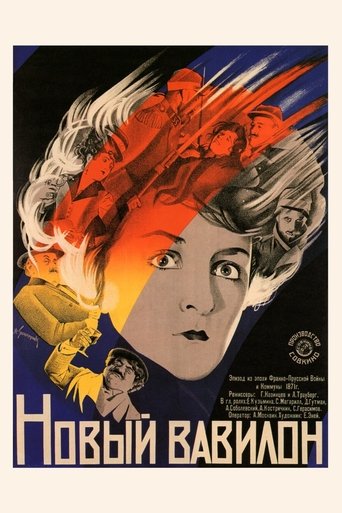
In the short-lived Commune of Paris, a conscripted soldier falls in love with a Communard saleswoman. As the army cracks down on the revolutionaries, the soldier is forced to fight against the Commune, and the pair's love is put to the test.
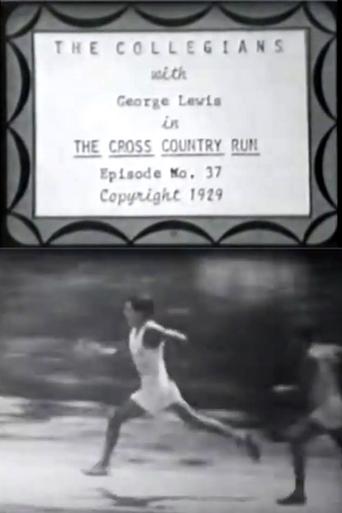
Episode 37 of "The Collegians" Series of the 46 short films
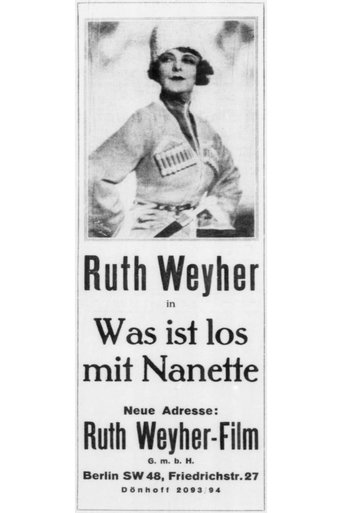
In her only self-produced film, Ruth Weyher plays the wife of a bankrupt night editor who secretly performs as a vaudeville dancer to alleviate his financial woes. Her stuffy husband, however, believes she inherited money from a wealthy aunt. When the supposedly dead aunt suddenly appears on the doorstep, a turbulent game of hide-and-seek ensues...
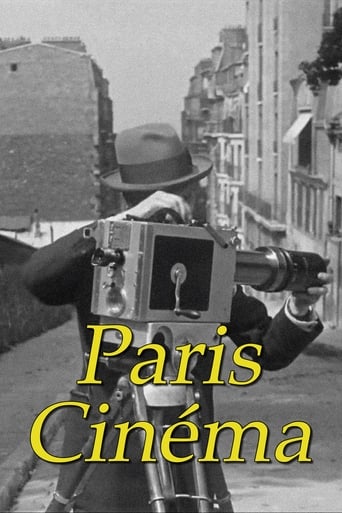
The first behind-the-scenes documentary in the film industry, from the making of a camera (Debrie) to studio shooting and directing, including animation techniques. Pierre Chenal meets André Rigal who executes, in his workshop, a series of freehand drawings. These sketches are then ground in a coffee grinder, from which a cartoon on film emerges. In Champigny, Alain Saint-Ogan and his host are working on Zig et Puce and developing Alfred the penguin's first steps. In Fontenay-sous-Bois, Ladislas Starewitch presents his future stars. Pierre Chenal described his film as follows: “I had designed to shoot a documentary in which I would show how a film is made in order, at the same time, to learn it myself. "
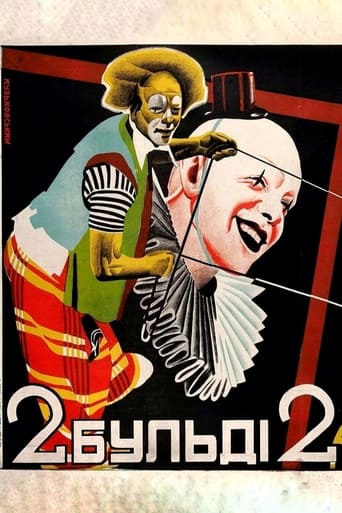
Naturally, the circus milieu of 2 Buldy 2 (1929) encourages stunts. A father and son, both clowns, are to perform together for the first time, but the civil war separates them, and the elder Buldy, tempted for a moment to acquiesce to the White forces, casts his lot with the revolution. At the climax Buldy Jr. escapes the Whites thanks to flashy trampoline and trapeze acrobatics; the gaping enemy soldiers forget to shoot.
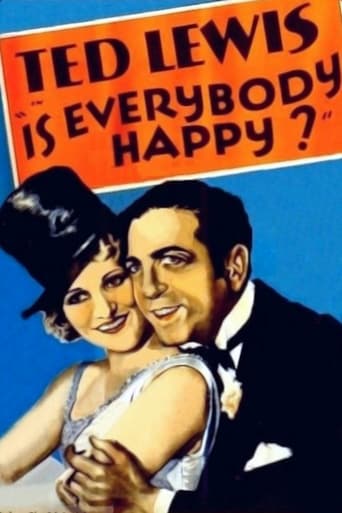
It is the story of Ted Lewis, popular band leader and clarinettist. The music for the film was written by Harry Akst and Grant Clarke, except for "St. Louis Blues" by W. C. Handy and "Tiger Rag". The film's title comes from Lewis's catchphrase "Is everybody happy?" The film's soundtrack exists on Vitaphone discs preserved at the UCLA Film and Television Archive, but the film itself is considered a lost film, according to the Vitaphone Project website. A five minute clip from the film can be found on YouTube.

A young Chinese woman, working in the kitchen at a London dance club, is given the chance to become the club's main act.
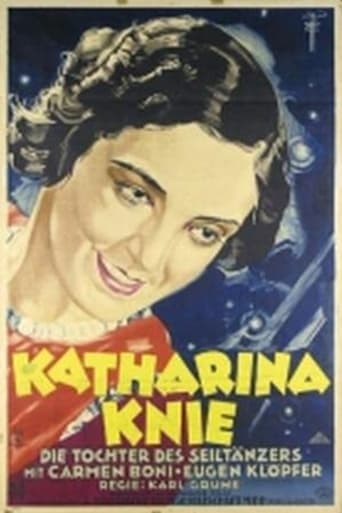
"Katharina Knie" is a 1929 German silent drama film directed by Karl Grune and starring Eugen Klöpfer, Carmen Boni and Adele Sandrock. It is based on the 1928 play of the same title by Carl Zuckmayer.

Japanese silent film from 1929.
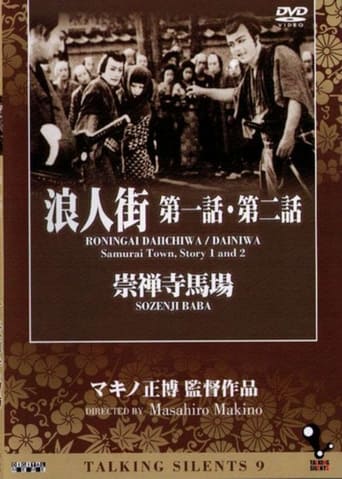
A representative film directed by Masahiro Makino, son of Shozo Makino ("the father of Japanese film"). This film lent status to ensemble casts that did not rely on famous stars. The unique setting of the samurai town, exquisite camera work and fast-paced sword fighting scenes all have an original appeal that audiences can related to even today.

