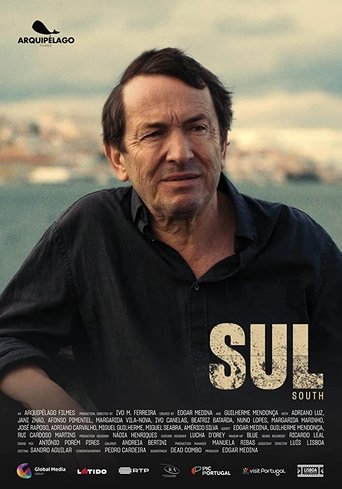
South 2019
The series develops around cases of homicides that occurred during the summer, at the time of the economic and social crisis that affected Portugal.
The series develops around cases of homicides that occurred during the summer, at the time of the economic and social crisis that affected Portugal.
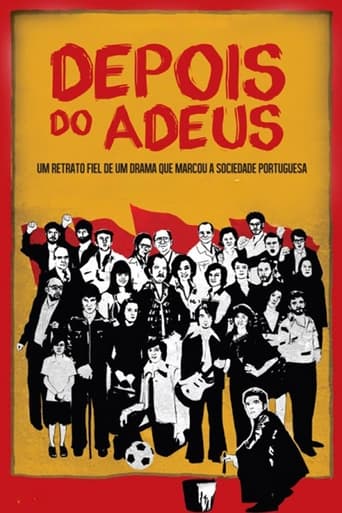
Álvaro and Maria do Carmo lived happily in Angola. He was a successful businessman and she was a mild mannered housewife. They have two children together, Ana and João, who were studying and living their teenage years in Luanda... Until the day the civil war broke out and everything fell apart. Amidst declarations of independence, a wave of violence breaks out and the established peace and order fades away. In July, 1975, the Mendonça family, along with over five hundred thousand people, leave their belongings behind and embark on an air convoy that would become the biggest exodus in the history of the Portuguese people to a homeland that most only knew from photos and dubbed it Metropolis. In Lisbon, Joaquim and Natália, Álvaro’s brother-in-law and sister, take the Mendonça family in their small apartment, where they will try to get their lives back in order. However, over that hot summer of 1975, the integration seemed to be far from easy.

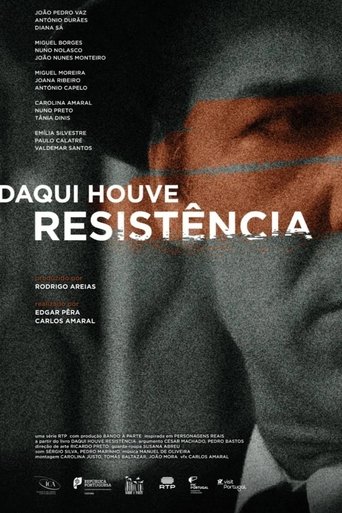
Adaptation of Miguel Torga's iconic short stories. An intimate look at a rural community in the 1940s. Each chapter has its own protagonist, whose existence is untouched by modernity or the outside world. Five portraits of humble lives with enormous resistance to suffering - and a capacity for violence that, at times, proves impossible to repress.
After the passing of his wife, Camilo, an elderly man, goes to his son and daughter-in-law's house and starts living with them, to their great misfortune.
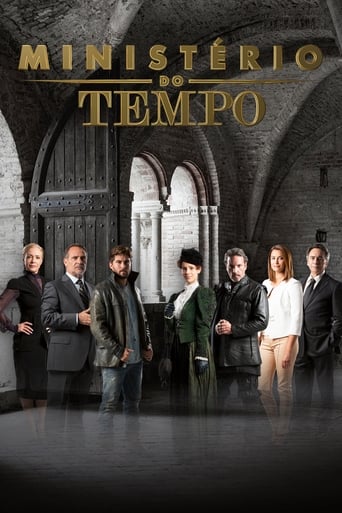
A warrior from the XVI century, the first female university student from the XIX century and a nurse from the XXI century, join a secret agency to prevent people to change the Portuguese history by using time-traveling doors
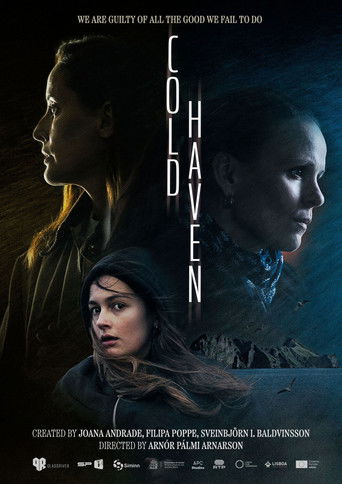
Maria is a Portuguese woman who emigrates to Vestmannaeyjar, a small and remote island in Iceland, in search of a better life for herself and her teenage daughter, Bela. Away from a past marked by domestic violence and deep secrets, she looks for freedom and a place to be herself. Six months after her arrival, Maria is found lifeless. Her violent death shocks the isolated community and exposes the secrets everyone is keeping. The investigation is placed in the hands of Soffía an Icelandic detective who, as she immerses in the investigation, faces her own crossroads, trying to balance professional duty and the ghosts of her past.

Filha da Lei, a criminal series on a Chief Inspector, Isabel Garcia, and the investigation of the most important police case in Portugal in the last 20 years. Garcia is faced with the greatest challenge of her career when she is assigned to lead the Investigation of the violent serial murders that devastate the city. Samuel Lopes, Trainee Inspector with a degree in Criminal Psychology, joins the Garcia Brigade where he will have to earn his place and the respect of the most experienced inspectors. The interaction with the Trainee Inspector helps Garcia to better understand his daughter Sara, a 16-year-old teenager who was married to the implacable journalist Jaime.
Filipe, a municipal architect known for his idealism and commitment to environmental causes, is the only person who can stop the construction of a luxury real estate development in a protected area. Maria Rodrigues, a young prosecutor, is pursuing a lead in a high-level financial corruption case. At the same time, the reopening of a closed case, in which she was the victim, forces her to confront the deep and painful trauma of a night that took place 15 years before. As she takes the investigation into her own hands, she struggles with the hazy memories of the rape and hit-and-run. Filipe is one of the main suspects, but was it really him?
A story developed in two different narratives which are interlinked. On the first one, the two friends Bruno Nogueira and Gonçalo Waddington (playing themselves) set out on a caravan trip through Portugal with the desire to escape from their daily lives and find a solution for their personal struggles. On the second one, there's the fictionalized making-off of the miniseries itself.

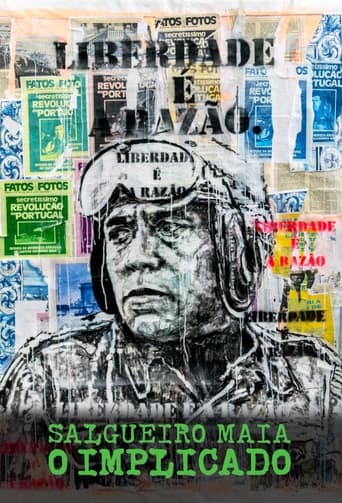
On April 25, 1974, a man walked alone in Largo do Carmo. He knocked on the GNR military barracks door and entered, unarmed and without any escorts. Inside, the Government’s chief, Marcelo Caetano, waited, surrounded by the military and the people. The man who stared at him that afternoon and demanded surrender, guaranteeing his safety, had just led Santarém’s Artillery 1 regiment in taking the capital. Without firing a single shot, he managed to overthrow a regime that was over 48 years old. That was the last step to take and he took it, without hesitation, becoming the unavoidable figure of the day that marked the beginning of democracy in Portugal.


Series about one of the most iconic Portuguese bands, DOCE. Doce were one of the first "girls band" in Europe, opening the way not only in the musical world, but also breaking barriers and prejudices in traditional Portuguese society. The series is based on real events, following the band's entire journey from its appearance in 1979, until the end of the initial formation. Doce has outlasted all critics and left its mark on a generation and a country.


A story about doomed love between two people from different worlds and the impact in their lives. Based on the novel of the same name by Portuguese writer Camilo Castelo Branco.
