Clove

Clove 1977

1

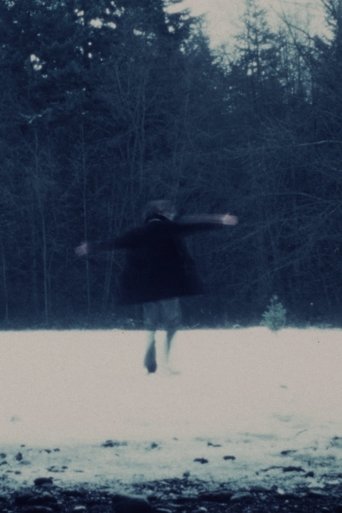
“A nine-year-old boy is seen in a dark and sometimes sinister setting with an older boy, perhaps a brother, and a young woman who could be the mother. Bare light directed frontally on the nude bodies like a flash bulb adds a stark directness to the expressionism. In a climactic scene the nude boy lies at the feet of the woman, her swirling red satin dress caressing him in re-photographed dream motion”
1977

About Media

About Media 1977

1

Ramos' astute deconstruction of television news focuses on the media coverage of President Jimmy Carter's 1977 declaration of amnesty for Vietnam War draft resisters, and his personal involvement with the issue. Ramos, who had served an eighteen-month prison sentence for draft resistence, was interviewed by New York news reporter Gabe Pressman. Using repetition and juxtaposition, he contrasts the unedited interview footage — and patronizing comments of the news crew — with Pressman's final televised news report. In his ironic manipulation of the material, Ramos exposes the illusion and artifice of television news.

1977

Game of the Week

Game of the Week 1977

1

T.R. Uthco artist Doug Hall drew on members of Ant Farm and Optic Nerve to create Game of the Week, a striking document of his residency with the San Francisco Giants. Interspersing footage of himself and team members like Willie McCovey with an actual televised game, Hall was able to fabricate his own field of dreams. The seminal Media Burn combined the creative resources of Ant Farm, along with Optic Nerve, The Residents, T.R. Uthco, and others. During this momentous performance, Ant Farm drove a customized Cadillac through a wall of burning TV sets to create a remarkable image of media cataclysm.

1977

Just After Christmas

Just After Christmas 1977

1

"A sculptural and quasi-performance piece involving discarded Christmas trees. A meditation on passing and the things-left-behind." –RM

1977

Re Dis Appearing

Re Dis Appearing 1977

1

The artist speaks a word, which is quickly echoed in French, so that the words are only barely comprehended. Simple images — a bowl, a photograph of the ocean — appear and disappear.

1977

Ganamos la paz

Ganamos la paz 1977

1

Propaganda documentary in which the Armed Forces try to justify the Argentinian military coup d'état of 1976.

1977

Time 1

Time 1 1977

1

A recording of a clock ticking for 7 minutes.

1977

The Blow Job

The Blow Job 1977

1.00

An animated short about the titular event.

1977

Globes

Globes 1977

1

Cultural and perceptual contrasts are evoked in this non-linear mythic episode in which a hammer, a paintbrush, a bucket, a pile of clothes, a window full of globes and a couple are manipulated via the filmmaker/demi-urge.

1977

Homesick for Rügen or Yesterday, I Was a Cook

Homesick for Rügen or Yesterday, I Was a Cook 1977

1

Sometimes Hannelore wishes she were a Hans, because “when a woman has to deal with a lot of men, she has to summon up a lot of strength to be heard”. The mayor of the island of Ummanz off Rügen used to be a cook. Now she represents the government and demonstrates “socialist democracy in action”. Director Róza Berger-Fiedler weaves Madam Mayor’s encounters with her constituency and discussions about the office with all its responsibilities into a sensitive portrait of a dedicated person.

1977

We are Alone in his Coffin

We are Alone in his Coffin 1977

1

On est tout seul dans son cercueil is a fake satirical documentary in which Philippe Simon expresses his deep disgust for the film production system, mercantile and inept.

1977

The Maturing Woman

The Maturing Woman 1977

1

A useful primer for managing the aging women in your life.

1977

Painting covers, art uncovers

Painting covers, art uncovers 1977

1

In this experimental video project, originally broadcast on the ZDF television art program "Aspekte," artist Richard Kriesche appears on a TV monitor and delivers an artist statement about the invisible wall between artist and spectator in the televisual medium. Kriesche then paints over a glass canvas, the very invisible wall, between himself and the camera, just as he reappears in front of the TV monitor and delivers the same artist statement. After this, Kriesche paints over the glass of the TV monitor with blue paint, acting as a chrome key effect that slowly uncovers the original image of Kriesche on the monitor, now seeming to drip as the blue paint spills over and Kriesche delivers his statement a third and final time.

1977