ABC 2000 Today

ABC 2000 Today 1970

1

ABC 2000 Today is ABC News's coverage of New Year's Eves around the world. Part of the 2000 Today programming in the United States, Peter Jennings anchored the 23 hours and 10 minutes of broadcast in Times Square Studios in Manhattan, New York. ABC temporarily converted the Good Morning America marquee broadcast studio into a type of "millennium command center" that included a desk, where a standing Jennings spent most of his time, two lounge chairs, where Jennings would interview guests, a large screen with a time-zone included map of the world, a wall of clocks, and a makeshift newsroom where ABC News staffers would follow the latest developments.
1970

Penny to a Million

Penny to a Million 1970

1

Penny to a Million was a primetime American television game show that aired on ABC from May 4 to October 19, 1955 on Wednesday nights, for alternate sponsors Brown & Williamson's Raleigh cigarettes, and W.A. Sheaffer Pen Company. The pilot was hosted by Bud Collyer, but he was replaced by Bill Goodwin when it became a series.

1970

The Mad, Mad, Mad Comedians

The Mad, Mad, Mad Comedians 1970

1

The Mad, Mad, Mad Comedians is an animated half-hour ABC television special produced by Rankin/Bass Animation, best known for their stop-motion Christmas special Rudolph the Red-Nosed Reindeer. The show aired on April 7, 1970 before the airing of that year's Oscars. It was a tribute to early vaudeville, and featured animated reworkings of various famous comedians' acts.

1970

ABC Barn Dance

ABC Barn Dance 1949

1

ABC Barn Dance is an early country and Western music show on American television, a spin-off of the popular radio program National Barn Dance. It also included some folk music. The show aired on Monday nights from February 21–November 14, 1949 on ABC-TV. Originally broadcast from 8:30–9 p.m. Eastern Time, it was moved to 9 p.m. and then to 9:30 p.m. Filmed at the Eighth Street Theater in Chicago, Illinois, the weekly variety show was hosted by Hal O'Halloran and Jack Stillwell. Several of the radio program's performers appeared, including the Sage Riders, Lulu Belle and Scotty, Cousin Tifford, Bob Atcher, the DeZurik Sisters and Holly Swanson.

1949

Warner Bros. Presents

Warner Bros. Presents 1970

1

Warner Bros. Presents is the umbrella title for three series telecast as part of the 1955-56 season on ABC: Cheyenne, a new Western series that originated on Presents, and two based on classic Warner Bros. films, Casablanca and Kings Row. While neither a critical or popular success, this wheel series is an historically important program. Perhaps most significantly, it is the first television program of any kind made by Warner Brothers. It was also the original home of Cheyenne, the first hour-long television Western series and the first wholly original television series produced by a major Hollywood studio. It also allowed ABC, then a junior player in American television, to secure its first advertising contracts with commercial giants General Electric and tobacco company Liggett & Myers.

1970

The Ruggles

The Ruggles 1970

1

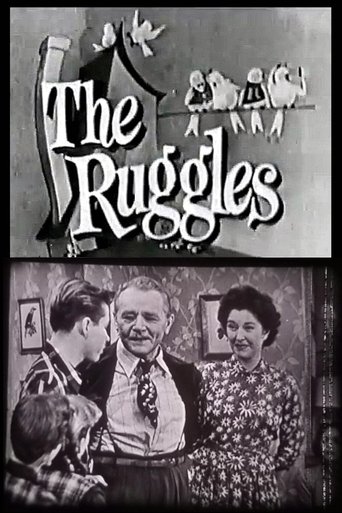
The Ruggles is an early American family-oriented situation comedy series broadcast live on ABC. A few episodes were recorded on kinescope. The series began November 3, 1949 - a month after the radio hit The Life of Riley had moved to television on NBC - and ended on June 19, 1952. The Ruggles was also one of the first shows to originate from Hollywood rather than New York City, where most radio programs had been produced.

1970

AM America

AM America 1970

1

AM America is a morning news program produced by ABC in an attempt to compete with the highly rated Today on NBC. The show never found an audience after its premiere on January 6, 1975. Lasting just under ten months, its final installment aired on October 31. The program's concept was based on Ralph Story's AM, the local morning show on the network's owned-and-operated Los Angeles station KABC-TV. Like Today, AM America employed two hosts and a news anchor. ABC chose Bill Beutel, who was co-anchor of Eyewitness News on the network's New York City flagship station WABC-TV, and Stephanie Edwards from Ralph Story's AM to host the program. Peter Jennings, who at the time was ABC's Washington correspondent, provided the news reports. One notable episode of AM America aired on April 25, 1975, when members of the British comedy troupe Monty Python made one of their earliest appearances on American television. Edwards quit the show by the end of May, and Beutel followed her out a few months later. On November 3, the Monday following its final broadcast, AM America was replaced by Good Morning America.

1970

The Music Man

The Music Man 1970

3.00

The Music Man is a 2003 American television film directed by Jeff Bleckner and starring Matthew Broderick and Kristin Chenoweth. The television production, which was broadcast by ABC on the February 16, 2003 edition of The Wonderful World of Disney, is based on the book of the 1957 stage musical by Meredith Willson, which was based on a story by Willson and Franklin Lacey. The musical was adapted for television by Sally Robinson. The three-hour presentation was watched by 13.1 million viewers, with a 3.8 rating/9 share in adults aged 18–49. It finished second in the first two hours and fourth in the final hour.

1970

Encounter

Encounter 1970

1

Encounter is a five-week anthology television series aired from Toronto, Canada, and carried by both CBC Television and ABC from October 5 to November 2, 1958. The one-hour dramas were either romance, adventure, or mystery stories. Patrick Macnee and Barry Morse were among those who appeared on Encounter.. In the United States, Encounter followed the western series Colt .45. The program faced competition on CBS from The Alfred Hitchcock Show and The $64,000 Question. NBC at the time aired part of The Dinah Shore Chevy Show. It is not known what program succeeded Encounter in the 9:30 Eastern time slot beginning on Sunday, November 9, 1958. The following season The Alaskans, an adventure program set in Alaska and starring Roger Moore, Dorothy Provine, and Jeff York, aired on ABC in that time period. Encounter is not the shortest-running series on an American television network. In the fall of 1966, The Tammy Grimes Show, a situation comedy starring Tammy Grimes, ran only four episodes on ABC before it was cancelled.100 Grand, an ABC quiz show, lasted for only three episodes after its debut in the fall of 1963 on the Sunday evening schedule. A program called Turn-On, promoted as a sophisticated answer to NBC's Laugh In, was cancelled on the air during its first and only episode.

1970

The Children's Doctor

The Children's Doctor 1970

1

The Children's Doctor is an American daytime medical and parental advice program that ran on ABC for 3 years, from April 1967 to August 1969.

1970

My Kind of Town

My Kind of Town 1970

1

My Kind of Town is an American television game show that premiered on August 14, 2005 on ABC. Part variety show, part game show, the series brings 200 people from a small town in the United States to New York City to compete for prizes and participate in games and assorted gags. At the end of the show, one of the 200 who was preselected prior to the show competes in a game called "Name Your Neighbors" where, if the person is successful in identifying the names of six people featured in the program, the entire audience wins a prize. The show is hosted by English television and radio presenter Johnny Vaughan. The show's executive producer is Michael Davies, who is also the producer of the American version of Who Wants to Be a Millionaire. Despite a lead-in of reruns from ABC's popular Extreme Makeover: Home Edition and a lead-out of reruns from the also-popular Desperate Housewives, the show's ratings were dismal, with the premiere episode receiving just a 2.9 rating among 18-49 viewers, with about 11.4 million viewers. By the third episode, the show received a 2.1 rating, with about 5.1 million viewers. The show has received very little in-network advertising. Only four of seven episodes had aired when ABC canceled the show.

1970

The Big Showdown

The Big Showdown 1970

1

The Big Showdown is an American game show that aired on the ABC television network from December 23, 1974 to July 4, 1975. Jim Peck hosted the program and Dan Daniel served as announcer. One pilot was taped in 1974, simply titled Showdown. The series was recorded at ABC's New York studios and packaged by Don Lipp and Ron Greenberg, with assistance by MCA Television.

1970

Celanese Theatre

Celanese Theatre 1970

1

Celanese Theatre is an anthology television series which aired from October 3, 1951 to June 25, 1952 on ABC. The show aired as a 60-minute program on Wednesdays at 10pm ET. Beginning on January 9, 1952, the show aired in a 30-minute version which ran from 10pm to 10:30pm ET. The series was produced by the Celanese Corporation and the William Morris Agency, and featured plays by Maxwell Anderson, Philip Barry, Rachel Crothers, Eugene O'Neill, S. N. Behrman, Elmer Rice, John Van Druten, Sidney Howard, Paul Osborn, and Robert E. Sherwood. The show alternated with Pulitzer Prize Playhouse. For a short period beginning in October, Celanese Theatre alternated with a short-lived program King's Crossroads.

1970

Stop the Music

Stop the Music 1970

1

Stop the Music was a prime time television game show that aired for an hour on Thursday evenings on ABC from May 5, 1949 to April 24, 1952, and again for a half-hour from September 7, 1954 to June 14, 1956. The show had also been broadcast on radio from 1948 to 1949. The radio show was responsible for taking "The Fred Allen Show" off the air, as the shows were broadcast opposite each other in 1949. The hosts were Bert Parks and Dennis James. Similar to the later Name That Tune on NBC and then CBS, Stop the Music had players identify songs. After a song was played, a home viewer would be called and could win a prize by correctly naming the song. A correct guess won a prize and a chance to identify a short clip from the Mystery Melody for more prizes. If the viewer missed the first song, the viewer received a gift from the sponsor and members of the audience would be asked to identify the song. Among the vocalists and stars who appeared on Stop the Music were Jaye P. Morgan, Jimmy Blaine, June Valli, Broadway dancer Wayne Lamb, Estelle Loring, and Ann Sheridan. The program aired at 9 pm ET on Thursdays for all five seasons except for the 1954-1955 year, when it was broadcast at 10:30 pm ET on Tuesdays. Its competition in the 1951-1952 year was The George Burns and Gracie Allen Show and Amos 'n' Andy, both on CBS. In its last season from 1955 to 1956, it was aired opposite Jackie Cooper's The People's Choice on NBC.

1970

Scooby's Mystery Funhouse

Scooby's Mystery Funhouse 1970

1

Scooby's Mystery Funhouse was a 30-minute Saturday morning animated package program combining reruns of Scooby-Doo and Scrappy-Doo episodes from the following shows: ⁕The Richie Rich/Scooby-Doo Show ⁕The Scooby & Scrappy-Doo/Puppy Hour ⁕The New Scooby and Scrappy-Doo Show ⁕The New Scooby-Doo Mysteries The show was produced by Hanna-Barbera Productions. Scooby's Mystery Funhouse aired from September 7, 1985 to January 25, 1986 on ABC. A total of 63 episodes were rebroadcast in 21 half-hour formats.

1970

Bowling Headliners

Bowling Headliners 1970

1

Bowling Headliners was television's first regularly scheduled bowling show. Bowling Headliners aired on ABC from 1948-1949 and the DuMont Television Network from November 13, 1949 to April 9, 1950. The series aired from Rego Park Lanes in Queens, New York. The original commentators were Jimmy Powers and Al Cirillo. When the show moved to DuMont, Joe Hasel took over as host. The show was featured on the cover of the October 29, 1949 TV Guide when the magazine was still a local publication from New York City.

1970