
How They Rob Men in Chicago 1900
A burlesque on the work of highwaymen in Chicago. An elderly gentleman is sandbagged and robbed by a thug, who inadvertently leaves some money on the victim's prostrate body. A policeman shows up.
A burlesque on the work of highwaymen in Chicago. An elderly gentleman is sandbagged and robbed by a thug, who inadvertently leaves some money on the victim's prostrate body. A policeman shows up.
Although we are led to believe that the ancient alchemists were all powerful, this picture somewhat reverses the order of things...
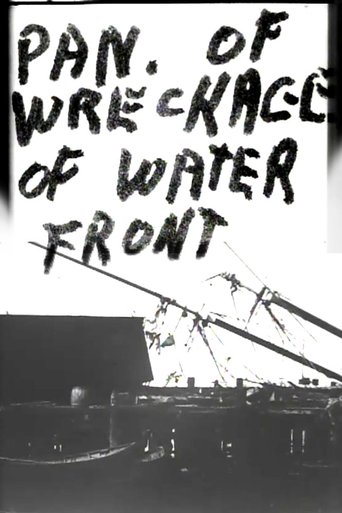
This picture shows the remains of one of the docks, several freight cars being piled one upon the other, while the most interesting part of the picture shows two schooners literally smashed one into the other, forming a most picturesque mass of wreckage.
During the terrific storm all of the light craft along the dock front was lifted out of the water and washed up into the streets, many of them being carried for miles inland. This subject shows a number of boatmen who have banded together to get their craft back into the water, a panoramic view being taken of the schooner as she glided sideways down the improvised ways, forming a very interesting subject. 60 feet. $9.00.
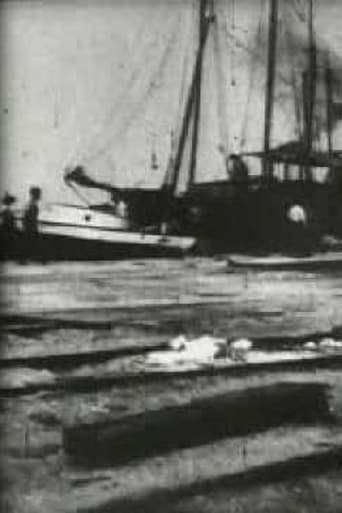
At the first news of the disast by cyclone and tidal wave that devastated Galveston on Saturday, September 8th, 1900, we equipped a party of photographers and sent them by special train to the scene of the ruins. Arriving at the scene of desolation shortly after the storm had swept over the city, our party succeeded, at the risk of life and limb, in taking about a thousand feet of motion pictures, although Galveston was under martial law and photographers were shot down at sight by the excited police. The series, taken as a whole, gives a definite idea of the most terrible disaster since the Johnstown flood of 1889.
It's what it says on the label: a panoramic shot of East Galveston, right after the Storm of the Century came through, ripping up trees and destroying house like they were made of cards. Then, a decade and a half later came another Storm of the Century for Galveston.
This picture shows several buildings which were wrecked and also shows a rear view of this hotel, which is on the highest point of land in Galveston, and in which several thousand people were saved.
This building and machinery supplied the electric power and electric light for the entire city of Galveston, including the car system. The building, which is of solid masonry, is a complete wreck, and together with the twisted iron work of the machinery, shows the tremendous power of the cyclone.
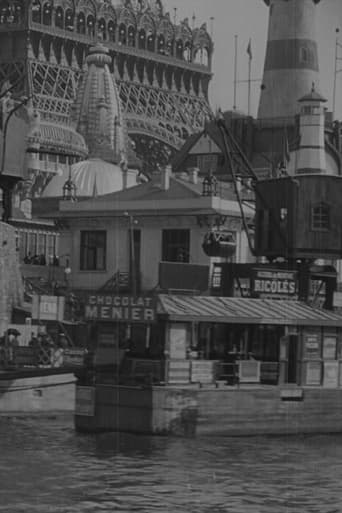
An actuality film of the 1900 Paris Exhibition, shot from a boat travelling down the Seine.
This picture, taken from Thorneycroft's Yard, shows the two boats about twelve lenghts apart - a state of things owing to terrible weather in which the race was rowed. It is a very comprehensive view of the contest and a good photograph despite the very trying conditions under which it was produced.
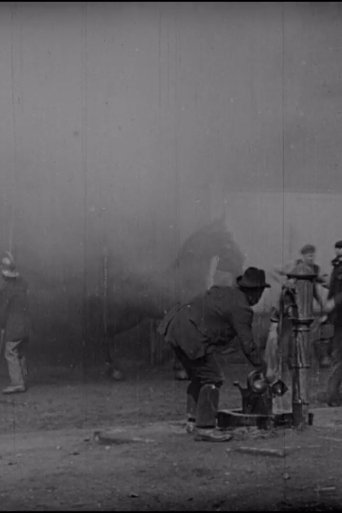
A dramatic scene - and exactly what moving pictures were invented for. With a fixed camera and without a traditional narrative, this film nevertheless tells a compelling story as a cast of men and boys fight an impending crisis. It's not known whether this fire was real or staged, but the tension is palpable as horse after horse emerges from the smoking barn. There's even comedy in the foreground as one man loiters at the pump a little too long, sloshing bucketloads of water on to the ground. (BFI.org.uk)
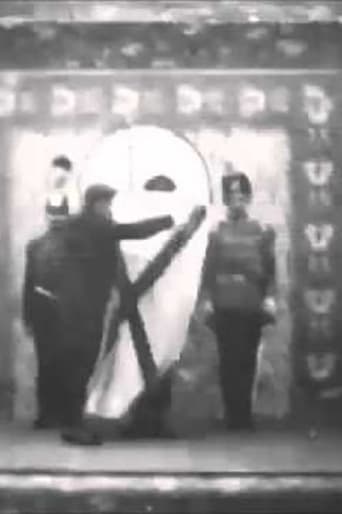
A magician steps upon the stage carrying a hoop covered with white paper. Then in quick succession the flags of Germany, Russia, Ireland, England and China are brought forth, and from each a soldier is produced corresponding with the flag of each nation. The magician adds a bit of comedy to the scene by producing a decidedly Hibernian policeman from the flag of Erin's Isle. The magician then waves his hand and the flags of all nations slowly dissolve and blend into one huge American flag.
Trick film. A stage magician transforms a woman into a butterfly and himself into a giant bat. This film is considered lost.
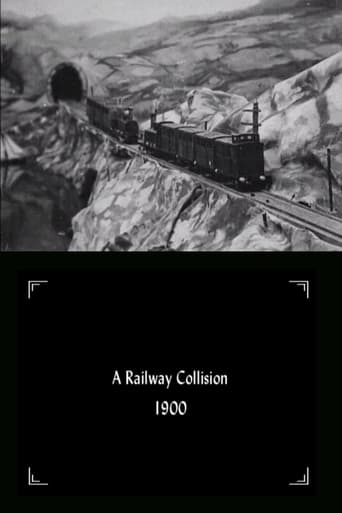
The scene is a railroad track on the side of a steep mountain, with a tunnel in the background, toward which a train is running at a high rate of speed. At this instant the audience is appalled at the sight of a second train rushing out of the tunnel. Both trains are on the same track and traveling toward each other at a high rate of speed. They collide. Cars and engines are smashed into fragments and thrown down the steep incline. (Edison Catalog)
The titles tell us this film is based on an incident in the Boxer Rebellion. A man tries to defend a woman and a large house against Chinese attackers. They attack with swords, guns, and paddles. He's over-matched. What will become of the mission, its defenders, and its occupants?
Directed by Robert W. Paul.
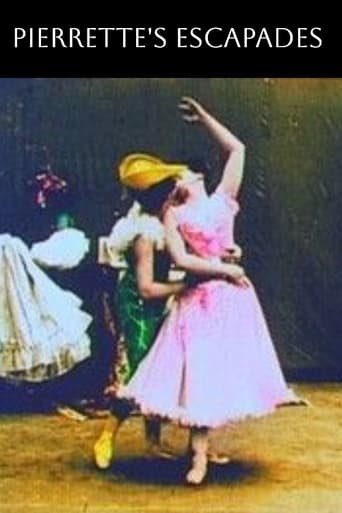
"Les Fredaines de Pierrette" is the collective name of four short films of 20 meters each ("Arrivée de Pierrette et de Pierrot", "Arrivée d'Arlequin", "Suite de la danse", and "Départ d'Arlequin et de Pierrette"), attributed to Alice Guy (although not confirmed in any primary source), in which Columbine resists Pierrette's courting in favor of Harlequin. From July 1901, the series were made available hand-colored.
Directed by Robert W. Paul.
Butterfly dance.
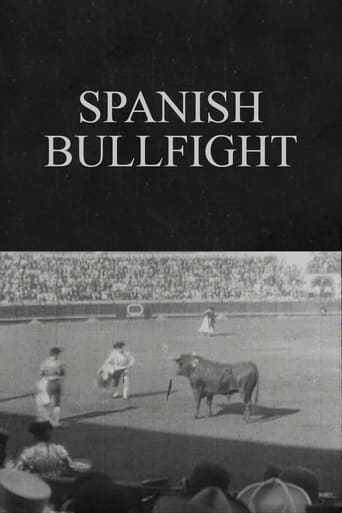
With a crowded arena in the background, a stationary camera records a bull charging a picador astride his horse. An attendant on foot throws stones at the rump of the horse to get it to move. Various toreadors run past the bull to try to get him to charge or at least run about.
