
The funeral procession accompanying the body of King Umberto 1900
Vittorio Calcina was the official filmographer for the House of Savoy, and as his final act of patronage to King Umberto, his funeral procession was filmed and released.
Vittorio Calcina was the official filmographer for the House of Savoy, and as his final act of patronage to King Umberto, his funeral procession was filmed and released.

"The Bath" is a flip book remake of After the Ball (Après le Bal) made in the late 1800s.
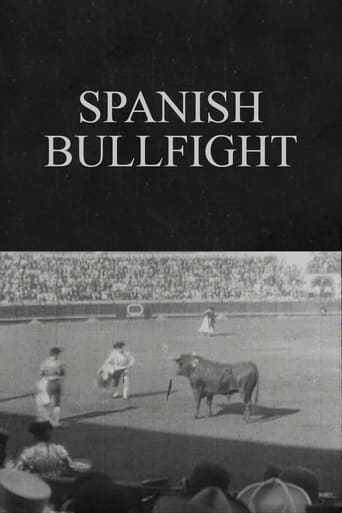
With a crowded arena in the background, a stationary camera records a bull charging a picador astride his horse. An attendant on foot throws stones at the rump of the horse to get it to move. Various toreadors run past the bull to try to get him to charge or at least run about.
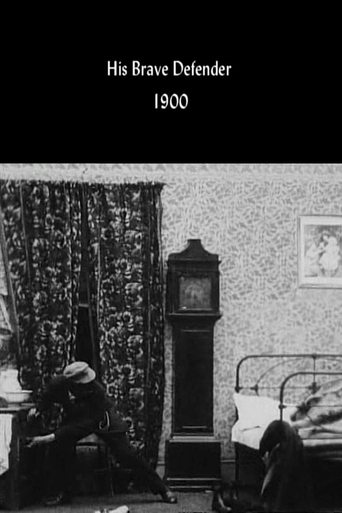

Two cooks fight, one pushing the other into a barrel and pouring a saucepan of liquid over his head. 10 second fragment available in flipbook format, otherwise lost.
Solser en Hesse was a short Dutch silent film featuring the comedians Lion Solser and Piet Hesse. the film was first distributed in the Netherlands by 'Edison's Ideal' in 1900, and second film starring the two men and under the same name was released in 1906 by 'The Royal Bioscope'. Both films are lost.
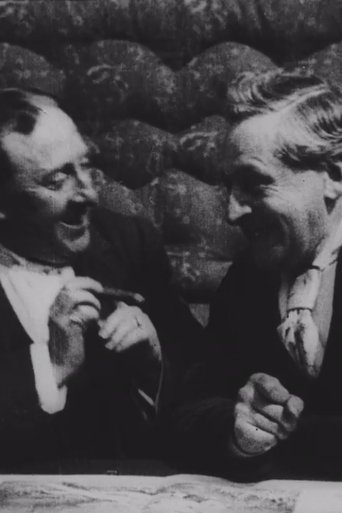
A conversation between two gents perks up when the see a picture in a magazine. A 'facial' comedy by GA Smith.
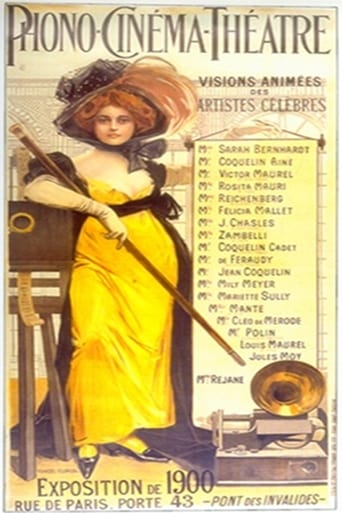
The Phono-Cinéma-Théâtre was a special pavilion at the 1900 Paris World's Fair which featured filmed performances presented with sound via wax cylinder recordings. Many of these short films were also presented in hand-tinted color. The performances ranged from theatre (Coquelin the eldest, Gabrielle Réjane, Sarah Bernhardt, Félicia Mallet), opera & operetta (Mariette Sully, Emile Cossira, Jeanne Hatto, Mily-Meyer, Désiré Pougaud), to café concert & music hall variety (Footit et Chocolat, Mason and Forbes, Little Tich, Brunin, Polin, Jules Moy) and dance (Blanche and Louise Mante from the Paris Opera, Carlotta Zambelli, Michel Vasquez, Rosita Mauri, Jeanne Chasles, Achille Viscusi, Christine Kerf, Cléo de Mérode).
“A marvelously clear picture taken from the top of the elevator of the Eiffel Tower during going up and coming down of the car. This wonderful tower is 1,000 feet in height, and the picture produces a most sensational effect. As the camera leaves the ground and rises to the top of the tower, the enormous white city opens out to the view of the astonished spectator. Arriving at the top of the tower, a bird's eye view of the Exposition looking toward the Trocadero, and also toward the Palace of Electricity, is made, and the camera begins its descent. The entire trip is shown on a 200-foot film. 30.00. We furnish the ascent in 125 foot film.” (Edison film catalog)
White’s camera offers several 360-degree pans of views of the fairground, then amazes by tilting up and down the Eiffel Tower, and concludes with a stunning tracking shot to the highest point above Paris. Exhibitors freely grouped films into nascent narratives such as those displayed here. - Bruce Posner
Sailors row a whaling boat in a medium-tight shot.
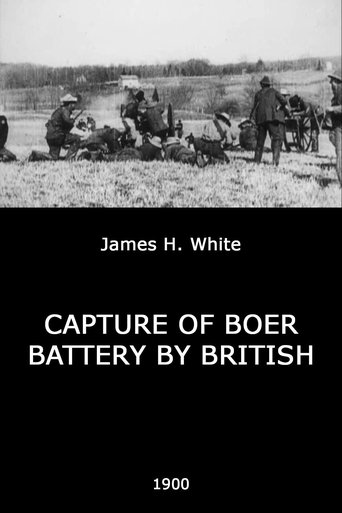
Naval ratings pulling along naval guns during the Boer War.
Madame Ondine performs a serpentine dance surrounded by big cats.
Panorama of the Swiss city.
This is the building in which so many of the poor orphans met their death. The place is completely dismantled. In addition to the orphanage is shown one of the principal streets in Galveston blocked with overturned houses and other materials.
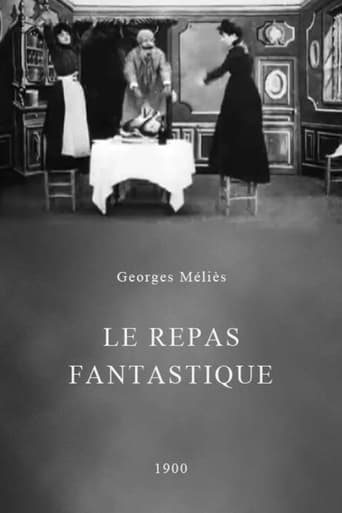
A family sits down to enjoy a meal that ends up being fraught with complications.
Overview of the Alexandre III bridge during the World Exhibition in Paris.
A combination of the picture entitled "The Ballet of the Ghosts," and a surf scene; the resulting effect being that the ghostly figures rise up out of the surf and come to the shore, cast their draperies aside and dance a few steps of the ballet, after which they again take up their draperies, and having covered themselves, retreat into the waves.
Recording of the dance Mesdemoiselles Lally and Juliette from the Olympia.
