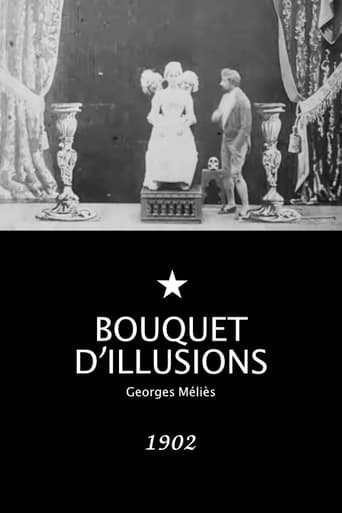
The Triple Headed Lady 1901
A conjuror appears to demonstrate a lady with three heads.
A conjuror appears to demonstrate a lady with three heads.
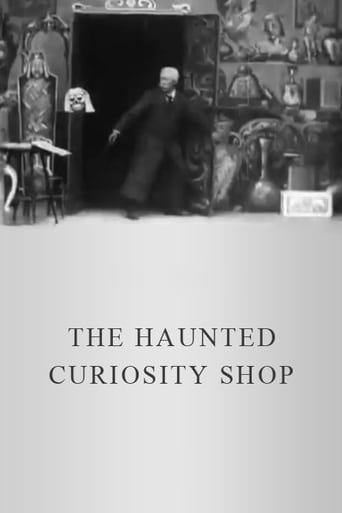
An old proprietor is startled and haunted by the strange happenings inside his curiosity shop.
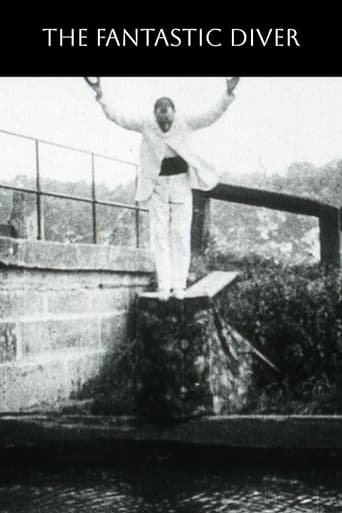
A diver jumps into a body of water-- and then comes right back out! This film should not be confused with Ferdinand Zecca's own remake of the same name (Plongeur fantastique, 1905).

As the above title indicates, the scene does not take place in an ordinary restaurant, but one in which all natural rules of order and gravitation are reversed. The couple above mentioned have a most trying experience while endeavoring to partake of a square meal. They find themselves flying about the room from chairs to table, and vice versa, until they are both completely bewildered, ending in a general mix-up, which is sure to provoke much merriment. The film was a Vitagraph production filmed somewhere between late 1899 and September 1900 at the company's rooftop studio in New York City, but later acquired and copyrighted by the Edison Company on December 1901.
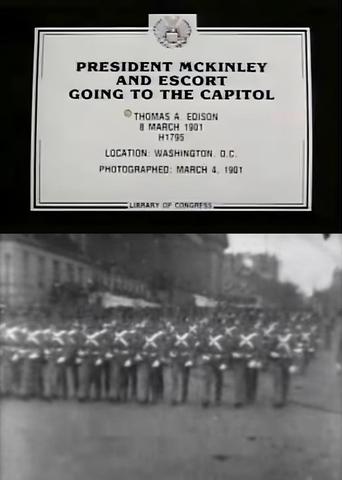
Cavalry and foot-soldiers escort President McKinley.
First comes the Chief's sleigh with old-fashioned side runners, containing the Chief and his driver. Next comes a chemical engine mounted on a stout double runner sled, which is followed closely by hose carriage apparatus mounted also on double runner sleds. Next comes a water tower mounted on a set of double runners and drawn by four beautiful horses. This is followed very closely by an engine drawn by a four-horse string team. This is followed by another engine on double runners, drawn by a four-horse tandem team. A second hose carriage and a Protective Insurance outfit brings up the rear. The breath leaves the horses' nostrils in great white puffs as they gallop through the snow-covered streets.
Gilbert Saroni impersonates an exceedingly ugly woman who coyly flirts with her fan.
Panoramic view of the McKinley homestead, Canton, O., on the morning of the funeral, showing large crowds passing the house, which was under military guard.
Persons who have visited the "Hub," no doubt carried away with vivid recollections of Boston's famous system of Underground Transportation and this film takes the audience from the bright sunshine into the dim obscurity of the subway. The Underground stations and rows of Electric Arc lamps are plainly shown and, after traversing the tunnel for a considerable distance, the car finally emerges opposite the railroad depot.
In the background is a row of three-masted sailing ships, at anchor, their sales furled. In the foreground, a simple pier that's more like a yardarm juts out above the water; about 15 boys of six or seven years of age are on the jutting wood, and they jump off into the water below. The water looks to be about three feet deep. They swim back toward the pier. A small motorized boat passes. It's a stationary camera; one take.
Girl gives spoonful of milk to kitten. (Cut-in close-up) [The British Film Catalogue]
A panoramic view taken from Young's Pier, showing the boardwalk, the auditorium pier, new steel pier...
A short dance film in Pathécolor, also know as stencil colouring. The editing cuts correspond with the dancers' costume changes. More about stencil colouring at http://zauberklang.ch/filmcolors/timeline-entry/1218/.
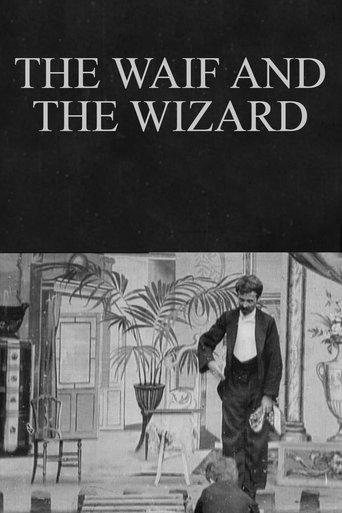
The Waif and the Wizard features the same young man who appeared in Undressing Extraordinary (and who might be early filmmaker Walter Booth). It's another early example of a two-shot film along the lines of Paul's earlier film Come Along Do!. The young man plays a magician who, after completing his act, agrees to go home with the young boy from the audience who helped him perform his tricks. At the boy's home he finds a sick sister and a worried mother being threatened with eviction by her landlord.
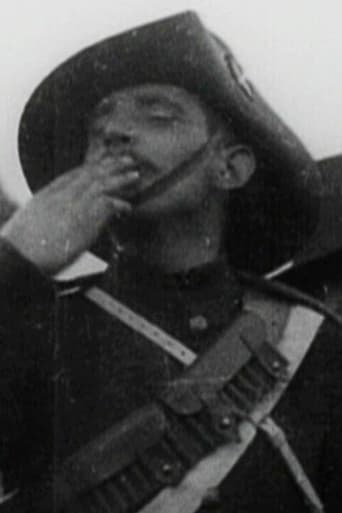
Troops play up for the camera in the shadow of Edinburgh Castle.
In a wizard's cavern, a series of magic tricks are performed..

In this picture President Roosevelt is seen crossing the field from the Navy to the Army side between the halves of the game. He is accompanied by Secretary of War Root, Secretary of Navy Long, and other notables.
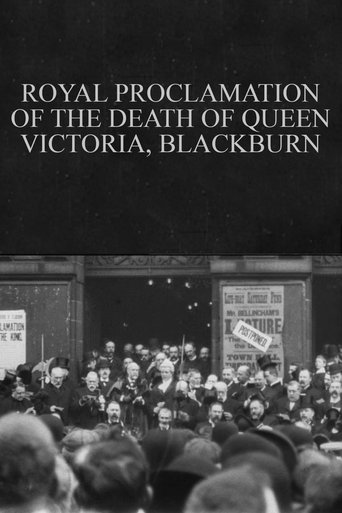
The exact moment when the Victorian age turned into the Edwardian age, in this public proclomation in Blackburn, UK on Jan 22 or 23, 1901.
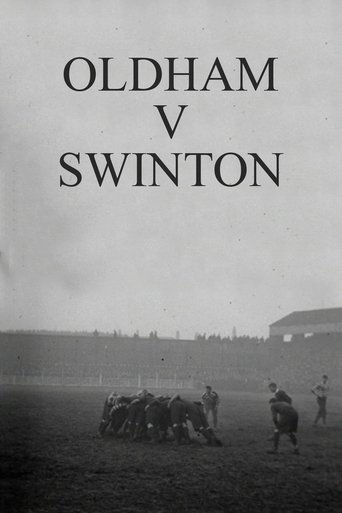
The evolution of Rugby League in a top of the table match between rival Lancashire clubs.
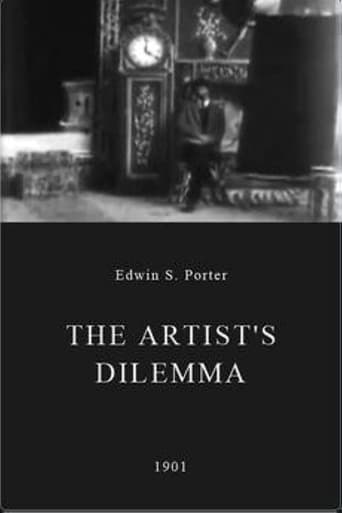
In the artist's studio, he asleep in his chair. A large old fashioned clock opens and a young lady comes out and awaking the artist, requests him to paint her picture. While the artist is executing the work a clown comes from the clock, takes in the situation and begins to make love to the lady. The artist detects him and compels him to desist his love making. He continues to paint. The clown becomes interested and asks the artist to allow him to paint the picture, and begins smearing a whitewash brush over the canvas, and a most perfect image of the young lady appears. The image then steps down from the frame, joins the young lady in the studio, and the figures, each a perfect counterpart of the other begin to dance to the great astonishment of the artist. The clown waves his hand causing the figures of the two girls to merge into one. The artist then assumes his seat and awakens in shock. The film was a Vitagraph production, but later acquired and copyrighted by the Edison Company.
