
Parade of Delegations in Traditional Costumes 1908
Short reportage
Short reportage
Short reportage
On a rainy and windy day there is marching a procession of priests and town dignitaries. A big community of priests is consecrating the foundation stone of the memorial of František Palacký. The Prague Archbishop František Schönborn is blessing the foundation stone. The Priests are lying down blessed stone cube components and form them into one big unit.

Created by the young but obviously ambitious French production company Lux Film, founded just two years before by pioneer Henri Joly. The film was released in the United States with the title Love and Fortune, in a version which sought to mellow the character of the male protagonist, at least judging by the synopses in the period press: the American Ascanio was always in love with Graziella, and he only lets himself think of wealth in his dreams.
Hélène, the daughter of a wealthy shipowner, receives a letter from Jean, her lover, who wants to see her to find out her father's answer about their marriage. The father refuses and Jean must embark. The father goes to the boat and sabotages it.
A man is rude to everyone he meets and is thrown into the river.
Two singers do not enter and take up their position in the center of the stage. Instead, the camera discovers them, the woman on her balcony and the man just outside, whereupon they launch into the duet "Liebchen Komi In Mein Stubchen".
A proud father takes his many children to an outing.
A masher approaches a lady on the street who is elegantly dressed, but when he gets near enough to see her face he changes his mind so suddenly that he is glad to get away. The ugly woman passes on, however, and on reaching the store of a beauty doctor, decides to step in. The M.D. promises her complete satisfaction and gets busy promptly. First he subjects her mud-colored marcelled hair to a treatment, and in a little while she has beautiful raven-black hair. He massages her face and removes all dermatological defects, and finally gets to work on her teeth; in a few more seconds the woman emerges from the place a fine specimen of natural brunette beauty, with teeth like so many pearls. This time when she meets a gentleman on the street he promptly offers his arm.
These extraordinary views of life and landscape in Beijing were filmed during the last years of China's Qing dynasty, before the 1911 Xinhai Revolution overthrew imperial rule. The focus is on everyday life, and the views of hawkers, laborers, traders, and artisans reveal the city’s vibrant street culture. Especially striking is the shot of a barber preening his client’s 'Manchu queue' hairstyle.
Children play with their toys while Grandpa dozes. He dreams that the doll's house catches fire and the toys rush to put out the flames. He awakens to find the children squirting him with water.
An art student inherits a sum of money and has his fellow students over to celebrate. Chaos ensues.
Song from an Operetta.

A man picks up a man in drag. Short Italian comedy from 1908.
Arrival of the Christian Slaves: The captives are brought before Nero. He chooses one fair maiden to serve in his palace. The others are condemned to death for a Roman holiday.
An early account of Marat's murder, and the subsequent arrest, trial, and execution of Charlotte Corday.
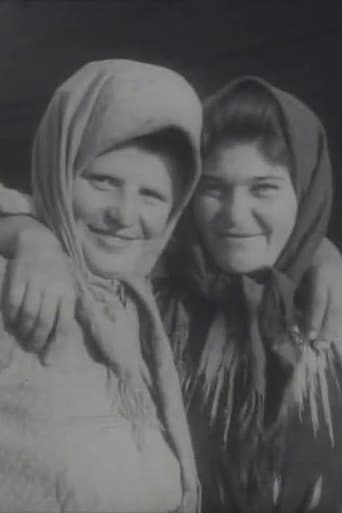
On a dock, men and women are bustling about. The fish is unloaded and brought to the covered market. The fish merchants gut the fish with dexterity, before salting it. While the men weigh the fish, the women rinse out their clothes and tools in the port’s water.
Funeral Pomps of Admirals Saldanha and Barroso; tribute from the Brazilian Navy. Views "of the Avenue, full of people"; "army and armada officers, ladies, etc."
Early Brazilian silent film documenting the 1908 Carnival in Rio.
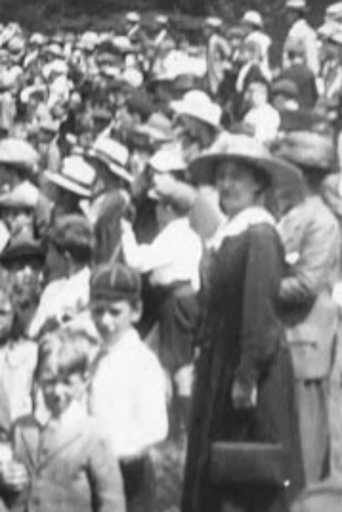
Ready, steady, relay! This newsreel captures the pepped-up mood of the camera-conscious youngsters assembled for the South London Schools Sports event at Crystal Palace in 1908. Judicious editing succinctly conveys the excitement of the relay race as the competitors traverse the "finest and safest running track" - as a contemporary newspaper article described the Edwardian sports facility.
