
The Christmas Burglars 1908
Mack Sennett appears as one of character Mike McLaren's assistants in this film produced by the Biograph Company.
Mack Sennett appears as one of character Mike McLaren's assistants in this film produced by the Biograph Company.
Maurice Chevalier simply can't stop dancing.
The hero, who fancies himself a ladies' man, cannot resist winking at every comely lass who passes his way. Unfortunately, he winks once too often, and soon the would-be Romeo is running for his life, pursued by an angry boyfriend. Disaster does indeed plague our hero for the rest of the picture.
Mack Sennett appears as a Native American in this film produced by the Biograph Company.
A bungling bumpkin fails at a number of jobs in this slapstick comedy - before he finds his true calling.
A young boy’s toys come to life through animation.
A Segundo de Chomón trick film.
The first scene shows part of Flint's old pirate crew, with one-legged John Silver in the lead. They have discovered the hiding place of Billy Bones, the mate of Flint's ship, the "Walrus," and they send Black Dog, one of the crew, to tip Billy Bones to the "black spot" at the Admiral Ben Bow Inn; but Billy Bones drives Black Dog away, and will have nothing to do with him.
In this simple melodrama, a boy loses his beloved girl, hence dying of a broken heart. The film presents advanced techniques in several fields.
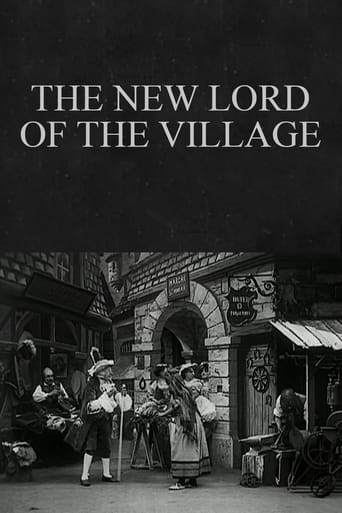
There's a scene in a village, then there's a scene out in the wilderness with what appear to be gods, and a giant crab, and a giant frog... then there's another scene in the village... and that's it.

A gang of outlaws are planning a bank robbery. After making preparations, they commit the robbery and make their escape amidst a sharp exchange of bullets. They return to their meeting place, and then hurriedly continue onwards, with lawmen close behind them.

Francesca, surrounded by ladies-in-waiting at the palace. Her father enters, and together they read a letter from Lanciotto, asking for the hand of Francesca. Both are overjoyed at the union of the two great houses in marriage, and the daughter retires to dress for Lanciotto's arrival.
Hulda is a maiden fair to look upon. Her artless rustic simplicity, rivaling Hebe's gorgeous radiance, phlogisticates the susceptible hearts of the village swains. But alas, Hulda was a fickle maid, and seemed to have as many phases as the moon, with a smile for all and a frown for none. Her capriciousness was the cause of much unrest, both for herself and her lovers, for when her parents had departed for a visit, leaving her in charge of the kitchen, she received most effusively Jocular Jake, the village cut-up, only to hide him above stairs at the entrance of Previous-Hearted Pat, the hostler, who in turn is hidden in the Dutch oven at the approach of Handy Hank, the chore boy.
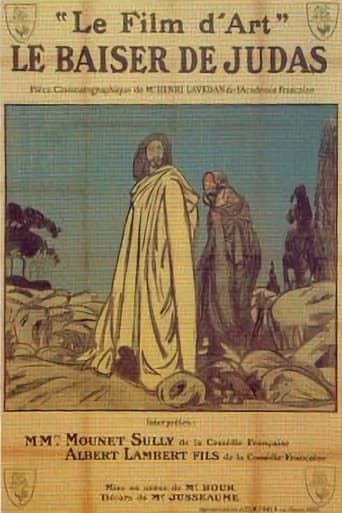
Judas betrays Jesus Christ.
Patients behave like apes after being given monkey-gland injections.
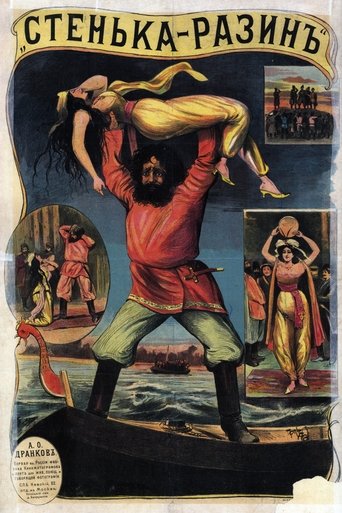
Stenka Razin is the leader of a group of outlaws who live a life of revelry and carousing along the Volga River and in the nearby forests. When Razin becomes distracted by a captured foreign princess and starts to dote on her, his men are displeased, feeling that he is neglecting them and their usual activities. Soon they come up with a plot, in the hopes of turning Razin against the princess.
Leah, a Jewish woman fleeing persecution in Hungary, arrives in the town and captures the heart of Rudolf, the local magistrate's son. They plan to marry and escape to America for a better life, agreeing to meet at a cross in the forest. However, the schoolmaster, Nathan, an apostate Jew who harbors his own secrets, overhears their plan. He inflames the villagers' fears and tricks Rudolf into believing Leah will betray him for gold, leading Rudolf to renounce her. A heartbroken Leah, now forsaken, bestows a curse upon Rudolf and his future children before retreating into exile.

In 1908, Director/Producer Shozo Makino (father of Japanese cinema) directed and produced the first dramatic film in Kyoto. “Honnô-ji Gassen” was shot at Shinnyo-Do Temple. Considered a lost film.
An impoverished father, with his young son and daughter, begs for food in a marketplace. When a merchant angrily turns them away, their plight attracts the attention of a woman of charity. Calling shame upon the unkind merchant, she buys the poor family some food, talks with the family, and adopts the two children. Marketplace workers, witnessing the scene, give the father work as a sign carrier.
María Rosa is a Spanish silent film directed by Juan María Codina.
