This is Roller Skating 1955
A promotional film extolling the virtues of roller skating.
A promotional film extolling the virtues of roller skating.
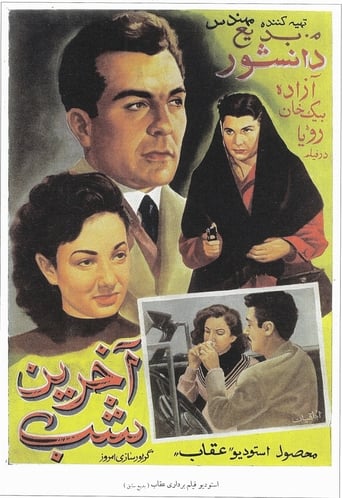
A fine example of the female-led melodramas of the 1950s that revived Iranian cinema after a long hiatus during WWII, The Last Night follows Monir, a happily married woman who gets blackmailed by her former lover and must rely on an actress to clear her name. There’s a striking sense of 1950s Iranian cosmopolitanism, especially when the camera leaves the studio and ventures into the streets of Tehran or the ski resorts in the north of the city.

An animation by Dion Vigne
A collection of newsreel spoofs. Among them, a house with some special features for the mother-in-law, an egg-eating champion who speaks fluent chicken, a slow-motion view of a spitball pitcher, a toothpaste with unfortunate side effects, a look at a heavenly body from Mt. Wilson observatory, a speaker is unconcerned with alien invasions, a circus performer retires from diving into wet anvils, a dog that does income taxes, and an anti-noise campaign in a small town.
The industrious little red hen is always on the move while the other farm animals just lay around and sleep. She finds a grain of wheat, plants it, harvests the wheat crop, shucks the wheat, grinds it, and then bakes a loaf of bread. When the time comes for the bread to be eaten, the farm animals want a share of it, but all they get from the little red hen is a lecture about when there is bread to be baked, don't loaf on the job. This proves just how hard-working the little red hen really is...not many would do that much work just to be able to make a bad pun.
A hunter and his dog are chasing a fox. The fox reaches out of the screen, grabs a pencil and eraser from the artist, and then proceeds to animate the film to suit his own needs. He erases the dog's legs and draws him shorter ones. Using the pencil he draws a variety of dangers, traps and hazards that frustrate the hunter, including rapidly changing the backgrounds. But the tables are turned when the hunter grabs the pencil.
The U.S. Office of Civil Defense illustrates facts about fallout from nuclear explosions.
Adventures of a skunk family.
A young boy runs away from boarding school and an old professor takes care of him.

Coca-Cola's presence in Philippine culture.
Magazine. Child divers; model makers; sights of the Solent.
This film portrait of Abingdon School in Oxfordshire is doubly fascinating: a glimpse into 1950s public school life and the juvenilia of a great filmmaker. Pupil Michael Grigsby (1936-2013) headed the school photographic society and was the driving force behind this film and its companion piece Ut Proficias. He went on to become one of our greatest film and television documentary makers.
Describes the journey of the okapi “Epulu,” which was brought from the Congo to Frankfurt Zoo in Germany as the first of its kind ever. The film shows the capture of the animal, its loading, and its flight of over 10,000 kilometers from one continent to another, until it finally arrives at Frankfurt Airport.
A beauty pageant for Miss California held in Santa Cruz, California
A poetic short film that describes Nordmarka, the forest located north in Oslo. ***** Oslofilm was a series of public information films about life in and around Oslo, produced between 1940 and 1980. Funded by the state, the films offer valuable insight into postwar Norwegian society. A wide range of Norwegian filmmakers contributed to the productions, resulting in a rich variety of styles and expressions. Several of the films also possess notable cinematic qualities, standing out as more than just informational material. The Oslofilms represent a unique and important chapter in Norwegian film history.
A dramatic portrayal of a struggle that is waged annually in wheat-growing areas - man against the wheat rust fungus. Views of the destruction caused during rust epidemics emphasise the urgency with which plant pathologists are endeavouring to breed resistant wheats and, eventually, to annihilate the blight. Animation, time-lapse photography and cinephotomicrography illustrate the life cycle of the fungus and the complex alternation of generations which poses one of the chief problems.
A writer's fiction becomes terrifying reality, sucking him into his own novel being played out. Ray Ericson writes of a lovely woman who leaves her steady boyfriend for a man out to kill her. Suddenly he realizes life is imitating art: he is in the killer role! How can the novelist prevent destroying the woman he's come to love?

