
BOAC 1955
The neon lights of Time Square’s BOAC sign…in Kodachrome kaleidoscope.
The neon lights of Time Square’s BOAC sign…in Kodachrome kaleidoscope.

A seminary student helps a nightclub singer sought by Paris police for killing her married lover.
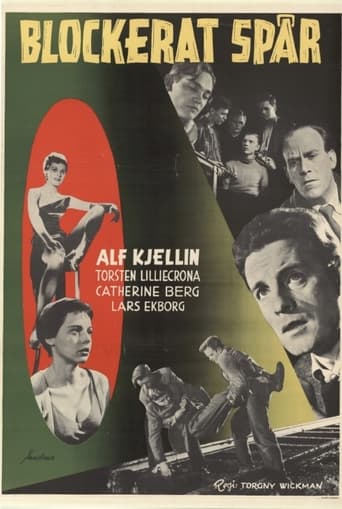
A train stops at a station in a small town. An accident has occurred and some freight cars have overturned, which stops the railway traffic. At the same time, some young people are breaking into a weapons depot, something that will have fatal consequences.
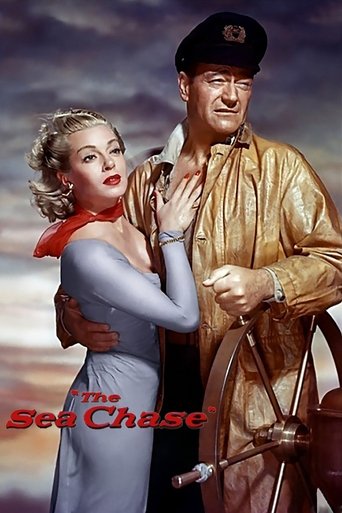
As the Second World War breaks out, German freighter captain Karl Ehrlich is about to leave Sydney, Australia with his vessel, the Ergenstrasse. Ehrlich, an anti-Nazi but proud German, hopes to outrun or out-maneuver the British warship pursuing him. Aboard his vessel is Elsa Keller, a woman Ehrlich has been ordered to return to Germany safely along with whatever secrets she carries. When Ehrlich's fiercely Nazi chief officer Kirchner commits an atrocity, the British pursuit becomes deadly.

Pseudonym Dr. Falke follows his wife through disguises and deceptions in postwar Vienna.
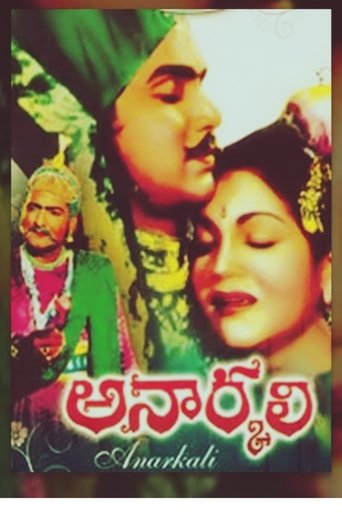
The legend of the romance between Mughal prince Salim and Anarkali.
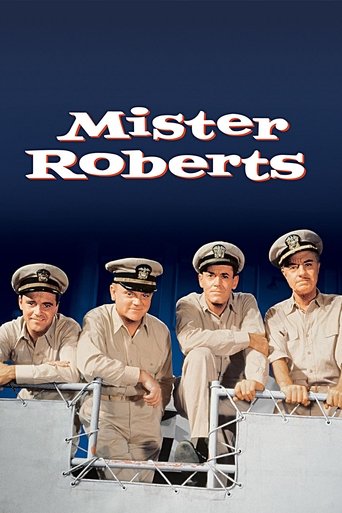
Mr. Roberts is a Navy officer who's yearning for battle but is stuck in the backwaters of World War II on a non-commissioned ship run by the bullying Captain Morton.
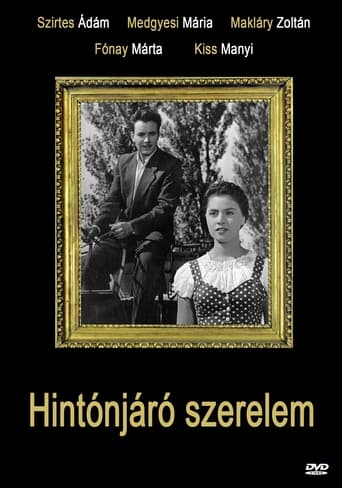
The top management of the co-operative in the rural community at Lake Balaton goes on coaches everywhere to irritate Mrs. Peczöli, the snobbish wife of the only individual farmer. Peczöli would readily join the co-operative, should it not oppose his apple improving experiments.

Hand painted directly onto film stock by Margaret Tait, this film features animated dancing figures, accompanied by authentic calypso music.
This Warner Bros. short reviews in an often humorous way the impact of the automobile on the United States. By 1900, the horseless carriage was beginning to have an impact. Early adopters were often the object of attention by large curious crowds. There were many car manufacturers and the quality of their product varied considerably. Traffic jams, pollution and automobile racing were only a few of the outcomes.
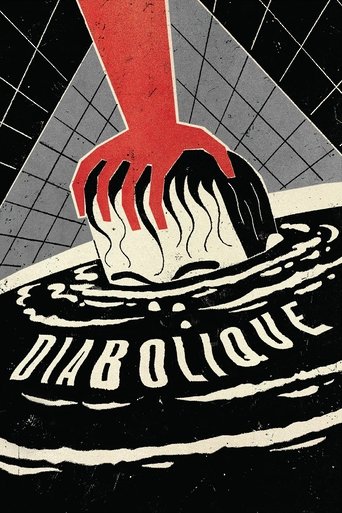
The cruel and abusive headmaster of a boarding school, Michel Delassalle, is murdered by an unlikely duo -- his meek wife and the mistress he brazenly flaunts. The women become increasingly unhinged by a series of odd occurrences after Delassalle's corpse mysteriously disappears.
A jazzy riff on 'Fantasia' from the creator of Gumby.
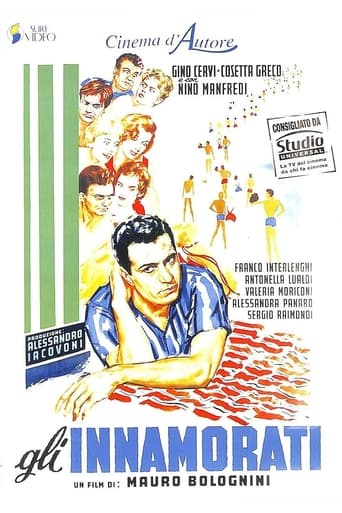
The film tells the love stories of several young people: Nando, owner of a mechanical shop, supplements his income by posing for photo novels, sparking jealousy in his girlfriend Marisa. Otello, who works as a barber, sincerely loves Adriana, Nando's sister, who has been promised to Franco, who is tempted by the charms of Ines, owner of the neighbourhood trattoria.
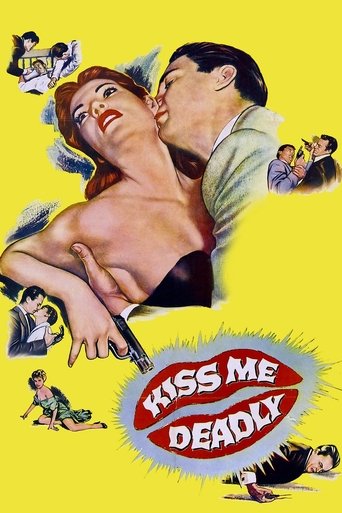
One evening, Hammer gives a ride to Christina, an attractive hitchhiker on a lonely country road, who has escaped from the nearby lunatic asylum. Thugs waylay them and force his car to crash. When Hammer returns to semi-consciousness, he hears Christina being tortured until she dies. Hammer, both for vengeance and in hopes that "something big" is behind it all, decides to pursue the case.
Rapidly alternating fragments of women's portraits, planes, trains, revue dancers, animals, a motorcyclist with 'Ferdi' written on the back of his jacket and in between the artist himself and abstract images; scratches and wild drawings, among others. Colourful abstract and expressive images and texts, painted directly on the celluloid, are interspersed with images from the maker's other films; THE VIPERS and FERDI.
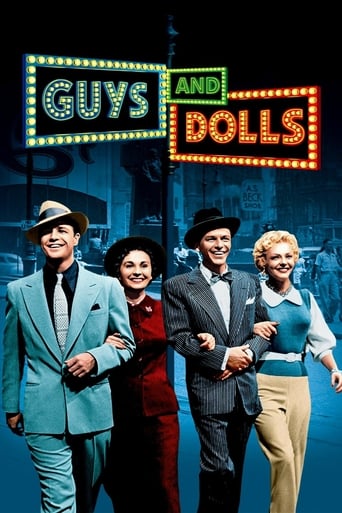
In New York, a gambler is challenged to take a cold female missionary to Havana, but they fall for each other, and the bet has a hidden motive to finance a crap game.
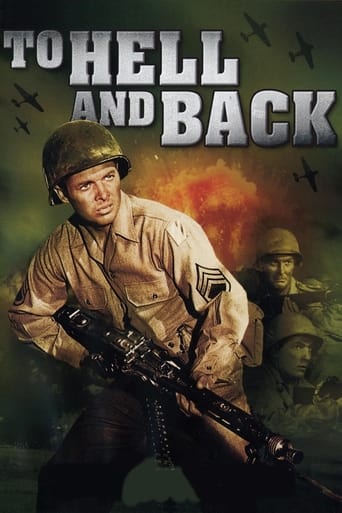
The true WWII story of Audie Murphy, the most decorated soldier in U.S. history. Based on the autobiography of Audie Murphy who stars as himself in the film.
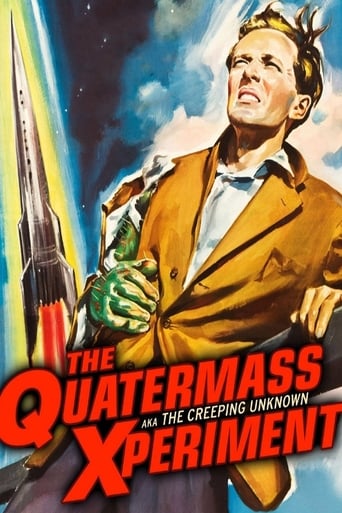
The first manned spacecraft, fired from an English launchpad, is first lost from radar, then roars back to Earth and crashes in a farmer's field, and is found to contain only one of the three men who took off in it; and he is unable to talk but appears to be undergoing a torturous physical and mental metamorphosis.
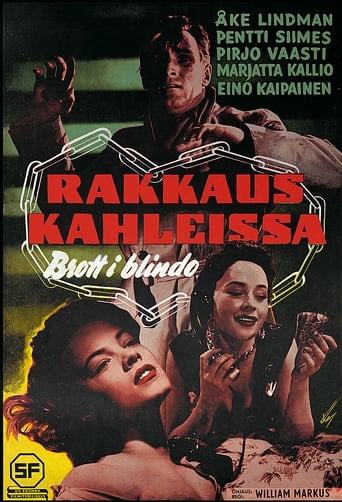
A lock factory worker Pertti would like to marry his girlfriend Verna, but fears they don't have enough money. His brother Martti is a member of a youth gang that is planning a robbery with three other young men. When the boys have to flee at the time of the robbery, Pertti who secretly shadowed them sees an opportunity to solve his money problem.
PSA about the history of Syphilis and the medical treatments used to combat it that's meant to raise the public awareness of the dangers of this insidious modern plague and the necessity of blood screenings and treatments.

Make the Connection is an American game show, sponsored by Borden, that ran on Thursday nights from July 7 to September 29, 1955 on NBC. Originally hosted by Jim McKay, he was replaced after the first four episodes by future Match Game host Gene Rayburn for the final nine episodes. The series was a Mark Goodson-Bill Todman Production, and as such it had many things in common with the other panel shows developed by the company. Like I've Got a Secret, there were four celebrity panelists who were each given a timed period in which to ask questions. Each panelist that was stumped earned the contestants money. Betty White made one of her earliest game show appearances as a panelist on the series. White would later be a frequent panelist on every version of the Rayburn-hosted Match Game.
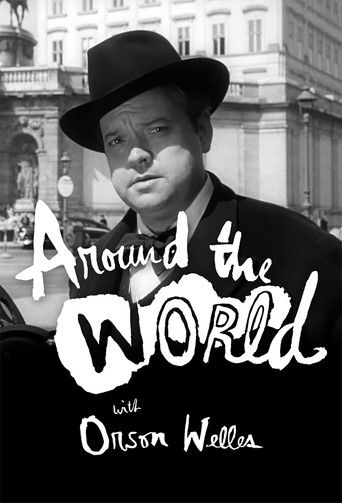
A six-part British television travel series written, directed, and presented by Orson Welles for ITV in 1955. Filmed entirely in Europe, the series follows Welles through Vienna, the Basque Country, Madrid, Paris’s Saint-Germain-des-Prés, and London’s Chelsea Pensioners, blending travelogue, cultural portraiture, and personal essay. Moving between documentary observation and reflective commentary, the episodes combine interviews, local history, and Welles’s distinctive narration into a series that functions as both travel film and cinematic essay.
Steve Donovan, Western Marshal is an American Western series that aired in syndication from September 1955, to June 1956. The series stars Douglas Kennedy as Marshal Steve Donovan and Eddy Waller as his sidekick, Rusty Lee. The series, set in Wyoming, was also broadcast under the title Western Marshal.
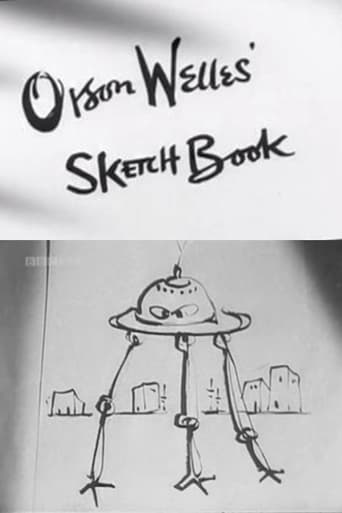
Orson Welles' Sketch Book is a series of six short television commentaries by Orson Welles for the BBC in 1955. Written and directed by Welles, the 15-minute episodes present the filmmaker's commentaries on a range of subjects. Welles frequently draws from his own experiences and often illustrates the episodes with his own sketches.

While working as a staff writer on The Red Skelton Show, local Los Angeles television comedian Carson filled in as host when Skelton was injured during a show rehearsal. As a result of Carson’s performance, CBS created the primetime variety program: The Johnny Carson Show, a traditional potpourri of comedy, music, dance, skits and monologues. The short-lived 1955-56 series served as a precursor of what would come later for Carson, planting the seeds for sketches he would perform on the later The Tonight Show Starring Johnny Carson such as "Mighty Carson Art Players".
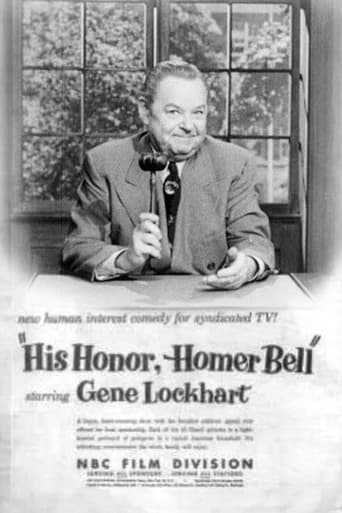
Homer Bell, an elected judge/practicing attorney and widower, looks after his orphaned niece Casey with the help of his housekeeper Maude.
Norby is an American sitcom television series that aired from January 5 until April 6, 1955 on NBC in color. RCA's color system wasn't used until the fall of 1954. This is the first color show that I'm aware of.
Stage 7 is the title of a United States TV drama anthology series that aired in 1955. This program premiered in December 1954 with the title Your Favorite Playhouse with all episodes being repeats from other series. The program's 25 episodes showcased the talents of actors and actresses such as Charles Bronson, Edmond O'Brien, Gene Barry, Phyllis Coates, Frances Rafferty, Macdonald Carey, and Phyllis Thaxter. Some directing was done by Quinn Martin.
It's Always Jan is an American sitcom that aired on CBS from September 10, 1955 to April 28, 1956. The series stars Janis Paige as single mother 10-year old daughter and night club singer Jan Stewart.
New Orleans PD
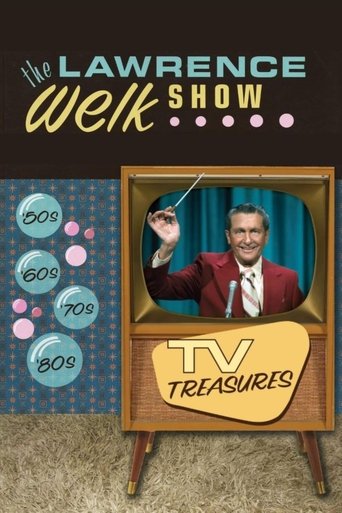
The Lawrence Welk Show is an American televised musical variety show hosted by big band leader Lawrence Welk. The series aired locally in Los Angeles for four years, then nationally for another 27½ years via the ABC network and first-run syndication. In the years since first-run syndication ended, The Lawrence Welk Show has continued to reach new audiences through repeat episodes, broadcast in the United States by Public Broadcasting Service stations. These airings incorporate an original program—usually, a color broadcast from 1965 through 1982—in its entirety. In place of the commercials, newer performance and interview clips from the original stars and/or a family member of the performers are included; these clips are occasionally updated.
