
Year 1971 - 248
Yellow Brotherhood 1971
Color UCLA Student Film, Preserved by the UCLA Film and Television Archive. A short documentary featuring the Yellow Brotherhood, a revolutionary Asian-American group inspired by the Third World Liberation Front and the Black Panther Party. Offering services to Los Angeles Asian-American young people, the group believed strongly in self-determination. The documentary also features an Asian-American motorcycle gang and interviews with members about white supremacy and Internment Camps. Possibly filmed at Ats Sasaki shoot pool at Holiday Bowl, a Japanese American bowling alley. Made as an Ethno-Communications film production.
Chain Reaction 1971
Bulgarian animation film
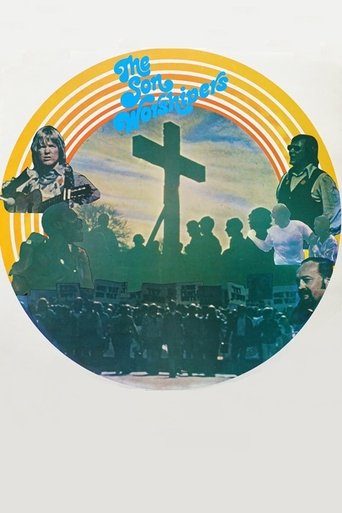
The Son Worshipers 1971
Documentary captures the moving of the Holy Spirit in the hearts of youth who call themselves "The Jesus People." It tells the story of their changes lives.

Gente di Milano 1971
David Lamelas was invited to mount a solo exhibition, a short film was shot with a stationary camera documenting everything that happened to enter its angle of view. At the same time, eleven photographs were taken at regular intervals.
Sisyphus 1971
An animated cartoon of the Greek legend, which interprets the mood and style of Robert Garioch's poem.
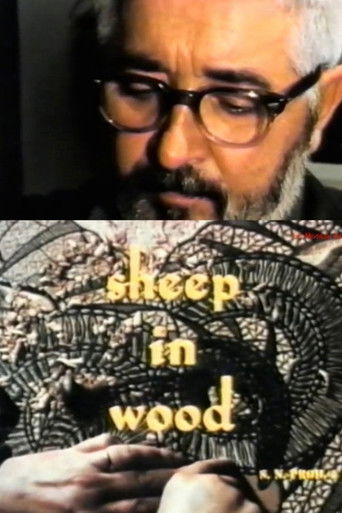
Sheep in Wood 1971
Ukrainian American artist Jacques Hnizdovsky demonstrating the process of creating his classic woodcut “Two Rams” – from sketching the concept to producing the artist’s proof print.
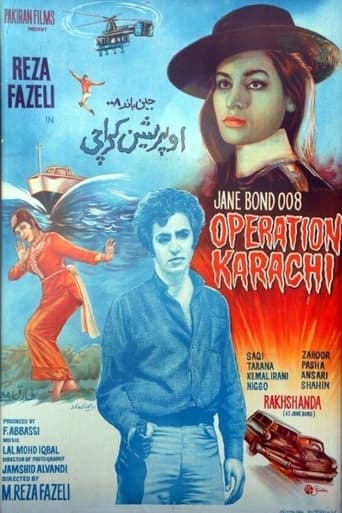
Jane Bond 008: Operation Karachi 1971
The members of the Black Hawk group want to escape from the port of Karachi after stealing the death ray. Agent Jane Bond 008 is assigned by the British Intelligence Service to rescue the professor who succeeded in inventing the death ray while fighting against the members of the Black Hawk group.
Ajab Tujhe Sarkar 1971
Directed by Raja Thakur. With Madhu Apte, Madhav Avchal, Mohan Choti, Vatsala Deshmukh.
Tithe Nandati Laxmi 1971
Janubhau and his wife Radha decide to get Janubhau's younger brother, Vinayak, married to the daughter of Tatya Khot. However, they feel dejected as Vinayak decides to marry Kusum instead.
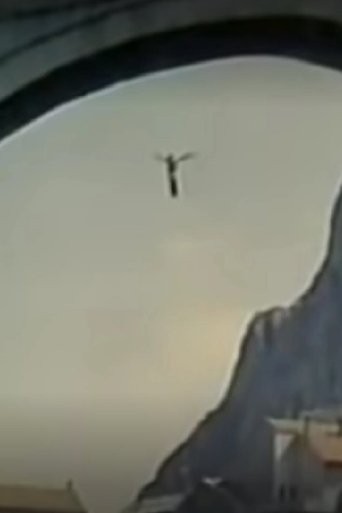
The Boy and the Bridge 1971
Diving off the Old Bridge as a rite of passage for a boy in the city of Mostar.

Zofia I Ludmila 1971
A Child's Alphabet with Casual References to DNA Replication in the Garden of Eden 1971
A fluid line-art composition that integrates ABCs with evolutionary images.

People Are Not Goats 1971
In an unusual spaghetti western setting, a man - played by Ilarion Ciobanu - returns to his home village after spending time at the front. He finds his wife in the company of another man - played by Anușavan Salamanian - who is also raising his son. The confrontation between the two is at its most intense when they exchange glances that, in Ciobanu's case, seem to be a textbook study in Clint Eastwood's taciturn protagonist from Sergio Leone's famous trilogy. In many ways, People Aren't Goats stands out among all the other student films of the period. But the point where it proves most particular is its belonging to a genre - spaghetti western - at that time still new worldwide, whose national exponent will remain Ilarion Ciobanu, through the roles he played in the singular western trilogy, released a few years later, in which the people of the Ardennes go through all sorts of adventures.
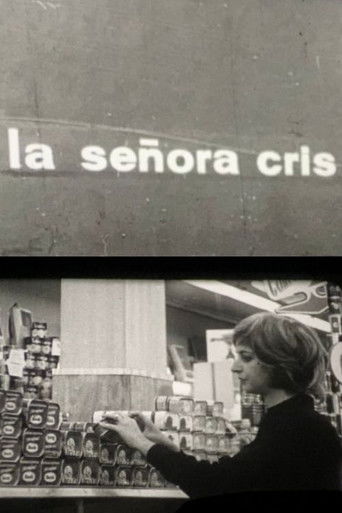
La señora Cris 1971
The boring life of a bourgeois housewife.
Freizeitpädagogik - Bauspielplätze in Dänemark 1971
The color film informs about Danish recreational pedagogy using the example of the Bauspielplätze.
Terra 1971
Self-portrait
Ife / 3ème Festival des Arts 1971
Newsreel of the third Festival of the Arts in the Nigerian city of Ife, launched in the city’s university. A celebration of the arts (traditional music, photography, sculpture, handicrafts, cinema) confronting the continent’s anglophone and francophone hemispheres. Among others, the report features the Nigerian Nobel Prize-winning playwright, poet, writer and essayist Wole Soyinka, the Senegalese filmmaker Ousmane Sembène and the Martinique playwright Aimé Césaire, who premiered the English version of The Tragedy of King Christophe in Ife for the occasion.
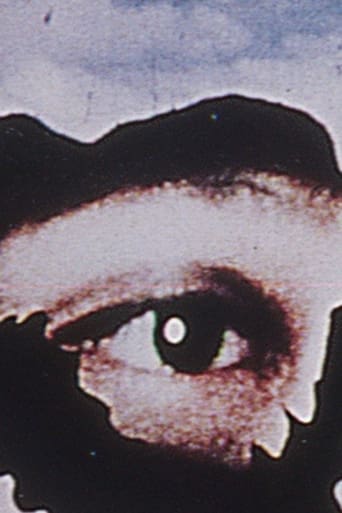
Fall 1971
"What is most powerfully effective in FALL is the extraordinary sophistication of DeWitt's visual techniques, his graphic eye, and his complex designs. Because each unit of the exposition is so painstakingly conceptualized and nurtured, an audience is afforded a unique kind of purview on the elements as they are reconstituted in the more complex overlays. Thus the early, Magritte-like compositions of eye and sky establish basis for later more complicated efforts .... Color changes worked on given images (the bird, the sky) avoid the oversimplifications of hues/cues. Certain effects, as when clouds pass through the falling body which is outlined in flaming orange, can only be described as awesome. ... [A] work of immense dedication and exceptional skill." – John Fell
