
The Chicken 1982
A bird struggles against a strong headwind, but things are not as they seem.
A bird struggles against a strong headwind, but things are not as they seem.
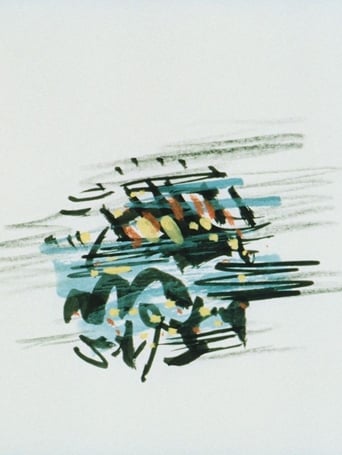
This short film is an animated interpretation of the Suite No. 4 by the music ensemble Bayon, which was founded in East Germany in 1971. Bayon’s music is a unique combination of Khmer pentatonic music with elements of classical, jazz and rock.

Short film by Keiichi Minegishi
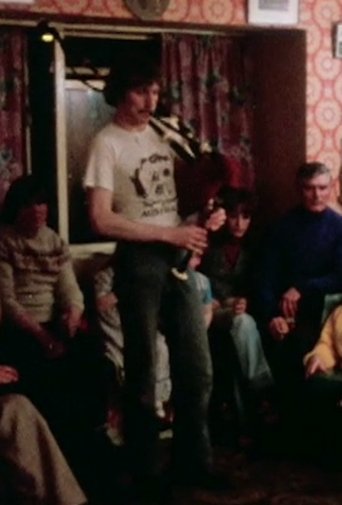
Scotland’s Gypsies have lived outside mainstream society for more than 500 years. Although some of the “Travelling People” still live by the sides of roads, most live today in houses and are under pressure to abandon their culture. This film celebrates their traditional music, especially the long unaccompanied British ballads that date back hundreds of years and have been handed down by memory through the generations.

“Death – Begetting” : symbolic physical death, to enter the Silence; the negation of banality, of everyday language, of non-stop talking; certain “words” of power that guide us to the Silence… A brank, according to Aleister Crowley, is an old Scottish device, designed for holding closed the mouth of a woman – the woman (seen in Tarot, shutting a lion’s mouth) who signifies Strength. Thus it implies the Silence is more powerful than the (physical) Strength.

Aubrey Beardsley, the influential 1890s illustrator who died at the age of 25, returns to life in the late 20th century.

Sherman underscores the oppositional component of the board game with split screen techniques and evocative black and white graphics.
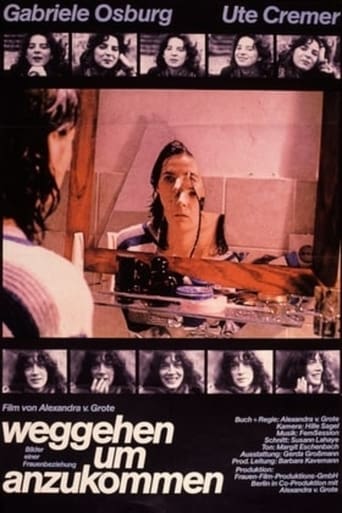
When her lesbian affair with Regine hits the rocks, Anna needs to escape her job as a photographer, her home, her friends and everything that reminds her of the past and so she aims a borrowed Volkswagen van for the south of France and steps on the gas pedal. As she travels, her daydreams take on the force of reality as she fantazises about the past with Regine, yet the change in color tonalities of her imaginings and other camera tricks contrast her make-believe world with the scenic countryside and picturesque villages she passes on her way. As the road unspools before her like a role of film, images from her mind's storehouse of reels flash by - and the parallels between traveling away and mentally going back become clearer, for as the title suggests, she has to "depart to arrive."
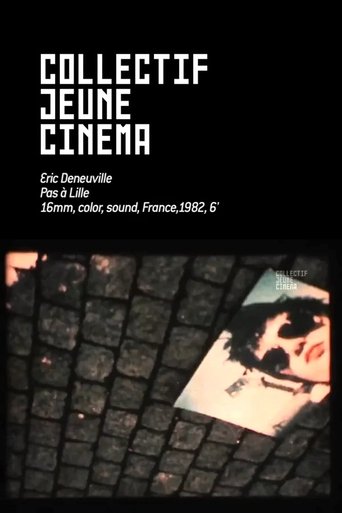
After The Indian Spielberg, Joëlle and Catherine meet up at the top of « L’Aiguille du Midi ». They take a series of photos. Six months later, in Lille, one of these pictures is thrown at the ground and shot randomly as Joëlle is walking by. These pictures, shot again frame by frame, generate the film : with a repetitive music background, we can see glimpses of storytelling, a story that is setting up, with constant feedback of « L’Aiguille du Midi ».

Dégringolade (TUMBLE) - was produced in the pixilation technique. This process allows alive characters and real objects to achieve absolutely unrealizable movements in reality. Everything becomes possible with the stop motion technique. This film shows an imaginary and frenetic world where it slides, runs, falls, flies, jumps, fidgets, leaps, rolls, bolts, and boozes; it is a wild weird world.
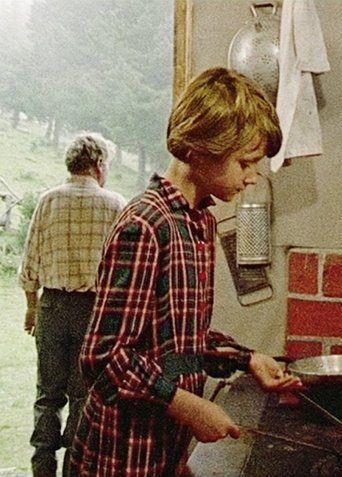
In this short, cracks appear in the idyllic concept of ‘Heidi in the Alps’. Lisa is eight and spending the summer with her parents in the mountains. But the much-vaunted beauty of nature provides the young girl with little comfort in the sparse Alpine landscape. Instead, it seems eerie. Her father is often away and her mother is always busy with washing and doing the dishes. Lisa watches and fantasises about being far away – ideally in Persia. In the South Tirolean dialect, “kribus krabus” means “topsy turvy”. The “domine” in the title stands for the opposite, for God, control, and power. (Berlinale)
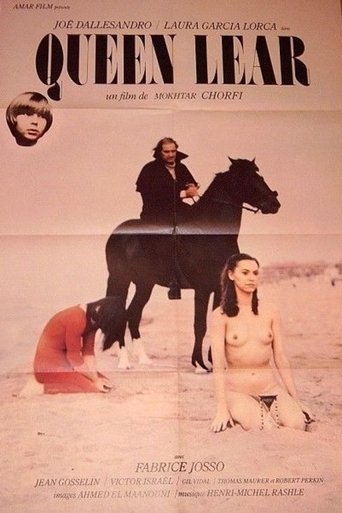
Georges live with his mother, who is a widow after the death of his father. His father "comes back" and Georges goes with him.

A poetic picture story of everyday life in Berlin, supplemented, contrasted and broken up by text quotes from Christa Wolf and Bertolt Brecht.

A documentary film about a "village of huts" that was erected in a section of forest near Frankfurt am Main in 1980 to demonstrate against the planned construction of Runway West. It was built by a large number of Frankfurt citizens together with various citizens' movements.
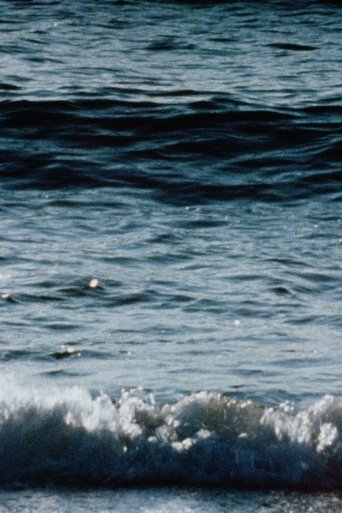
Spring tides at Ynys Llanddwyn at the full and new moon are compared to the filmmaker’s own ‘body tides’ from dark to light and back again. Like other films by Judith Noble (formerly Higginbottom), The Red Sea is concerned with the menstrual cycle, and its relationship to lunar cycle. Higginbottom and other feminist artists such as Catherine Elwes, Carolee Schneemann and Judy Clark were trying to reclaim menstruation from its negative image and assert it as a source of creative energy. The Red Sea is made of 16mm film and 35mm still images, re-worked and over-printed.
A short video art piece done in a single shot, depicting a large felt curtain being mechanically raised to reveal a gymnasium. As the curtain is raised, another on the opposite side of the room is dropped.
A video art film which shows various arrangements of wooden planks into precarious, non-functional arrangements. The artist then attempts to disrupt the arrangements into toppling and, through repeat editing, emphasizes the acoustic quality of the wood pieces collapsing.
Beautiful washerwoman Tinette manages to get the upper hand time and again with cunning, leading the covetous men around by the nose in order to finally catch the dyer Taschereau and become the respectable Madame Taschereau.
