Us, Aged Five

Us, Aged Five 1955

1

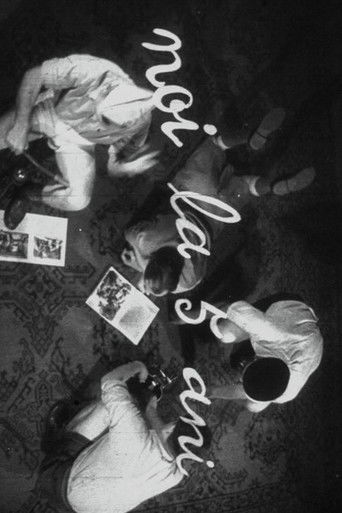
In December 1955, the professional community around Sahia celebrate the fifth anniversary of their institution by producing this films meant to be screened in the opening of the anniversary party and only for insiders of the studio. The film copy available at the National Film Archive has no credits therefore we cannot be specific about the type of involvement of each member of the studio in the making of this film.

1955

Report from the Red Flag

Report from the Red Flag 1964

1

Report from the Red Flag is an odd presence against the gloomy background of Stalinist Romania. It belongs to a wider body of Sahia films about the living conditions afforded by the new blocks of flats built across Romania – in this case, a workers’ quarter built in ‘Stalin’-town (the name assigned, between 1950 and 1960, to the Transylvanian town of Brasov). While other films bear the imprint of the collectivist, work-centered ethos of the time, Red Flag follows the workers during their downtime, between Saturday 3pm (the end of the working week) and Sunday evening, while they spend quality time with their families, walking, mountain climbing, biking, fishing, or shopping – an opportunity, today, to see candid images of relaxation shot at a time when the state started paying attention to the leisure and tourism facilities available to its citizens.

1964

Parents' Meeting

Parents' Meeting 1980

1

The Segalls’ interest in children’s lives dated from the mid-1960s, when, using a camera placed off-stage, they filmed the end of the year festivities at their daughter’s nursery. The result was Big Little Feelings, which won the Silver Dove at the Leipzig Festival in 1964. In the years that followed, the idea of including their own child in some of their films did not sit well with the political bureaucrats. In the end, she would only feature briefly in two short sequences at the end of this and another documentary, filmed eleven years later with the same children (The Feelings Have Grown, 1975). In both films, Doru Segall proudly makes clear that he is both the film’s cinematographer and the father of the girl in the image—a personal, autobiographic detail unusual for a Sahia film. Over the following years, the Segalls continued to work on documentaries about children, including Exams (1976), The High Schoolers (1978), Parents Meeting (1980), and The School Leavers (1986).
1980

The Hottest Day

The Hottest Day 1974

1

This film consists of almost twenty minutes coverage of a political rally, filmed by more than ten Sahia cameramen, during the celebration of the thirtieth anniversary of 23 August 1944, ‘the first day of the socialist era’. The Hottest Day is part of a rich author filmography, which includes around one hundred titles, such as A Life Dedicated to the Happiness of the People (1978); Homage (1983); The Party, The Homeland, The People (1986); Heroic Times in Legendary Lands (1987). When the Sahia documentaries obediently followed their political commission, their length could surpass the usual ten to twenty minutes, even reaching feature length. The Hottest Day was one of the shortest film in this category that we could find in the archives.

1974

Lectii de Viață

Lectii de Viață 1970

1

Ohio riddler faces the emperor of Romania in the ultimate clash to see who will be sleeping with Ceaușescu

1970

Along the Frumoasa Valley

Along the Frumoasa Valley 1981

1

The industrial site, the dam under construction and the colony of workers’ housing attached to them are among the favourite spaces of the Sahia documentary, especially during the last decade of the communist regime. The work on the country’s numerous industrial sites is a constant theme included in the annual Thematic Plans of the studio, therefore repeatedly fixed on film and repeatedly missed, or at least simplified by the documentaries of the time, always completed under the pressure of the political imperative.

1981

Tell Me a Poem

Tell Me a Poem 2025

6.00

A woman’s journey towards liberation and healing through recollections of her younger self.

2025

I Am Also Part of the Three Turns

I Am Also Part of the Three Turns 1970

1

A small town in Buzau province is affected by a destructive flood during the time of an aggressive nationalistic program of urbanization in Communist Romania.

1970

Ajde maestro

Ajde maestro 1970

1

Musical documentary essay on Romanians in the metro in Paris in December 2004.

1970

Surge of Transference

Surge of Transference 2024

1

Surge of Transference is a video essay that investigates the expansion of the internet in a small Romanian town, where communities have formed and shifted around the newly imported Western technology. Within this micro-universe, the video traces the rapid transformation of the Internet, from the early days of peer-to-peer software to the upload of online late capitalism.

2024

Rehearsals for Peace

Rehearsals for Peace 2024

1

A tale from the 16th century narrates the story of Ursula, a female figure disguised as a man, who successfully chased away occupying intruders (at that time, the Ottomans) using the supersonic sound of a whip. This account purportedly originated in Cincu, the Transylvanian village which today houses one of N.A.T.O.’s key combat training zones in Romania.

2024

The Butterfly Collector

The Butterfly Collector 1970

1

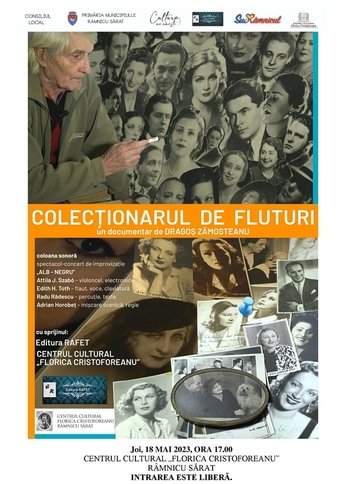
"The whole world is a stage and all people are actors. They rise and fall in turn, each one: A man plays several roles in life, And the acts are the seven ages..." (William Shakespeare, How You Like It) The story of a man - Mihai Sarca - for whom the theater means everything and for whom a whole life defined himself by his passion for the stage and for the people who serve it, thus becoming the treasurer of an archive collection and, at the same time, a living encyclopedia of the Romanian theatrical phenomenon of the last century.

1970

Păltinișul și Noica

Păltinișul și Noica 1970

1

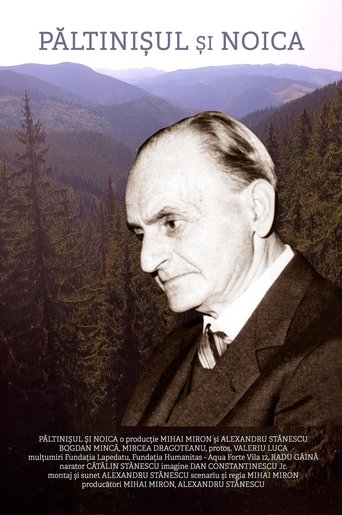
Constantin Noica spent the last years of his life "1400 meters above humanity", as he liked to say - in Păltiniș. Far from the communist gray, but still kept under observation by the Securitate, the philosopher found in this place the joy of talking about wisdom. In the modest room on the 1st floor of Villa 12, what we know as the "Păltiniș School" was born.

1970

Mihai Is Robbed

Mihai Is Robbed 1970

1

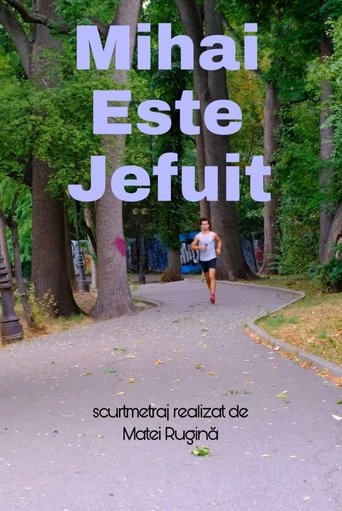
Mihai goes out to run and has several encounters that trigger out his social anxiety.

1970