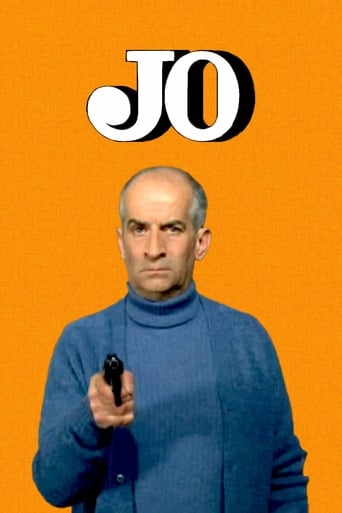
Joe: The Busybody 1971
A writer accidentally shoots his blackmailer and tries to hide the body.
A writer accidentally shoots his blackmailer and tries to hide the body.

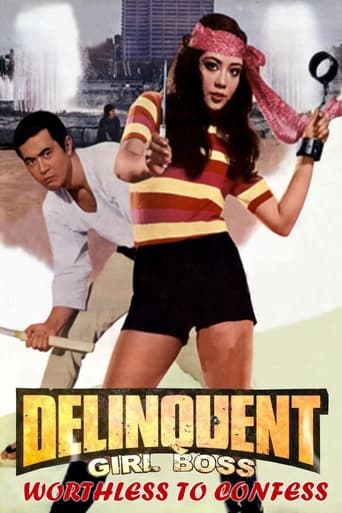
Reiko Oshida stars as a young wannabe gangster tough girl, just released from reform school. She tracks down one of her classmates fathers, who runs an auto repair shop that the local Yakuza are trying to force out of business and take over, and starts working for him. At the same time a recently released from prison, and now ill Yakuza is trying to make a new life for himself and his girl, a friend of Reiko's, who also just graduated from reform school. A fateful car crash brings the two on a collision course with each other and the brutal Yakuza clan, which can only end bloody vengeance.
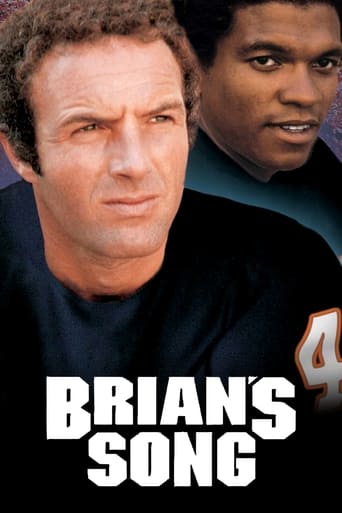
Based on the real-life relationship between teammates Brian Piccolo and Gale Sayers and the bond established when Piccolo discovers that he is dying.
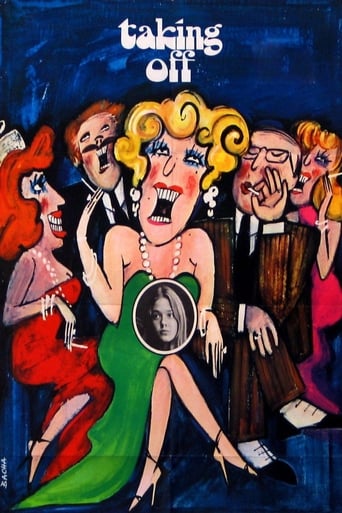
Unable to deal with her parents, Jeannie Tyne runs away from home. Larry and Lynn Tyne search for her, and in the process meet other people whose children ran away. With their children gone, the parents are now free to rediscover/enjoy life.

When a trio of ex-convicts led by Mattie Appleyard is released from prison, they hope to open a general store using money Mattie has saved during his 40-year sentence. This attempt is met with great resistance from a corrupt prison official and the banker who issued Mattie the check.

Western journalists visit Moscow to interview Adrian Harris, a former controller in British intelligence who was also a double agent for the USSR. Harris believes in both Communism and Englishness, believing himself to have betrayed his class, but not his country. The press find these beliefs incompatible, and want to find out why he became a ‘traitor’. Harris is plagued by anxieties over both his actions and his upper-class childhood, and drinks to a state of collapse
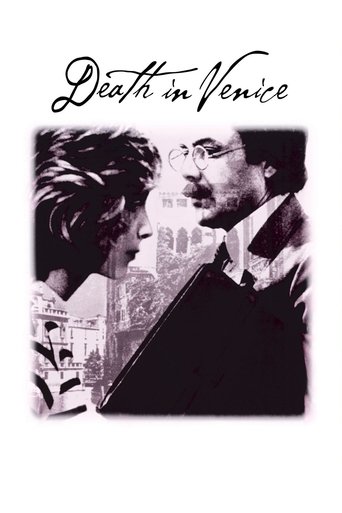
Composer Gustav von Aschenbach travels to Venice for health reasons. There, he becomes obsessed with the stunning beauty of an adolescent Polish boy named Tadzio who is staying with his family at the same Grand Hôtel des Bains on the Lido as Aschenbach.

The film is about microbiological scientists who are exploring the causes and mechanisms of the action of oncological diseases, looking for ways to fight this insidious and dangerous disease for humans.
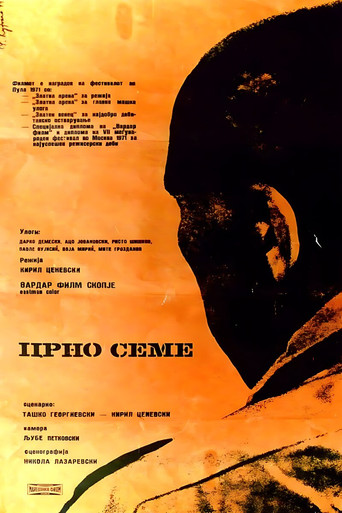
The story of Macedonian soldiers who were captured by the Greek army and taken to the prison camps on Greek islands during Greek Civil War in 1946. Suspected of being communists, they are maltreated by the Greek officers running the camp
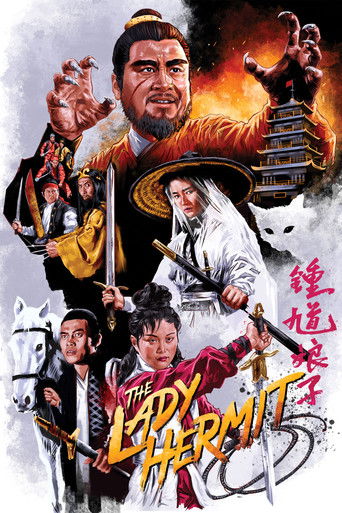
A young Kung Fu student seeks a reclusive teacher so that she may learn to defeat the evil Black Demon. She doesn't realize that the servant woman she befriends is actually the kung fu master she seeks. After Black Demons henchmen attack, the master reveals herself and eventually takes on the student to train her so that they may both defeat the villain. A love triangle complicates things when another student asks for training as well.
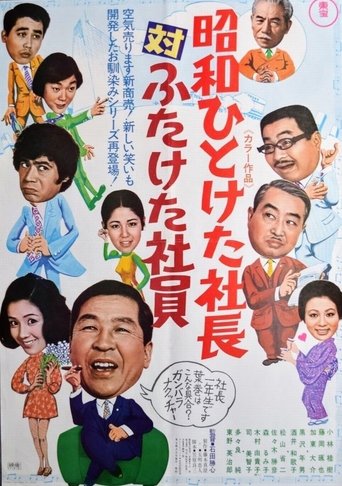
After a major corporate merger, a middle-aged executive is demoted but unexpectedly appointed president of a small subsidiary.
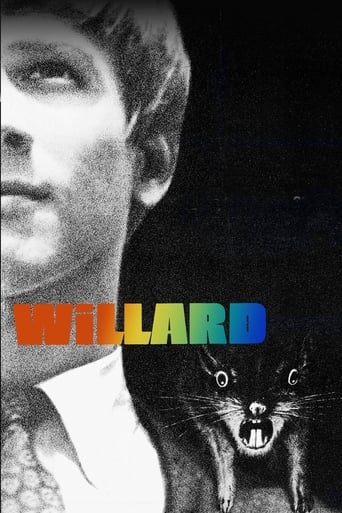
A social misfit, Willard is made fun of by his co-workers, and squeezed out of the company started by his deceased father by his boss. His only friends are a couple of rats he raised at home, Ben and Socrates. However, when one of them is killed at work, he goes on a rampage using his rats to attack those who have been tormenting him.

In a rare reversal of typecasting, Shaw Brothers' perennial bad guy Lo Lieh breaks tradition to play the honorable and noble swordsman in The Swift Knight. It's a tale of brave knights, chivalry and fair maidens where the Swift Knight (Lo Lieh) finds himself involved in romance, court intrigue and deadly jousts while trying to protect the lives of a pair of siblings as the fate of the throne depends on them.
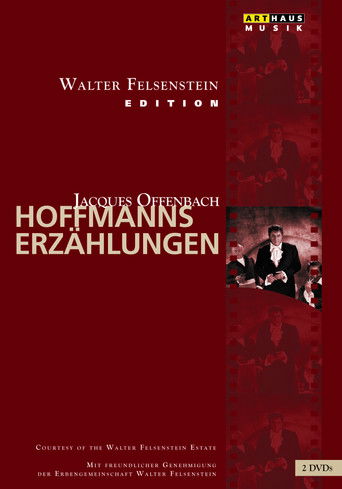
Walter Felsenstein's staging of Jacques Offenbach's The Tales of Hoffmann at the Komische Opera Berlin.
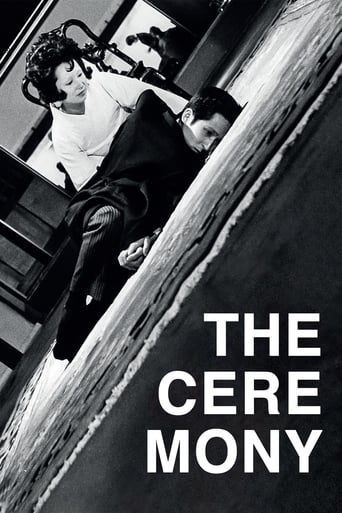
Oshima’s magisterial epic, centering on the ambivalent surviving heir of the Sakurada clan, uses ritual and the microcosm of the traditional family to trace the rise and fall of militaristic Japan across several decades.
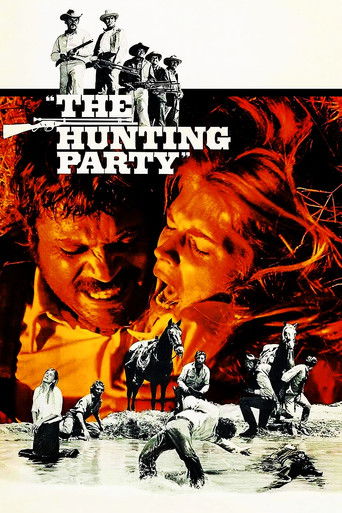
A ruthless rancher, and his gang, use extremely long range rifles to kill the men who kidnapped his wife.
An experimental film by Derek Jarman that captures the decay of an urban environment.
Filmed partly in Urdu, Insaaf (Injustice) is a public information film aimed at Britain’s South Asian communities. Produced through the Central Office of Information for the Race Relations Board, it seeks to inform viewers of the Board’s role in enforcing the 1968 Race Relations Act, via the story of a young man denied a job he is qualified for due to the racism of his potential employer.
The Good Life is an American situation comedy which was aired on NBC as part of its 1971-72 lineup. The series stars Larry Hagman and Donna Mills, and was produced by Lorimar, in association with Screen Gems.

Rollin' On The River 1971-72 - (Rollin 1972-73) was a Canadian Music Variety Series hosted by Kenny Rogers and The First Edition. They were the first pop-rock group to host their own prime-time TV series. - 53 episodes x 60 min - Featured guests included: Tina Turner, Merle Haggard, Bo Diddley, April Wine, Bill Withers, The Raiders, Cheech & Chong, The Stampeders, Bruce Cockburn, The Grass Roots, The Five Man Electrical Band, Lighthouse, Climax, Billy Preston, Jim Croce, Kris Kristofferson, Jose Feliciano, Mac Davis, Ronnie Hawkins, John Kay, Chilliwack, Looking Glass, The James Gang, The Poppy Family, Ian & Sylvia, Pat Paulsen, Helen Reddy, Andy Kim, John Stewart and many others. *Note: The series was an hour long in Canada. In the U.S. it was only half an hour, and Canadian talents were excised from the show for prime-time viewing.
An English writer interested in the occult searches Rome for George Byron's lost diaries, convinced that they hide a terrible secret. During his search, mysterious events occur around him, including a murder and the enigmatic appearances of a beautiful woman...

Living with her snobby family on the brink of bankruptcy, Anne Elliot is an unconforming woman with modern sensibilities. When Frederick Wentworth – the dashing one she once sent away – crashes back into her life, Anne must choose between putting the past behind her or listening to her heart when it comes to second chances.
Based on the memoirs of Eugène-François Vidocq, this series follows the adventures of this former convict turned policeman in the early 19th century. In these new adventures, Vidocq comes up against a ravishing “baronne”, a formidable gang leader. The cases entrusted to Vidocq are not only police affairs, but also delicate, political and even diplomatic affairs.
The satirical film magazine Mozalan (The Gadfly) was founded in 1971 at the Azerbaijanfilm film studio named after Jafar Jabbarli. To date, more than 180 issues of the film magazine have been published, each containing 3-4 stories. The stories can be fictional, documentary, and even animated. The aim of the satirical film magazine Mozalan is to combat negative situations and convey the shortcomings of society to the people through the language of satire. The main style of work of the Mozalan film crew was to suddenly appear at manufacturing enterprises, capture shortcomings, and convey them to the people.
The show revolves around a group of five ronin (masterless samurai) who make a living by transporting anything, anywhere. They take on tasks ranging from dangerous items that the town's couriers won't handle to people. The narrative features an innovative concept where the characters become entangled in incidents and use their skills and courage to resolve them. Starring veteran actors Yutaro Daitomo, Ryuji Shinagawa, Goh Wakabayashi, and others, the series is known for its lively and bold storytelling, making it a must-watch for fans of historical dramas.

A story of two sisters attempting to find happiness in the tightly structured society of 18th century England. Elinor, disciplined, restrained and very conscious of the manners of the day, represents sense. Outspoken, impetuous, emotional Marianne represents sensibility.
The Man and the City is a dramatic television series which was aired on the ABC television network as part of its Fall 1971 lineup from September 15, 1971 to January 5, 1972. The Man and the City stars the well-known Hollywood actor Anthony Quinn as Thomas Jefferson Alcala, the long-term Hispanic mayor of a major but unidentified city in the Southwestern United States. Quinn's WASP deputy, Andy Hays, was portrayed by Mike Farrell. Hays' main role was to make sure that the well-meaning Mayor Alcala did not become so engrossed in aiding individual constituents with their problems that he failed to address the issues facing the city as a whole. Despite the vast talents of Quinn and the earnest Farrell, The Man and the City was a Nielsen ratings failure, finishing third in its Wednesday night time slot against the hit private eye show Mannix and the Rod Serling anthology series Night Gallery, and was cancelled at midseason.
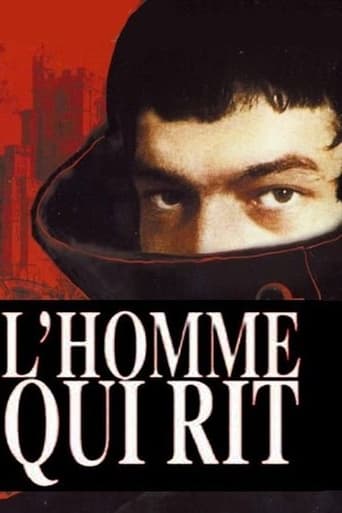
A three-episode series, based on the novel of the same title by Victor Hugo, telling of the adventures of two children, a blind girl and a badly scared boy, who are rescued and looked after by a vagabond.
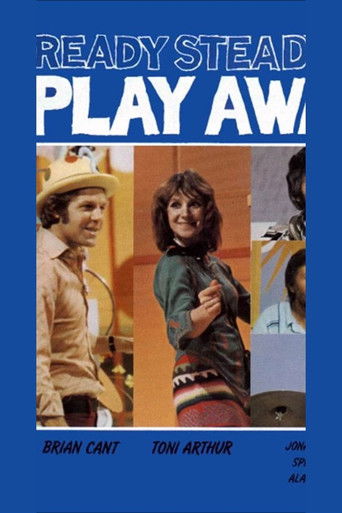
Play Away is a British television children's programme. A sister programme to the infants' series Play School, it was aimed at slightly older children. It ran from 1971 until 1984, and was broadcast on Saturday afternoons on BBC 2. While Play School had a more gentle, intimate feel, featuring just two presenters in a studio with the usual collection of toys, Play Away was much more lively, including songs, games and many jokes. The first eight series were shot in a studio, usually at BBC Television Centre, London, although certain episodes were recorded in Bristol or Manchester. Later episodes were recorded in front of a live studio audience. The format was a little like a music-hall variety show or 'end-of-the-pier' show. The Musical Director was Jonathan Cohen on piano, with Spike Heatley on double bass and Alan Rushton on drums, often with accomplished guest musicians such as trombonist George Chisholm.

A bride arrives at the Shimizu household, where the seven members of the family live as they please. However, the groom, the youngest son of the family, is going to study alone in the USA, and the bride is left alone in the eccentric house.
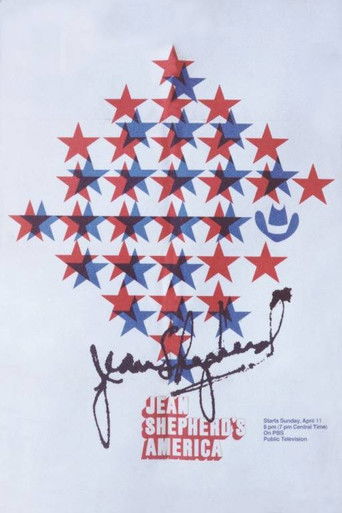
In these humorous and affectionate television poems, humorist Jean Shepherd celebrates America in all its richness and diversity -- from cars to candy, baseball to beer, motels to money. Each week a different aspect of our national psyche is explored as Shepherd travels to the Okefenokee Swamp, Death Valley, Milwaukee, the Old South, and other far-flung locations -- using the PCP-90 portable camera.

