
What Happened to the Lord of the Worlds 1994
A funny action film about the exchange of a young man who owns a company called "Ertönts" and a young man who believes he is the owner of the world and a prophet from heaven.
A funny action film about the exchange of a young man who owns a company called "Ertönts" and a young man who believes he is the owner of the world and a prophet from heaven.

Showed children's kindness and desire to love animals. The second picture shows a little boy creating a piece for his mother and expressing his love.
This film, which deals with the moral issues of people in the 1990s, shows that even people who are imprisoned behind bars can love and understand in a human way.
Their friendship and courage were shown along with their eagerness to learn about the natural world.

After the victory of the people's revolution, Mongolia, which has entered a new path of development, is trying to bring down the economy of Mongolia.

On a rainy Saturday night, four friends catch up with each other while drinking. As the night progresses, hidden resentments towards each other come to the surface.

Zulaa, who was fired from his job, fulfills his dream and buys an Inn. From that day on, when extraordinary and terrible things happen in her life and she risks losing her only son, she starts to fight for her own things. But the girl did not know what caused the terrible thing to happen...

This story is a true story in 2006 and includes artistic exaggeration. A middle-aged man named Bilgt discovers a new deposit, and driven by greed, he digs a place where the local people used to put people in the old days.
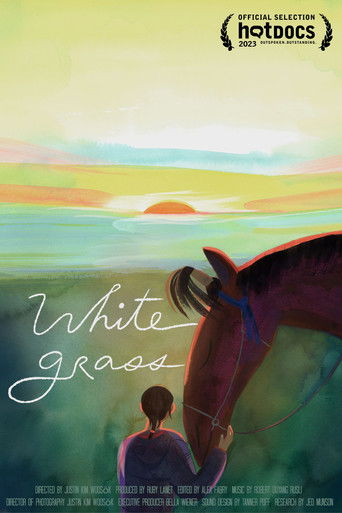
In Mongolia, Munkhjargal dreams of following in both her father's and her ancestors' footsteps as a horse trainer. Unfortunately, her entire way of life is threatened by a once rare but increasingly common phenomenon of extreme and unrelenting cold known as dzuds, which is forcing Mongolian herders to rethink their nomadic way of life.

A queer love story told through voice memos
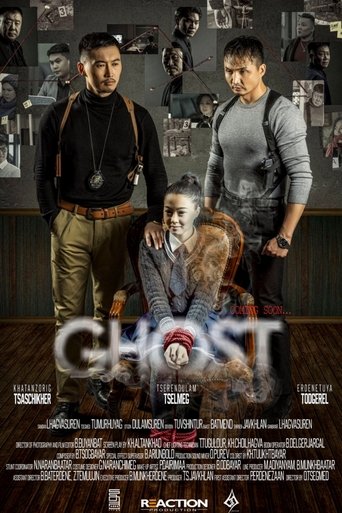
A school girl’s ghost approaches cop Byunaa asking for help. Meanwhile, detective Od, who has a history with Buynaa, finds the girl’s body while working on a serial murder. A competition arises between the two to solve the case and find the murderer.
This fascinating film depicts the Taigana, an unusual tribe of nomads living in the mountainous Hovsgol region of Mongolia, near the Siberian border. Nomadism has deep spiritual meaning for the Taigana; their annual migration represents the cyclical nature of life to them and has profound sacred meanings. All their activities are dictated by the world of the spirits. They believe the valleys and mountains are inhabited by their forefathers and by the Supreme Divinity.The Taigana are entirely dependent on their reindeer. They use the sturdy animals to move along the same paths their ancestors did for hundreds of years. Each family owns ten to seventy reindeer which provide most of the diet of the Taigana. The meat is dried and preserved while the milk is used for drinking and making cheese. The skin is utilized to make clothing for the extremely cold winter.

This film shows the cycle of life through Denzen’s life. The eternal life of the human world in the infinite expanse of space, time, and movement.
He expressed the idea that this issue should be a universal concern, while clearly stating that the care of parents has a special role in the development of children's morals.
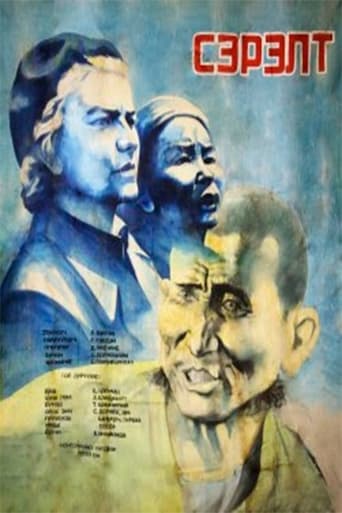
In 1928, when scientific hospitals were introduced to Mongolia, the Russian female doctors who came to rural areas and the famous local maarambas overcame old customs, opinions, and religious influences, and showed how people's views were changed and a new morality was formed in their minds.

The Mongolia of 1996 was a very different country to the Mongolia of 2015. The sudden transformation to a market economy left health services at breaking point. A mother learns that local doctors are unable to cure her young son’s sudden loss of hearing; and that her son will no longer be able to play his beloved Horse-Head Fiddle. This news does not stop the boy’s older brother trying, with the help of his best friends, to find a cure of their own – no matter how ambitious.
"I always feel helpless watching how we human beings destroy nature to satisfy our ever-increasing consumption. We all act as if we have no choice but to consume more and more. One day I was looking at the moss I collected from the forest and suddenly thought, What would it be like if I eat moss? I tried to eat it and recorded my act. The taste was really awful."
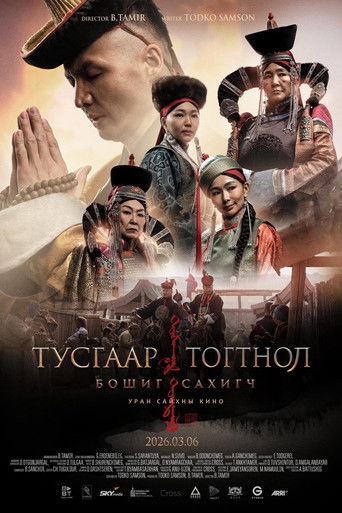
The foundation of modern Mongolia’s independence—who laid it? What were the tragic yet heroic fates they endured? Why did the Mongolian nobility of that time widely adopt “foster sons,” and what hidden motives and deeper secrets lay behind this practice? The work reveals the sacrifices made for this cause.

A mother returns to Mongolia after years abroad to begin life anew with her daughter. When the daughter reveals a truth that challenges inherited values, the mother confronts the tension between social norms and maternal love.
In 2012, after my grandfather passed away, my grandmother left the deserted village where she had lived for nearly half a century and moved to a strange county town. The next year, she was shocked to hear that her homeland would be leveled within two days - her "old world" was thus completely destroyed. After that, she spent a long time alone, often accompanied by her sick second daughter, and more often by an old TV and a deck of cards. When the wind blows, she dreams of the sunset, sheep, green grass, and curling smoke in her hometown. Every year, I go back with a camera to record her homesickness that has nowhere to go, listen to her reminiscences, and also take pictures of my childhood hometown that has also disappeared.
