
Rev. S.S. Jones Home Movie: Yale Collection Film 20 1925
Schools, businesses and other locations in Kansas City, MO; Boley, OK; Tulsa, OK; Taft, OK; Muskogee, OK.
Schools, businesses and other locations in Kansas City, MO; Boley, OK; Tulsa, OK; Taft, OK; Muskogee, OK.

Well-known locations in New York City. Clergy and others in Chicago; Muskogee, OK; and Bristow, OK.
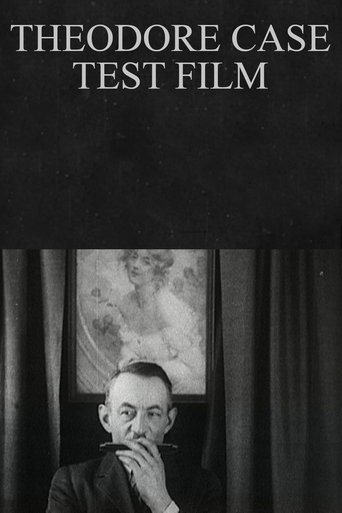
“An engineering graduate of Yale University, Theodore Case assisted Lee de Forest in developing sound-on-film called “Phonofilm.” Falling out with de Forest, Case and associate E.I. Sponable then built a laboratory behind Case’s family home in Auburn, New York, where they developed their own optical sound film system. Sold to William Fox, it was commercially exploited as “Movietone” with sensational results.” —David Shepard
1925 animated cartoon in two-color Technicolor. The Old Family Toothbrush features a character named Kid Noah in “A New Redhead Satire” filmed in Naturecolor, using the Wilson Wetherald Process.
Directed by N. Scerbakov.
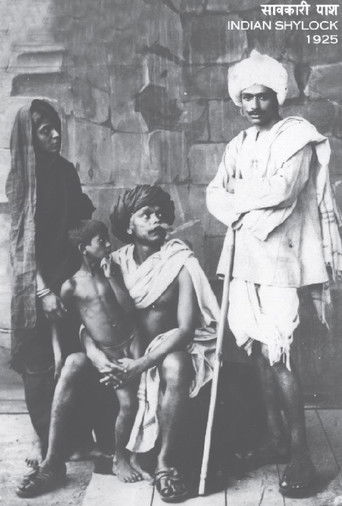
A social film with high melodrama, concerning a peasant (Shantaram) who loses his land to a greedy money-lender and moves to the city where he becomes a mill worker. Taking its cue from the realist tradition, the film counterposes an idyllic rural life (destroyed but the greedy money-lender who uses forged papers to steal the peasant's land) with the harsh city life. The shot of a hut accompanied by a howling dog are regarded as one of the most memorable moments of Indian cinema to date.
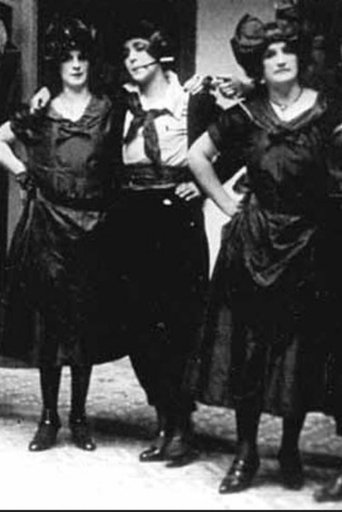
Documentary filmmed on the occasion of the seventy-fifth anniversary of the founding of the city in March 1925, with the record of the festivities and celebrations of the commemorative carnival. However, on July 3, 1925, the city suffered a terrible fire, which destroyed much of its historic center. The producers filmed the ruins of the city and added this footage to the original version, offering a rather bleak contrasting picture.
"The Pathe Sound Magazine presents An All-British Talking Cartoon - Little Bruin - The Talking Teddie." "Episode one --" A broken down building stands on a hill with a sign "Misery Farm" outside. The cartoon is drawn by Joe Noble.
We see the animator's hand as he draws Jerry (Sid Griffiths?). Jerry is cycling along but the artist hasn't drawn him a bike. Speech bubble comes out: "- Mr. Artist! What about the bike?" A bike is drawn in. Jerry carries on cycling. There is moving landscape behind him. Suddenly a fire engine starts bringing up the rear. Jerry cycles along looking scared. The fire engine chases Jerry.
Documentary showing the making of Stetson hats, from animal skins to the finished product.
Series of animated vignettes linked by a disembodied hand which appears to be drawing the illustrations. In the first segment, the hand turns around a drawing of an old man and canine-hero Rin Tin Tin magically appears. In the second set of segments, drawings of children morph into adults who look completely unlike their youthful countenances. in the final segment, the hand slices up "The House That Jack Built" into the pictures of the most significant characters in the children's rhyme, and then reattaches the slips of paper to reform the house.
The morning after his engagement party, wealthy young New York playboy Billy Hepburn awakens, battered and bruised, but without any memory of what happened the night before. Billy's valet then informs him that he and prize fighter Battling Burke had gotten into a brawl over Billy's fiancée, and Burke won. Determined to regain his honor, Billy goes into training, with his valet's help.
A documentary about a home for the sick and elderly.
According to Yomota Inuhiko's What is Japanese Cinema?, this is the first film produced by a Taiwanese person in Taiwan (circa 1925).
A commercial promoting Sana margarine. A painter's hand adds two skinny boys to a painting. The boys have a sausage and a wandering dog steals it from them. In a while, another two younger, but also skinny boys, playing at American Indians, join the chase after the dog, running away with the sausage. The older boys, however, finally pursue the younger boys instead of the dog, who eats the sausage in the meantime. The younger boys run into a factory complex in the Prague neighbourhood of Hlubočepy. A well-nurtured cook welcomes them and feeds the hungry and skinny boys almost to the verge of bursting. When the older pursuers arrive, they are surprised how fast the two younger boys gained weight. The concluding text of the commercial claims: "Every proper boy must feed on margarine."

Documentary about syphilis and venereal diseases, presenting in its sad truth the horrific consequences of venereal diseases, affecting the intimate organs of men and women.
Doing even better than Daniel, American girls dance in the lion's cage.

A defining cultural phenomenon of the Roaring Twenties, the Charleston gained widespread popularity after its appearance in October 1923 in the African American Broadway revue Runnin’ Wild. Newsreels captured the dance’s irresistible rise over the course of the decade. Fox News, Vol. 6, Release 74, issued on 13 June 1925, featured Charleston footage filmed at the Fox studio in New York and at Starlight Park, a prominent amusement park in the Bronx. In the studio footage the Charleston was demonstrated by a group of dancers sent by none other than Texas Guinan, the famed queen of New York speakeasies – among them was a very young Ruby Keeler, who, just a few years later, would marry Al Jolson and go on to become a successful actress. The surviving set of outtakes showcases a performance by an unidentified dancer embodying the Charleston’s spirit of freedom, fun, and youthful rebellion that so captivated audiences of the era.
Italy. President Mussolini on vacation on Lake Piana dei Greci.

