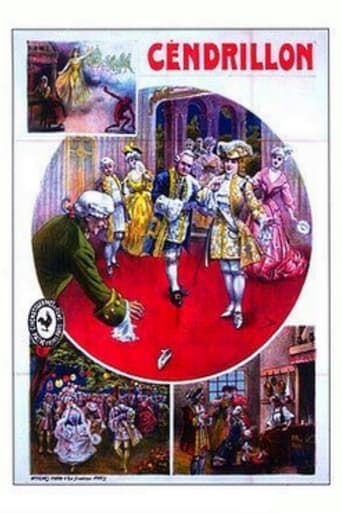
Cinderella or the Glass Slipper 1907
This is a compact telling of the Cinderella fairy tale and the film is elaborately staged.
This is a compact telling of the Cinderella fairy tale and the film is elaborately staged.

A clerk, unable to stop playing the game of Diabolo, strays in and out of precarious situations while playing with the toy.
In front of a round tent, a pasha is sitting on the grass; to the right of the tent's door, covered with a patterned blanket, is a flagpole - on top of which is an 8-pointed star [Saturn-Film's logo]. The pasha claps hands, and a servant comes to his bid. The lord is going to smoke from his water-pipe while he buys some new slave girls. The servant calls the seller and his two henchmen, who bring forth four girls in patterned burnooses.
An early short featuring Florence Lawrence.

After Lucinda do Carmo is abducted from a theatre, the police are on the case. This film is lost.
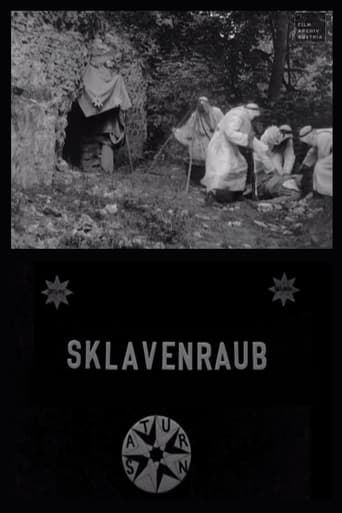
Four Arab men in white burnouses, two women in grey, and one female cook in striped burnous, are sitting in front of a cave in a forest path.
Mr. Hurry-Up gets dressed in a rush, and then races down to breakfast. After a few quick bites and a couple gulps of coffee, he races out the door and heads to work. While working at his desk, he begins to suffer from a painful toothache. Though he wants to get it dealt with as quickly as possible, Mr. Hurry-Up soon learns that some things should not be done hastily.
As a young couple are courting, they are rudely interrupted and split up. The man is seized and is turned over to a gang of toughs who want to hang him. Though she is greatly outnumbered, the young woman wastes no time in making a determined effort to rescue him.
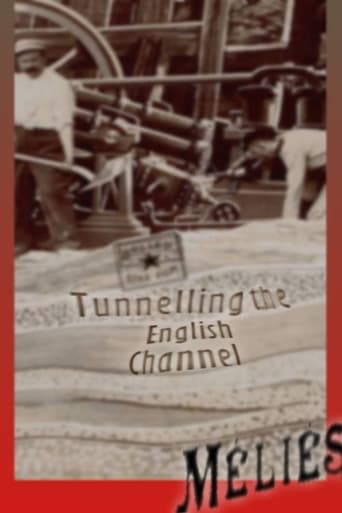
The plot follows King Edward VII and President Armand Fallières dreaming of building a tunnel under the English Channel.
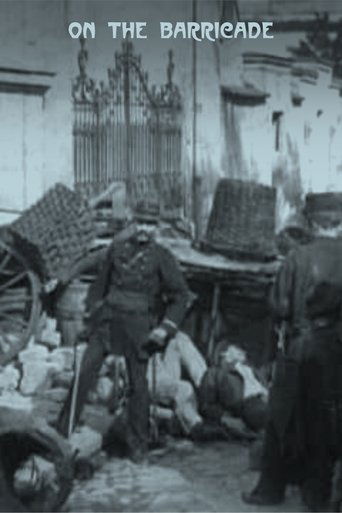
During the Paris Commune, a boy runs across trouble at the barricade. The film is now attributed to Alice Guy-Blaché by the Gaumont company, although there is some debate about whether it was directed by Étienne Arnaud.
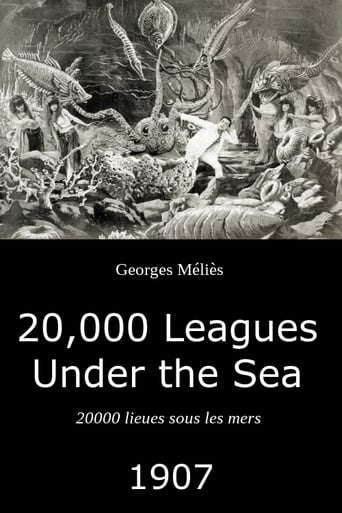
The film, a parody of the novel Twenty Thousand Leagues Under the Sea by Jules Verne, follows a fisherman, Yves, who dreams of traveling by submarine to the bottom of the ocean, where he encounters both realistic and fanciful sea creatures, including a chorus of naiads played by dancers from the Théâtre du Châtelet. Méliès's design for the film includes cut-out sea animals patterned after Alphonse de Neuville's illustrations for Verne's novel.
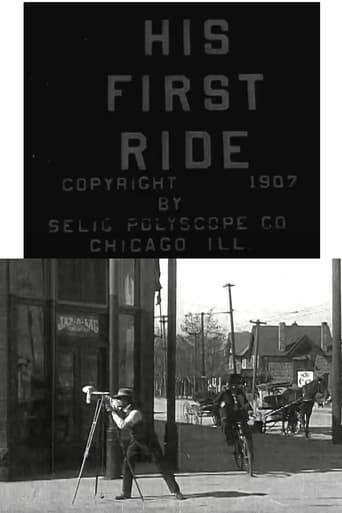
A nicely-dressed man is riding on a bicycle. When he parks it a hobo quickly steals it, but he is clearly new at riding. He cannot manage to steer in a straight line, and it is not long before he becomes quite a hazard to pedestrians and to others in his path.
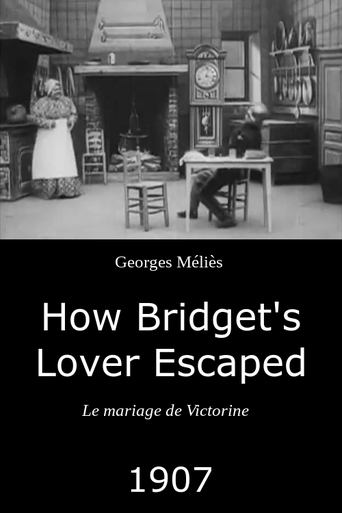
Very much a slapstick chase in the mode of the period, as Victorine's boyfriend escapes from the kitchen and is pursued on rooftop by his unsuspecting fellow officers.
As a result of a stagecoach hold-up and other crimes, Buck Brady has become known locally as the "King of Bandits". The sheriff posts a $1000 reward for Brady, dead or alive. Soon a full-scale effort is underway to capture the bandit king.
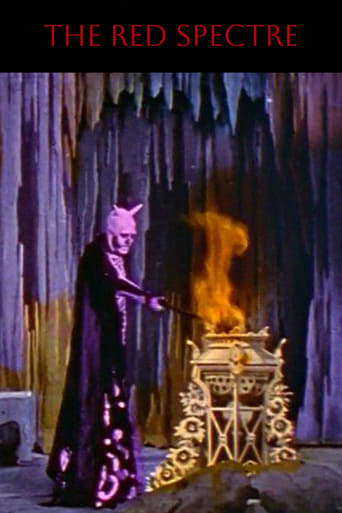
A demonic magician attempts to perform his act in a strange grotto, but is confronted by a Good Spirit who opposes him.

A boy in a cadet's uniform paints a statement on the top of the frame and then tips his cap to the audience. Also known as "Matsumoto fragment".
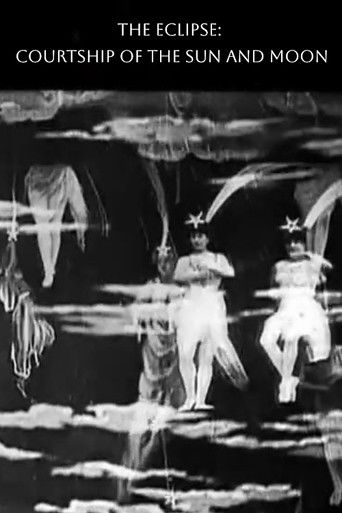
In this film, Méliès concocts a combination fairy- and morality tale about the foolishness of trying to look too deeply into the workings of an unstable and inscrutable universe. At a medieval school, an old astronomer begins to teach a class of young men, all armed with telescopes, about the art of scrutinising an imminent eclipse. When a mechanical clock strikes twelve, all the young men rush to the windows and fix their telescopes on the heavens.
A small dog thwarts burglars in this British short film.
An extremely clumsy man tries to clean a woman's house with disastrous results.
A mix of spectacle, animation and dance, the film reveals an early delight in the potential for creative fun with film form. Its director, Walter R. Booth had been described as making British films which attempted to out-Méliès Méliès.
