
Hunting Big Game in the Arctic with Gun and Camera 1925
"A Thrilling Companion Picture to the Snows' Thrilling African Hunt"
"A Thrilling Companion Picture to the Snows' Thrilling African Hunt"

Churches, schools, and other locations in Clearview, OK; Muskogee, OK; Guthrie, OK; Langston, OK; and Bristow, OK.
Film showing footballers, entrepreneurs and honourable members of Victoria Sports Club, as well as slow bicycyling and strongman competitions.
Shots of the port of Rotterdam, with images of the busy maritime traffic along the Maas river and the vertical-lift bridge above the Koningshaven, “the modern miracle of technology”.
1925 animated cartoon in two-color Technicolor. The Old Family Toothbrush features a character named Kid Noah in “A New Redhead Satire” filmed in Naturecolor, using the Wilson Wetherald Process.
An aeroplane in the sky writes the word Pongo in large letters. We see reaction shots from members of the public who look up into the sky. A man who is filming a young boy looks up at the skywriting through a telescope at the same time. The aeroplane drops a large box from the sky. It crashes on the ground and Pongo jumps out bowing, pirouetting and looking very pleased with himself. A policeman comes along and says "Where's your Collar?"
Pathe presents its third all-British cartoon of Pongo the Pup. Pongo sees a sign advertising a steer throwing competition with a £100 prize.
It's love among the mice in this very elaborate Paul Terry-Aesops fable silent. There are some nice absurdities to keep it interesting, both in the social assumptions --you can tell the rich mouse, not only because he drives a car, but because he wears a top hat, while the poor mouse (who is, I would guess, Adenoid) wears a straw hat -- and in the venue: the rich mouse takes the lady mouse to a nightclub in a large fish, where an octopus is a one-man band; she is kidnapped by a fish in a fedora and subsequently rescued by the poor mouse.
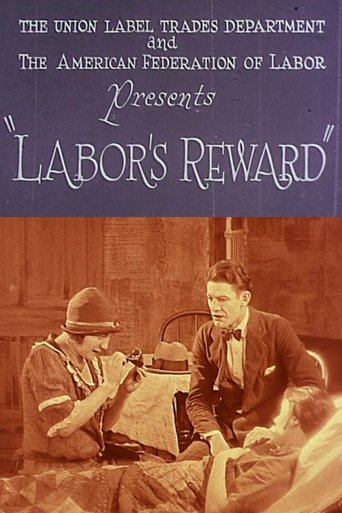
A motherless family is thrown into crisis when the father is injured at work. With no workers' compensation to fall back on, the eldest daughter, Mary, has to work long hours for low wages until she collapses. As a result, her coworkers band together to unionize.
The film shows long-lost images of the early 20th-century Korean Peninsula, before the Korean War separated the North and South. The images include women spinning on cotton wheels, families making traditional tteok (rice cakes), a look at Dongsomun (Seoul’s ancient East Gate), which was destroyed just years later, and missionary activities in what is now North Korean territory. The footage was once stored in a German monastery, but later the Nazi government, which sided with Japan in World War II, tried to confiscate it because some of it could be interpreted as espousing a critical view toward the Japanese occupational regime in Korea. Fortunately, a monk saved the film, hiding it behind a stone wall in the basement before he died during the war. The film was rediscovered in 1975 during a renovation.
