
Rut Rangeeli Aayee 1971
Film starring Bari, Bharat Bhushan and Brahmachari
Film starring Bari, Bharat Bhushan and Brahmachari
Open Form - Street and Tribune in Front of PKiN. A sequence from the 1971 KwieKulik film Open Form, in which the Polish art collective interrupts and upends the normal rhythms and routines of a city street.
Clip of Pink Floyd at Offenbach and Hamburg Feb 1971 from the German TV station ZDF. Originally broadcasted 02.03.1971 at part of Aspekte.
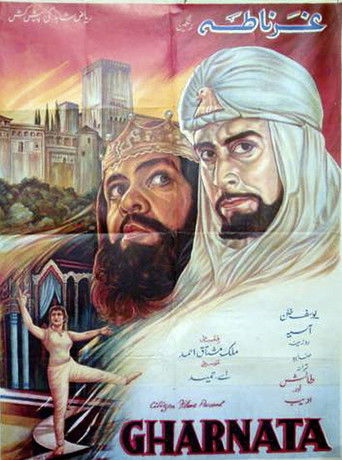
Gharnata (Granada) was the last Muslim region in Spain, which was fall on January 2, 1492. The last Muslim ruler Emir Muhammad XII surrendered complete control to Fernando V and Isabella I, after the last battle of the Granada War.
Like warriors preparing for battle, these labourers strap on all manner of protective equipment before going to work down on their hands and knees in molten tar, road-laying. The final application of paint markings indicates a job well done, but with the terrifying fall of a pickax, the cycle begins again.
This is the first ever BYU student film made for class credit. Poduced by Robert Starling and directed/edited by Dean Stubbs. Jerry has a crush on Sue after meeting her in the elevator. Their relationship becomes complicated when Sue sends a letter to Elder Wilson, her boyfriend on a mission for the Church of Jesus Christ of Latter-Day Saints. How will Sue's love life end up?
A rapid montage of stills giving impressions of New Guinea before and during the Second World War.
An ethnographic documentary filmed among the Trobriand Islanders of the Western Pacific, directed by Yasuko Ichioka for Japanese television. The film documents the Kula exchange system, a ceremonial network of inter-island gift exchange that structures social relations, travel, and status among participating communities. Produced within the context of Japan’s Our Wonderful World ethnographic television series, the film presents sustained observational footage of ritual activity and daily life associated with the Kula cycle. (Note: Although produced for television within the Our Wonderful World series, the film is consistently cited in ethnographic filmographies, festival programs, and scholarly sources as a self-contained work with a distinct title, director credit, and runtime, supporting its treatment as a standalone film.)
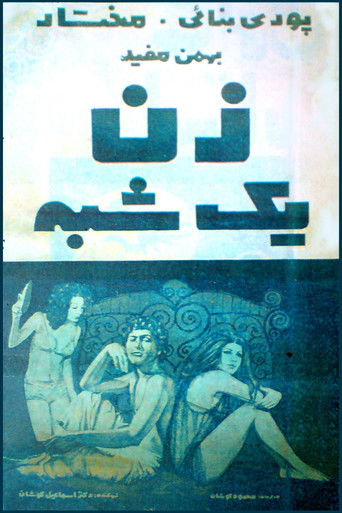
Homayoun, who has divorced his wife by triple talaq, asks Nosrat, a shoemaker who owns a small workshop, to act as a mohallel so that he can remarry his divorced wife. However, Sara, Nosrat’s wife, prevents her husband from cooperating. With the mediation of a driver, Homayoun arranges a situation in which Nosrat and his wife Sara travel to the north of the country. Along the way, Homayoun’s ex-wife and her mother get into their car, and in this manner an acquaintance is formed between them. Nosrat marries Homayoun’s ex-wife, and according to the plan they head north, but Sara and one of Nosrat’s friends keep a constant watch on them, never allowing the two to be alone and repeatedly creating disturbances.
Monty Rachmaninoff is an astoundingly beautiful Hereford bull, owned by a group of Welsh farmers. The selling of Monty from preparation to auction.
Can John Hume’s campaign of civil disobedience challenge the political status quo and take violence off the streets of Northern Ireland? In Hume's opinion there was no military solution to the problems that beset Northern Irish society. Instead, we here see him promote passive resistance, including the instigation of a rent strike. He believed that through such protests the silent majority could make their voice heard. However some believe Hume is a man who pleads pacifism, but whose actions "keep the pot boiling".
Short film made by psysisist Septimio Tesone. An experiment made in his laboratory for his students to see multiple chemical reactions.
About small and large events in a city at war.
Early experimental film from Claude Champion.
Documentary about the EEC debate in Norway.
The main character in this three-act visual gag is an apple, subjected to extremes of lightness and heaviness. Méliès’s camera magic enchants it in such a way that, in the most realistic shot, it ultimately seems the least real.
The material for this compilation guerrilla video was created thanks to the work of nearly thirty filmmakers who, using the then-new Portapak portable cameras, recorded from within the protest movement the mass demonstrations to end the Vietnam War that were held in early May 1971 in Washington, D.C. Footage of participants' discussions, strategy planning, and spontaneous happenings alternate with the documentation of police violence, stays at police stations, and improvised detentions. The first edited version tried in vain to get airtime on NBC, while the updated version of the original compilation adds informational subtitles for today's viewers and underscores the hope that the established order and repressive power can be overcome non-violently through solidarity and shared emotion.

In this film, heavily inspired by Man Ray's collage work L'enigme d'Isidore Ducasse (1920) and the poetic energy of Lautreamont's Les Chants De Maldoror, Franco films a number of incunabulae (a swing machine, an umbrella), ancestors of fecund inspirational symbols for modern and contemporary art, which hold a privileged position among the objects described by Lautreamont.

