Am I the Ageless Object in the Museum?

Am I the Ageless Object in the Museum? 2018

1

Based on a narrative that is written in parallel with several visits to different zoos and zoologies in Palestine, Switzerland and Egypt. The film is under a larger umbrella that contains different works that range between video, video installation, novel and performance, in which each of these episodes deal with the concept of the museum from a different perspective. The projected video deals with the construction of the zoo and its historical relation to the museum, and the relation between museums and cemeteries. Where the three of these components are related to the discipline of history and uses a similar aesthetics in the display of the history representation.

2018

The Moon is a Sun Returning as a Ghost

The Moon is a Sun Returning as a Ghost 2023

1

The video is based on a research that follows cases of seventeen exhibitions by Palestinian artists, each contained different artworks and exhibited in different countries around the world, the 17 exhibitions are considered missing today due to the challenges caused by the Israeli government associated with returning the artworks to Palestine. The Moon is a Sun Returning as a Ghost follows one of these cases, an exhibition that took place in 2005 in the swiss town of Martigny, the works could not be returned to the artists and were instead moved from a country to another and from one storage facility to another.

2023

White Oil

White Oil 2014

1

White Oil is a film about the quarries in the Occupied Palestinian Territories. The film unfolds narratives around colonialism, expropriation of land and mobility through the day-to-day lives of the quarry owners, workers and security guards by including their personal histories and experiences, as well as, the changing landscape and conditions of the quarries to bring to bear the myriad losses of land, economy, identity, history and community.

2014

This Is My Village

This Is My Village 2019

1

The Palestinian village of Wadi Fukin is located in the West Bank west of Bethlehem along the green line, and is surrounded on three sides by the Israeli colony of Beitar and the Israeli town of Tzur Hadasa. In 1948 the Israeli army destroyed the village and forced residents to move. In 1972, residents were allowed to return to the village and build their home within a month. Legend has it that the village was rebuilt in one night. Today the inhabitants depend almost entirely on agriculture for their livelihood and struggle daily to access their lands. But the danger is looming and the village could disappear again at any time.

2019

DEHBA

DEHBA 2009

1

Reflects the daily life of a child in a Sahrawi school

2009

For Sale!

For Sale! 2020

1

The film tells the story of a young woman with a mental illness who lost her brother in a murder. After a while, she decided to take revenge on the unknown killer, using her cunning and intelligence, exploiting his greed and avarice, and setting a trap for him, to prove to the killer that life is not about money alone.

2020

Palestinian Stories

Palestinian Stories 2008

1

These ten stories (dreams, urban legends, letters from prison, testimonies…) were filmed in Palestine from 2001 to 2008

2008

Women's Testimonies of the Nakba

Women's Testimonies of the Nakba 2006

1

This short documentary collects the oral history testimonies of five Palestinian women living inside Israel today. Four of the women are internally displaced refugees, unable to return to their villages and homes despite remaining within the boundaries of what became Israel in 1948, the fifth remains a resident of her original village, Tarshiha in the northern Galilee. The film aims to convey through these testimonies a sense of women's lives in rural Palestinian communities prior to, during, and after the Nakba, and by doing so to contribute to a fuller understanding of the different and vital roles played by Palestinian women during this period. The documentation forms part of a wider series of oral history projects undertaken by the Zochrot organisation in Israel.

2006

Deir Yassin Remembered

Deir Yassin Remembered 2006

1

Early in the morning of April 9, 1948, commandos of the Irgun (headed by Menachem Begin) and the Stern Gang attacked Deir Yassin, a village with about 750 Palestinian residents. The village lay outside of the area to be assigned by the United Nations to the "Jewish State"; it had a peaceful reputation, but it was located on high ground in the corridor between Tel Aviv and Jerusalem. Deir Yassin was slated for occupation under Plan Dalet and the mainstream Jewish "defense" force. The Haganah authorized the irregular terrorist forces of the Irgun and the Stern Gang to perform the takeover. In all over 100 men, women, and children were systematically murdered. Fifty-three orphaned children were dumped along the wall of the Old City, where they were found by Miss Hind Husseini and brought behind the American Colony Hotel to her home, which was to become the Dar El-Tifl El-Arabi orphanage.

2006

The Sun Doesn't Shine In The Camp

The Sun Doesn't Shine In The Camp 2004

1

A documentary on life in Balata Refugee Camp, Occupied Palestine. Filmed by international activists and Palestinians between December 2003 and March 2004, the film represents the suffering and struggle of the Palestinian people. Composed of interviews with Balata residents and footage from the 2003-2004 New Year's invasion, the film offers a unique view of Balata Refugee Camp. During this invasion, 5 people were killed, 2 homes were demolished and dozens were injured. The 30,000 residents were held under 24-hour home imprisonment for the four-week period without access to food, medical services or supplies. Yet the residents of the camp continued to resist by breaking curfew, throwing stones, walking past tanks to attend school. Raw street footage shows the conditions people were forced to live under and their acts of resistance.

2004

The Poet of Blue Light

The Poet of Blue Light 2003

1

A biographical documentary film about the life and creativity of the late thinker and poet Dr. Hussein Barghouti 2003. The researcher-director (Dr. Tayseer Al-Masharqa) reads Barghouti’s works and traced his biography through the personalities of those who knew him - approximately 25 personalities. The film is based on important and historical testimonies of a rare elite of Palestinian and Arab intellectuals.

2003

I am the all knowing, the deceased

I am the all knowing, the deceased 2008

1

I am the all knowing, the deceased. I live among you and have seen the imam Mehdi master of time, may god hasten his arrival I sit with him, he talks to me and he tells me of what was, and what will be. He spoke to me about the time of revelation, the signs and what will come. I am the all knowing, the deceased, I have fought in the name of our lord and his prophet. I have seen the revelation during my life and after my death.

2008

Golden Pomegranate Seeds

Golden Pomegranate Seeds 2009

1

A Palestinian fairy tale about a girl who faces substantial hardships in her life. After years of silently and patiently bearing difficulty, she is rewarded and lives happily ever after. But how will the stories end for real women in Palestine, who suffer daily living in fear, and at last break their silence?

2009

Jana

Jana 2019

1

Jana" (2019) is a Lebanese short film that explores the emotional journey of a young woman caught between tradition and self-expression. Through intimate storytelling and a subtle visual style, the film reflects on identity, cultural pressures, and personal freedom.

2019

O bird, tell me

O bird, tell me 2008

1

When a new TV show about finding missing people airs, a taxi driver sends a message through the show to find his sister who has been missing for two years.

2008

Iraqis in Multi-classes Exile

Iraqis in Multi-classes Exile 2008

1

"Iraqis in Multi-classes Exile" is documentary exploring the fragmented lives of Iraqi intellectuals exiled in Damascus, Syria, many of whom fled Iraq in the 1970s and 1980s under political and social duress. At its core, the film examines the psychological and existential burden of exile, especially through the lens of names and identity. Several of the film’s protagonists have lived under pseudonyms for decades, adopting fictional names to survive politically, socially, or artistically in a country that is not their own.

2008

Hotel Casafornia (2025)

Hotel Casafornia (2025) 1970

1

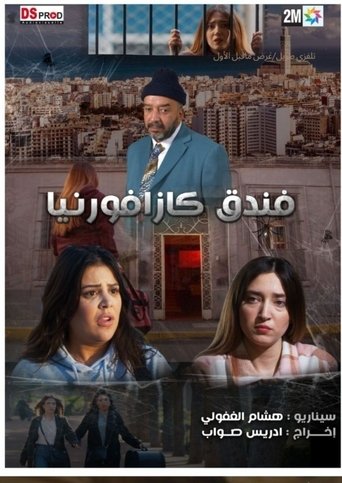
Safaa decided to settle in Casablanca, hoping for a better life than the one she was experiencing in her hometown. The beginning would certainly be difficult, but Safaa was determined to go through this experience, and initially settled in a small room in a hotel called “Casablanca

1970