
Merino 1957
Documentary about the merino sheep farming in Macedonia.
Documentary about the merino sheep farming in Macedonia.
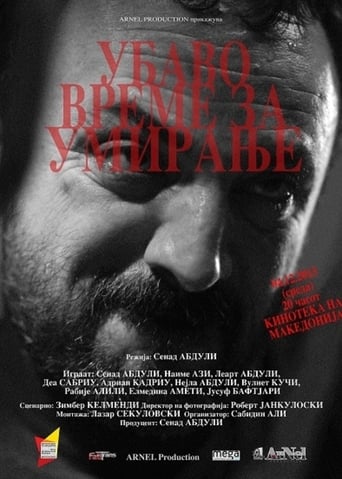
Without a doubt, one of the oldest occurrences of mankind is suicide, however, this film presents a different manner of this negative phenomenon in developing societies. Meti, a male of around 50 years of age, married with three children, decides to commit suicide twice from his monotony of life and his inability to care for his family. On the other hand, being fixated on the exact date, day, and hour, Meti leaves far away from his home, never to find exactness.... He does not commit suicide. There is always a reason to live...

When a conservative tradition of bridal sale becomes a solution for a financial family problem, ADELA dives into a completely new world where she gets caught between traditional and modern values.
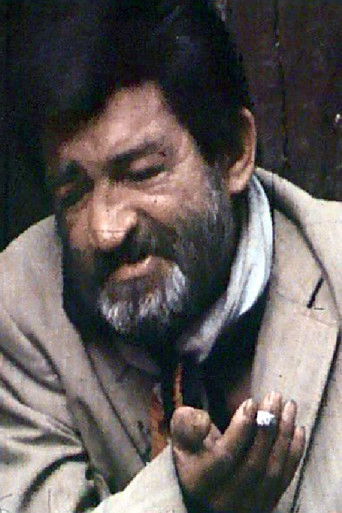
A film dedicated to the homeless man Pishta. He has no home, no family, only the ground under his feet and the sky above his head. He is also called the "emigrant of the soul."

A reportage from the Fourth Parachute Championship of Yugoslavia, which was held in Ohrid and organized by the Aeronautical Union of Yugoslavia.
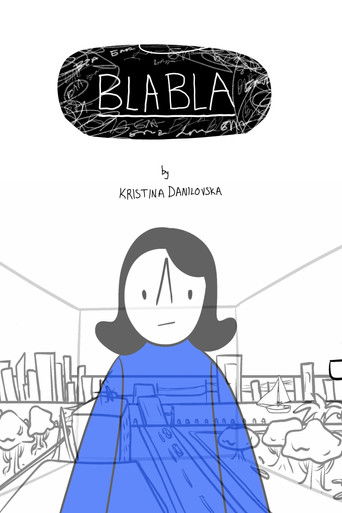
A girl spaces out during a conversation with her coworker, leading to an overblown misunderstanding.
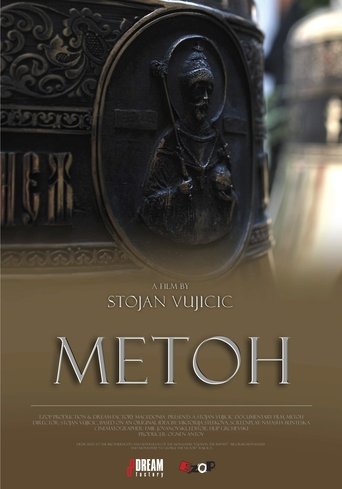
The twenty-minute documentary was filmed in the Macedonian monasteries “St. John the Baptist”, known as the Bigorski Monastery and in the women’s monastery “St. George the Victorious” in Rajčica, near Debar. The term “metoch” means property owned by a monastery, and the monastery in Rajčica, where most of the film was filmed, is a metoch of the Bigorski Monastery. The film shows part of the everyday life of the Macedonian monastic community and the motives that inspired some of its members to make the decision to become monks. “Metoch” talks about joy, simplicity and love for God.
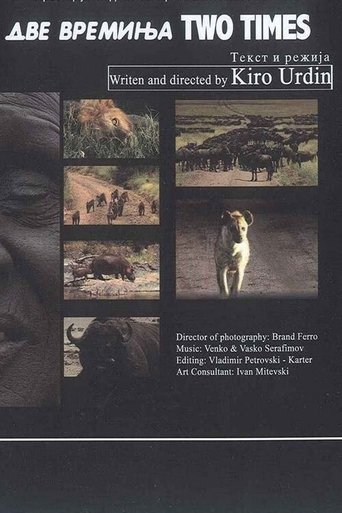
A poetic journey through the Serengeti National Park and Tanzania in Africa. The endemic flora and fauna, as well as the beautiful natural beauties are a blessing for the human soul, for the traveler, but his presence seems to represent pollution of the environment. Even the path along which man moves, which is created by himself, seems to be an intruder in these wild landscapes. How far should human intervention in nature and the environment in which he lives go? What is the limit beyond which human presence represents a violation of cosmic harmony?
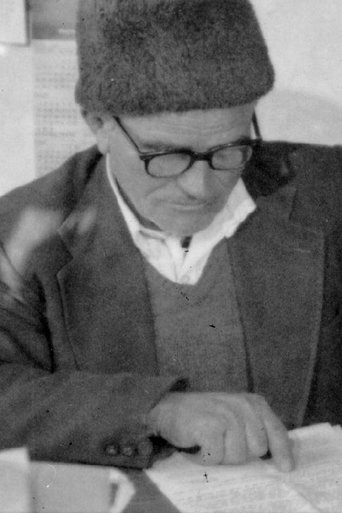
The work related to the liquidation of the ‘Bogoslovec’ asbestos mine, in the village of Bogoslovec, has been entrusted to a man who has been doing the job for seventeen years. The mine's facilities and the crumbling machinery themselves speak for the absurdity of the entire procedure.
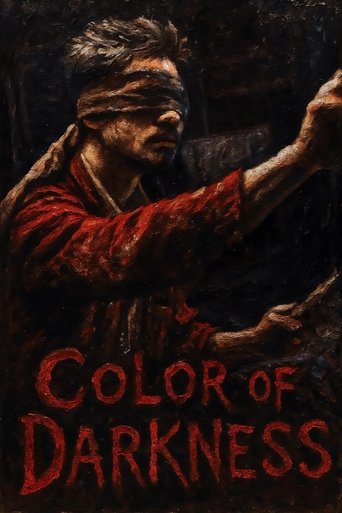
An intimate and psychological portrait of the young artist Denis, who faces his limits in his search for the perfect painting. He has achieved some fame and success, but, despite this, believes that he will die an unfulfilled and mediocre artist.

An incredible and sad story about the bear named Menka which roams the wilderness by day and is part of the Trajkovi family by night.
The destiny of a family of iconographers in a monastery in Macedonia during the Kresna Uprising in 1878.

Several people make an apartment so they can all live together in it, but when the apartment is ready, the system breaks down around a simple toilet.
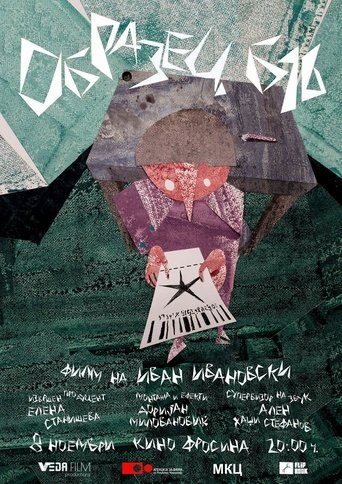
Form B16 is a film about a man who gets the smallest piece of the pie. Stuck in a bureaucratic labyrinth, he goes through a number of absurd situations, and following the already established and predetermined steps, he somehow ends up at the beginning.

Vetka is a 40-year-old woman, a single mother of two, without permanent employment. Her husband died, and she, along with her 15-year-old son Simcho and 3-year-old Bube, live in a deliberately hidden hut. They wash cars, collect old things from containers, barely eat. A new complex of buildings will be built on the land where their hut is located. Everything is destroyed, they remain on the street.
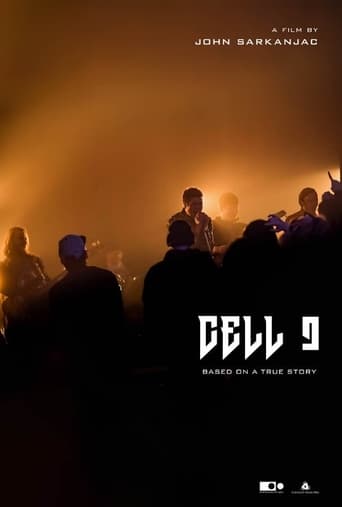
The teen metal band Cell 9 must decide whether to play their heavy metal music for their last performance or succumb to the threats of the principal of the high school they're playing.
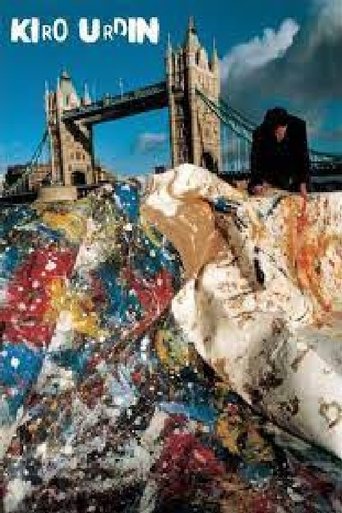
Planetarium is the first artwork in the history to be created around the world. It is composed of two panels of 24m2 each. Kiro Urdin devoted 20 months to his realization inspired by all cultures he met, ethnic groups and historical monuments he has discovered by traveling around the planet: Germany (Berlin's Wall). Macedonia (Nerezi, Ohrid), Belgium (Brussels, Knokke, Brugge), France (Paris, Mont Saint-Michel), Italy (Roma, Pompei, Pisa), Great Britain (London, Stonehenge), Greece (Athens, Cape Sounion), Israel (Tomb of Jesus, the Wailing Wall Jerusalem), Egypt (Suez Canal, the Nile, Kheops Pyramid), Kenya (The Masai-Mara tribe), USA (New York City), Peru (Machu Pichu, Cuzco), Thailand (Bangkok), China (Beijing, The Forbidden City of Peking, the Wall of China), Japan (Tokyo, Kamakura), Netherlands (Nuenen, Eindhoven).
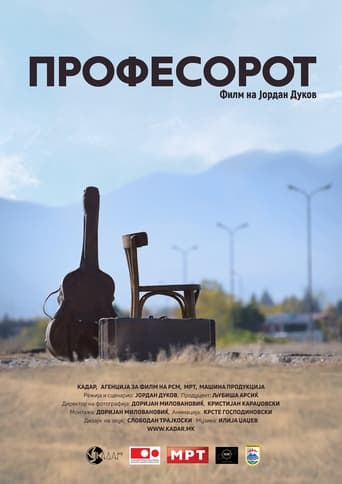
A research into the unusual life path of Ilija Dzadzev – musician, Hawaiian and classical guitar virtuoso, poet, philosopher, geography teacher. A story of the quest for a lost novel in manuscript. A story about the adventures of a Hawaiian guitar. This man-phenomenon played over 6,000 free concerts across the world, without making a difference between playing in front of people from the top or from the bottom. He played for presidents, beggars, miners, kindergarten children, students in cafeterias, field workers, replacing concert halls with maternity wards, graveyards, nursing homes, mine shafts, passenger and military ships, watchtowers, prisons, psychiatric hospitals, as well as squares in the major cities of the world, traveling more than 4 million kilometers with his guitar.
In the constant and cruel struggle of man to master nature, he will begin by destroying his greatest ally. An authentic story about a lesser-known profession that begins where the asphalt ends. In a mountainous setting, decorated with a variety of plants and home to numerous insects, birds and animals, man comes to bring unrest to the long-tamed bowels of the earth and disturbs the primordial peace of nature with the roar of explosives and the roar of machines.

Motifs from the life of the Macedonian people, through their folk art presented with fabrics, carvings, architecture, agricultural crops specific to this region, up to the folk songs and dances that cultural and artistic societies have the opportunity to present at the festivals in Bitola and Shtip.
