Meeting Milos Forman

Meeting Milos Forman 1971

1

In this interview given soon after the completion of Forman's first American film, Taking Off, we are treated to a candid, humorous and lively portrait of one of Czechoslovakia's most reputed filmmakers. Forman, a roguish, entertaining character, explains his reasons for using non-professional actors, tells anecdotes about his talent discoveries and provides interesting insights into the artistry of performers. The interview is interspersed with filmclips from Taking Off, Loves of a Blonde and The Fireman's Ball.
1971

Globe of Delights

Globe of Delights 1971

1

The world seen as a vast carnival, in which the clowns imitate the greed and avarice of human beings. Experimental animation film, using cut-out figures to reflect and symbolise human traits.

1971

People's Video Theater Reel

People's Video Theater Reel 1971

1

People's Video Theater (PVT) documented historic public demonstrations by liberation movements in 1970-1971. Sampled here are the first Women's Liberation March in New York, the first Gay Pride March, the Young Lords' (a Puerto Rican liberation group) protest occupation of a Manhattan church, and an action taken by Native Americans at Plymouth Rock on the 350th anniversary of the pilgrims' landing.

1971

Early Patterns

Early Patterns 1971

1

Exploring textures and patterns in nature.

1971

Wedding Ceremony of the Ainus

Wedding Ceremony of the Ainus 1971

1

The documentary is a record of a marriage ceremony that took place in April 1971 and was performed in accordance with Ainu traditions at the request of the young bride. There were two hurdles to overcome in the realization of the ceremony: first, a group of Ainu had to be convinced, who were against a revival of the tradition. Secondly, there were only a few members of the community who knew the details of the ceremony at all, since most of them had already been celebrating a wedding in their own style for over 80 years.

1971

Two Weeks at Manutuke

Two Weeks at Manutuke 1971

1

The candid record of a unique 14-day theatre school, held at the village of Manutuke by the New Zealand Maori Theatre Trust.

1971

Moseka

Moseka 1971

1

Moseka, a young woman from Zaire, travels to Belgium to study. With her braided hair and traditional clothes, she is the laughingstock of her fellow students who strive to look European, adopting wigs and European clothing. The film tells of the depersonalization of young Africans when they enter into contact with the European culture.

1971

Doing Their Thing

Doing Their Thing 1971

1

In a modern Africa, where the music of James Brown is starting to arrive, young people are coming into conflict with the older generations. A musical comedy that tells the story of a girl who wants to become a singer. Her father would rather see her embark on a safer career. But the girl leaves school and, with her mother's help, succeeds in convincing him to send her to the country to study traditional music. Thanks to her stay in the villages in the company of a sociologist friend, the young girl discovers the deep African roots of Afro-American music. When she goes back to the city, she begins to write songs combining Afro-American soul and traditional music

1971

Portrait - Jesse Fuller

Portrait - Jesse Fuller 1971

1

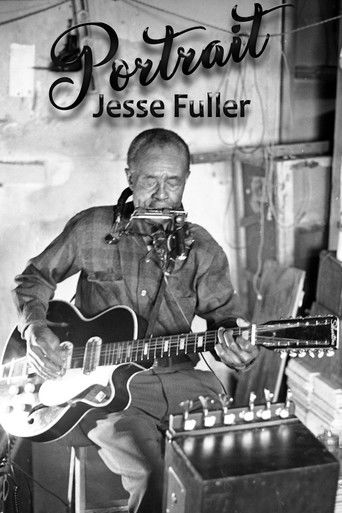
A KRON-TV film documentary featuring the last public concert given by one man band musician Jesse Fuller, in Oakland Museum's Cowell Hall on May 7th 1971. Fuller is seen playing several songs (including 'San Francisco Bay Blues') and bantering with the audience, recalling how he appeared in Raoul Walsh's 1924 movie 'The Thief of Bagdad'. Also includes close-up views of him playing his guitar and fotdella (a foot operated percussion bass) and talking about his playing style. Begins and ends with brief scenes of Fuller walking around his Oakland neighborhood.

1971

A Nail

A Nail 1971

1

16mm film, color, sound.

1971

III/71 Aktionen

III/71 Aktionen 1971

1

Things (and their treatment) are shown repeatedly - a loaf of bread, a sausage, an egg cracked open on the rim of a cup: everyday actions with irreversible, one might say vitally destructive consequences. In the second part, the actions are directed at people, and the anxiety changes because the situations are created deliberately and uncritically. Part three, which could be read as a sober protocol of a relationship, loses the proximity to actionism and performance. Images of a man and a woman alternate with images of windows, mirrors, sofas, and the interior.

1971