
Bajiraocha Beta 1971
Directed by Raja Thakur. With Mandakani Bhadbhade, Amol Palekar, Surekha, Sharad Talwalkar.
Directed by Raja Thakur. With Mandakani Bhadbhade, Amol Palekar, Surekha, Sharad Talwalkar.
A group of teens try a ritual but soon after get freaked out. In the coming days, the ritual starts to unexpectedly complete itself putting them in greater danger.
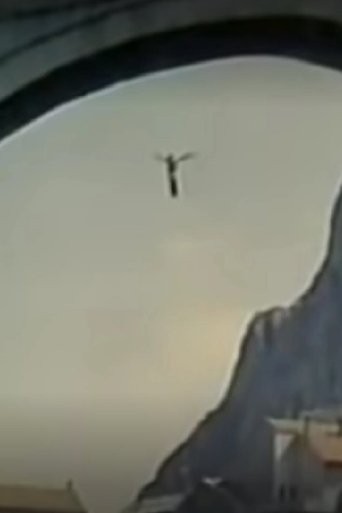
Diving off the Old Bridge as a rite of passage for a boy in the city of Mostar.
About the Barguzin Biosphere Reserve, located on the northeastern coast of Lake Baikal, among the attractions of which are the unique Siberian pine pine, hot mineral springs, rare grayling fish, Baikal seals and, of course, the famous Barguzin sable.
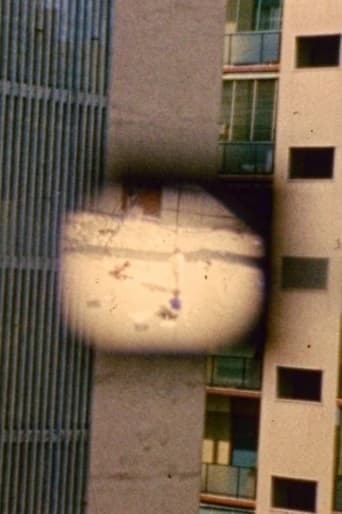
A jewel of Italian artist cinema long considered lost, Echo by Gianfranco Pardi was presented for the first time in 1971 at Studio Marconi. The music from the film, created together with the artists Mino Ceretti, Carlo Ruffini and Davide Mosconi, will then flow into the album Uno zingaro di Atlante con un fiore a New York, released by RCA in 1973. As Franco Quadri had already noted at the time, the structure of the film unfolds in three moments which, although contrasting, blend into each other harmoniously, from a visual and musical point of view. The first is of an exquisitely conceptual nature and focuses on the constructive values of the architectural measurement of space; the second is characterized by a convulsive explosiveness bordering on pop and, finally, the third brings the gaze back to the natural order.

In an unusual spaghetti western setting, a man - played by Ilarion Ciobanu - returns to his home village after spending time at the front. He finds his wife in the company of another man - played by Anușavan Salamanian - who is also raising his son. The confrontation between the two is at its most intense when they exchange glances that, in Ciobanu's case, seem to be a textbook study in Clint Eastwood's taciturn protagonist from Sergio Leone's famous trilogy. In many ways, People Aren't Goats stands out among all the other student films of the period. But the point where it proves most particular is its belonging to a genre - spaghetti western - at that time still new worldwide, whose national exponent will remain Ilarion Ciobanu, through the roles he played in the singular western trilogy, released a few years later, in which the people of the Ardennes go through all sorts of adventures.
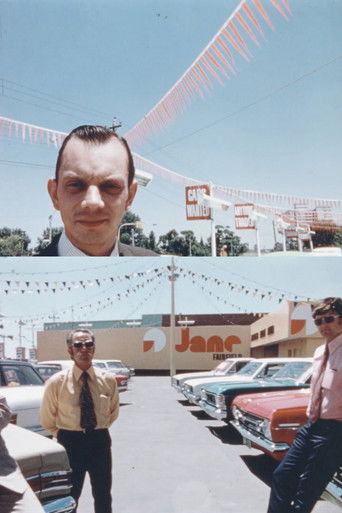
Sue Ford was one of the first feminist photographers and filmmakers in Australia, initiating her practice during the early 1960s in Melbourne. An active member of many feminist film co-operatives, her works explore Australian identity and feminism, excavating the effects of Australia’s colonial past through playful, innovative and experimental films. In Low deposit, easy terms, Ford interrogates Australia’s obsession with car culture, but instead of open Outback roads, the viewer tours inner-city car dealerships, home garages and junkyards where life struggles to grow. — ACMI
1971 documentary about the concentration camp Sachsenhausen commissioned for the National Memorial and Monument Sachsenhausen (GDR).
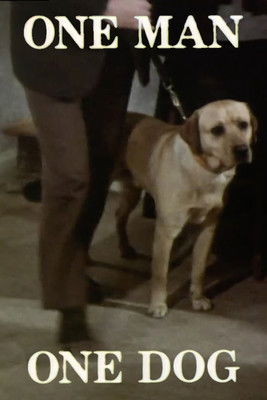
Filmed at Scotland Yard. An insightful film on the police dogs and their handlers, and what was the state of crime in London and surrounding areas in the 1970s.

Valentina Berardinone is an artist who favors the use of particular kinds of resin in her paintings and 'assemblages' which often represent the freezing in time of a falling drip–at other times it is a whole flow of liquid pouring over a staircase to be frozen in its slow advance. But even in their fixed state all these images refer to movement, either past or potential, for their manner of presentation. And this movement, which is necessarily frozen in the paintings and sculptures, is restored to its origins by Berardinone through the cinema. From her first work, Silent Invasion, she has reconstructed on film the impending descent of a mass of resin down a flight of stairs, this movement being repeated and emphasized through the use of a magnifying glass.
Self-portrait

Ombre mobili from 1971 was my first video work; a first test born from my environmental art project, an exhibition that could be made with lamps and lights that were supposed to stand out against the white walls of Studio 74, the constantly moving shadows of the audience present.
In a sequence shot around a drawing board the protagonist (Pettena himself, recently graduated architect) does anything but design: he trims his nails, stretches his back, takes slips of paper and money out of his billfold, scratches an ear, lights a cigarette.
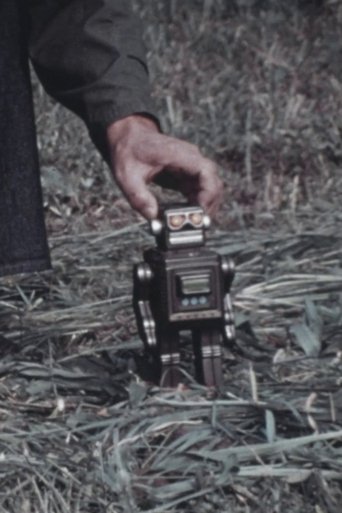
Robotic presentation of the myth of Sisyphus.
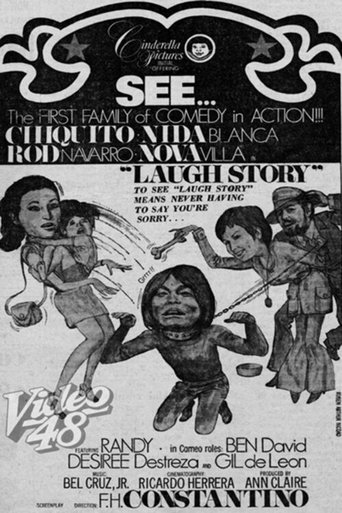
Laff Story: Directed by F.H. Constantino. With Chiquito, Nida Blanca, Rod Navarro, Nova Villa.
An evocation of a boy's growth into young manhood.
Experimental short by Yoichi Nagata.
Experimental short by Masaki Matsushita.
