
Gąszcz 1974
Colonel of the Citizens' Militia Stefko, after thirty years of absence, arrives in the town which was his place of work right after World War II.
Colonel of the Citizens' Militia Stefko, after thirty years of absence, arrives in the town which was his place of work right after World War II.
Paweł looks for the perpetrator of the theft in a student labor cooperative.
This film belongs to a group of works that constitute manifestations of Robakowski’s engaged attitude towards social reality. Here, his interests focus on the rhythm of the city, the dynamics of passing cars, recorded with a fast-panning camera set at a single point. The video recording is accompanied by Robakowski’s voice, commenting off-screen, with constantly varying intonation and speed of uttering words, on what is happening in the street. The energy of the urban landscape is contrasted with the calmness of the space in which the camera is placed, which introduces a tension that reflects the author’s emotional state.
December 13th, 1981 – General Jaruzelski declared martial law in Poland to put an end to the revolt by “Solidarnosc” (Solidarity), the first and only free union in the Eastern Block. It was a genuine people’s movement that counted more than 10 million members in Poland, and that met their aspirations of freedom, social justice, and democracy. The coup d’état was supported by Moscow and created a veritable diplomatic uproar, mobilizing public opinion around the world to come to the aid of Poland.
The Militia officer single handedly tries to catch Józef Rybicki, who escaped from prison.
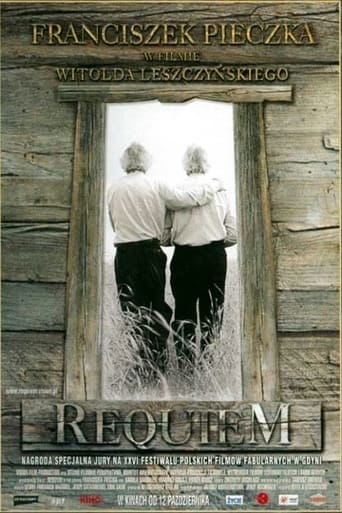
Wanda Borejkówna comes to Poland for a violin competition. On the way back she loses her passport.
Kamil is unable to choose between two women he cares about: his wife Izabella and friend Małgorzata. Christmas Eve will turn out to be a turning point in a man's life.
This film covers the history of the Duchy of Warsaw. It begins in 1806, when Napoleon Bonaparte's army enters the Polish lands under Prussian rule. Ends with a Galician company in 1809. An important element of the film is the battle with the Austrians at Raszyn, which is important for Poles.
A woman who is the director of a scientific institute terminates a pregnancy that would interfere with her career. Her husband files for divorce.
This film is based on Hasek's unfinished novel about a good-humored, simple-minded, middle-aged man who pretends to be enthusiastic to serve Austria-Hungary in World War I.

How easy it is to lose one's head? A white head rolls slowly towards the center of a black screen. One event triggers an avalanche of others.

A short story of life and death takes place in naturalistic, disgusting scenery. Blood, dirt and flies above a dying corpse create a frightening atmosphere of decomposition.
Polotubbbieland
A story about the life of the poet Bolesław Leśmian based on factual materials, memories of family and friends. Its main theme is the relationship between the poet and the doctor Teodora "Dora" Lebenthal, from the moment they met in the summer of 1917

