
Lucyna 1986
A lonely writer meets the woman of his dreams, but she marries another.
A lonely writer meets the woman of his dreams, but she marries another.
An inhabitant of an old tenement house lives with hope for her husband's return from the war, which is confirmed by parcels and letters sent to her.
10-year-old Joasia is given by her mother to the care of her grandparents.
Mr. B. is an old, ailing Jew who did not accept the changes. One day he sees Christ coming to Warsaw on a donkey. He is arrested. Mr. B. tells the doctor about it. He got bitter because nobody believed his words.
During the land reform, the priest encourages the peasants to accept the land, which puts himself at risk for forest gangs.
Martha's father falls into alcoholism. The girl is preparing for the secondary school-leaving examination.
The film shows Poland regaining independence in 1918 and the formation of the first government of the Republic of Poland.
The film is about three old buddies living in one of Poznań's forgotten apartment blocks. Darek - philosophy student, Rogalo - petrol station employee and Bubu Oxford - drug dealer. They have one goal in common: they want to go abroad to work. The action of the film begins when the student gets a visa to the USA. He has a job there with his uncle. The situation becomes more complicated when a policeman who has an eye on the dealer starts blackmailing Darek - demanding that Bubu be poured in in exchange for returning his passport and permission to leave.
In the sea, Peter and the dog find a bottle with a note written by a shipwrecked person. They go looking for a sender asking for help.
The love of Leopold and Sabina is in crisis when the man meets the daughter of his former partner.
Józef comes to Krakow, where he is to participate in the jubilee of Nowa Huta.
A documentary film about the life and work of 66-year-old Piotr Sudoł, a collector of dry bread. The director, talking about the film, described the title character as follows: "Mr. Chlebek was a person so extraordinary that everything he did had a deeper meaning for him. What mattered to him was not money, but an idea. He wanted to make people realize that they should respect bread and food". Three months after shooting, the protagonist was hit by a car while working.
The title inheritance is a square in Buczacz, bequeathed by an American citizen to Leon Zabielak as a token of gratitude for saving his life during the war.
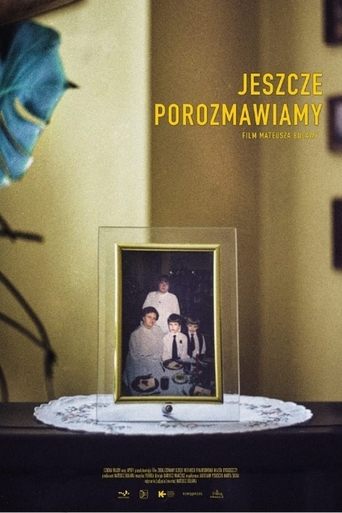
Two brothers on the threshold of adulthood still live with their mother and grandmother. In an apartment, they fight for even the smallest bit of autonomy, and each of them has a different strategy for moving around this difficult terrain. However, the family portrait is not complete - it lacks the father, whose significant absence returns with a dull tone in the telephone receiver.
A well-known actor, Bogumił Kobiela, appears on the beach in Sopot, where he does various strange and funny things for sunbathers, incl. changes into winter overalls and goes for a walk in skis, pretends to be a lifeguard controlling the possession of swimming cards, says goodbye to accidentally met sunbathers as a departing vacationer.
It is a parable about the inhabitants of Przechwałków. They could not come to terms with who was doing the most important work. Their quarrels shattered the unity in the city, which led to a threat.
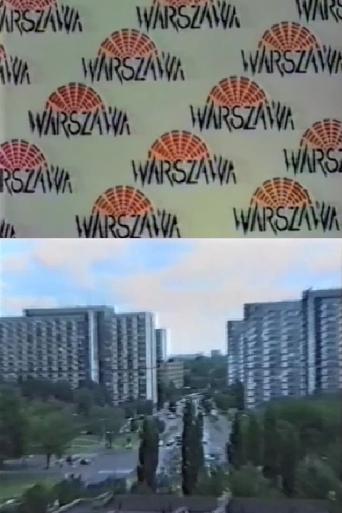
In the film Warsaw 88-89 we observe the city on the eve of the coming changes, captured on VHS tape. Tomasz Dominik and Piotr Rozbicki capture interesting, distinctive details - an unusual balcony, inscriptions on the walls, beautiful but dilapidated architectural details - from the gray reality of shabby tenement houses, blocks of flats, squalid courtyards. In the background we can observe the political, economic and cultural context of the period: lifestyle, cars, clothes, texts on walls. In the public space the sphere of the sacred mixes with the profane.
On January 27, 1952, the draft Constitution of the People's Republic of Poland was announced. The history of over a hundred years of popular struggle is illustrated by paintings, from Artur Grottger to contemporary artists of socialist realism.
Maciej Sienski's film is an extensive panorama of life in occupied Poland. The documentary focuses on the existence of civilians, their living conditions, and above all, the constant and periodically intensifying Nazi terror.
Poland. A young writer is doing research for his new book, when his brother returns home early with a mysterious box - an unforeseen event that will force the boy to come to terms with himself and his family.

