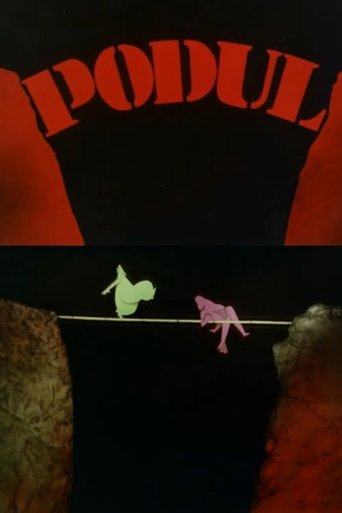
The Bridge 1985
Two characters separated by a deep gulf strive to build a solid bridge between the two sides.
Two characters separated by a deep gulf strive to build a solid bridge between the two sides.
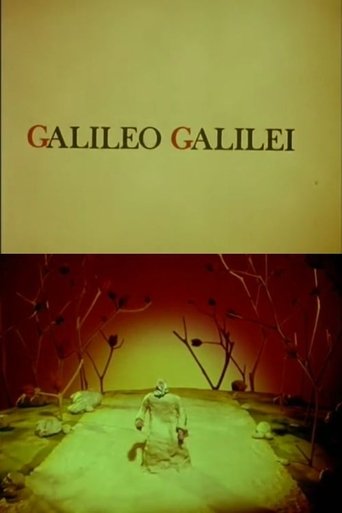

Two mysterious men are captured in various carefully stylized locations, accompanied by haunting music.
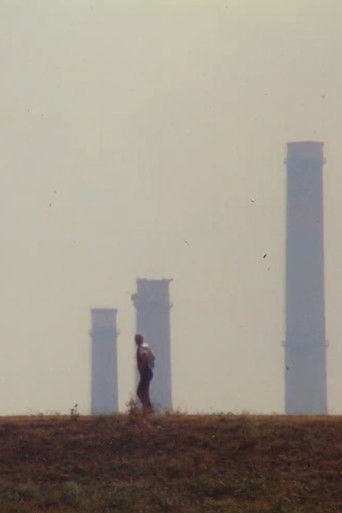
Compiling various footage from Bucharest at the end of the millennium, Niculae Popescu's film aims to imprint on film the transient image of post-socialist society, caught between two worlds denoting different aspirations and presenting great social contrasts.

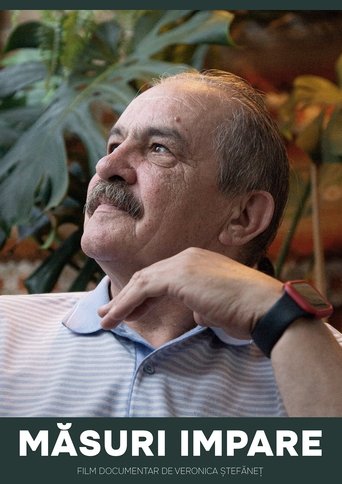
A small part of Ion Tarara's photographic archive is put in sentimental order by his daughter, on which occasion she rethinks the poetics of archivism.
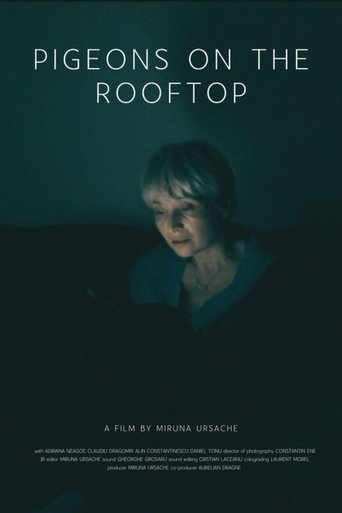
In a quiet Bucharest suburb, Edith and Stan lead an unremarkable life – until Spiridon, the building handyman, stirs their routine with a startling revelation: their new neighbor, Anilov, breeds pigeons that are not what they seem. As Edith, a fervent believer in conspiracy theories, becomes increasingly obsessed, her imagination spirals out of control, blurring the lines between reality and paranoia. Meanwhile, Stan, a man of reason, struggles to anchor her in logic, navigating the growing conflict between belief and skepticism.
The Segalls’ interest in children’s lives dated from the mid-1960s, when, using a camera placed off-stage, they filmed the end of the year festivities at their daughter’s nursery. The result was Big Little Feelings, which won the Silver Dove at the Leipzig Festival in 1964. In the years that followed, the idea of including their own child in some of their films did not sit well with the political bureaucrats. In the end, she would only feature briefly in two short sequences at the end of this and another documentary, filmed eleven years later with the same children (The Feelings Have Grown, 1975). In both films, Doru Segall proudly makes clear that he is both the film’s cinematographer and the father of the girl in the image—a personal, autobiographic detail unusual for a Sahia film. Over the following years, the Segalls continued to work on documentaries about children, including Exams (1976), The High Schoolers (1978), Parents Meeting (1980), and The School Leavers (1986).
This film consists of almost twenty minutes coverage of a political rally, filmed by more than ten Sahia cameramen, during the celebration of the thirtieth anniversary of 23 August 1944, ‘the first day of the socialist era’. The Hottest Day is part of a rich author filmography, which includes around one hundred titles, such as A Life Dedicated to the Happiness of the People (1978); Homage (1983); The Party, The Homeland, The People (1986); Heroic Times in Legendary Lands (1987). When the Sahia documentaries obediently followed their political commission, their length could surpass the usual ten to twenty minutes, even reaching feature length. The Hottest Day was one of the shortest film in this category that we could find in the archives.
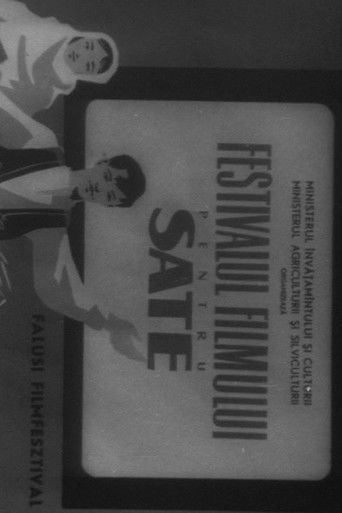
Created with a political-educational purpose and, at the end of the ‘70s, incorporated into the Cîntarea României (Song to Romania) Festival, the Film Festival for the Villages was one of the longest running cultural-political events in Socialist Romania. This film, conceived as a marketing device / trailer for an upcoming festival, is an example of Sahia ephemera. Seen today, it gives us a chance to carry out an ad-hoc archaeology of the film festival as an institution. The film served to increase the festival’s visibility around the country, to announce the dates of the event, and to build expectations among audiences for a certain time of year—in this case, 12 December 1959-31 March 1960.
Travelogue of Craiova, a (then-)small town in southwestern Romania.
Ohio riddler faces the emperor of Romania in the ultimate clash to see who will be sleeping with Ceaușescu

Musical documentary essay on Romanians in the metro in Paris in December 2004.

"Sisyphus" is a take on insignificance, repetition and the invisible chains that bind us to the routine of our daily lives.

A careful portrait of a woman in her fifties. Left without a husband, she has to take on all the household chores in a cramped apartment building, where she lives with her bedridden mother, her immature teenage son who constantly teases her, and his capricious girlfriend – a perpetual agitation filmed with nerve.
