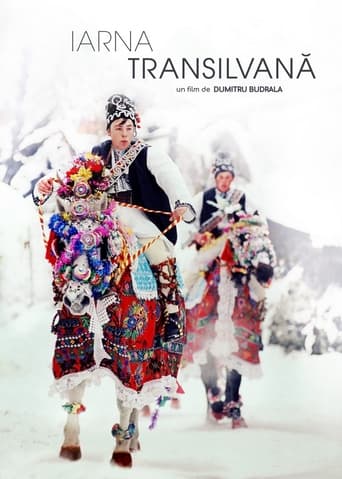
Transylvanian Winter 1996
The rituals and the ancient carols practised by the shepherd communities in the Carpathian Mountains are nothing short of those of the ancient Greek and Roman rituals.
The rituals and the ancient carols practised by the shepherd communities in the Carpathian Mountains are nothing short of those of the ancient Greek and Roman rituals.

At the village pub, Philip meets a local celebrity, a nonchalant and extremely determined character. Gigi Meserie, a local musician, is undeterred by the pandemic. On the contrary, he manages to turn every opportunity into an opportunity. Gigi's goal is to convince the townspeople "to turn their faces towards us", the country folk.
Jean Mihail’s "Rapsodia Rustica" deals with the life in Romanian villages in the period after the war.
Vlad, a young boy living in a remote village wants to follow his dream of adventure and tires to run away from home and an over religious family.
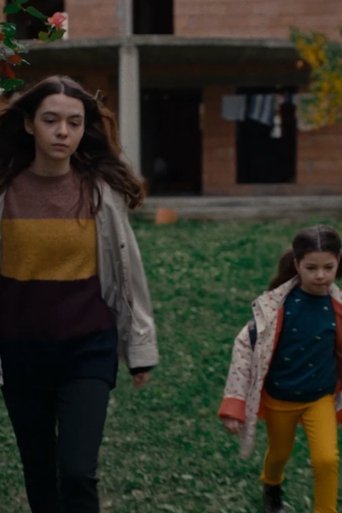
Once upon a time, there was a little girl who lived happily with her parents and her younger sister. But the little girl lived in Romania and her parents really wanted a house for them, so they went to work in Spain. The little girl stayed with her sister in the care of her grandmother and so the years passed, until one day the little sister told her that their parents were going to return. So the little girl began to hope.
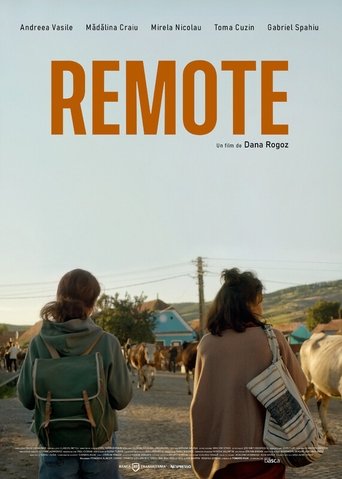
An odd night at a strangers home.
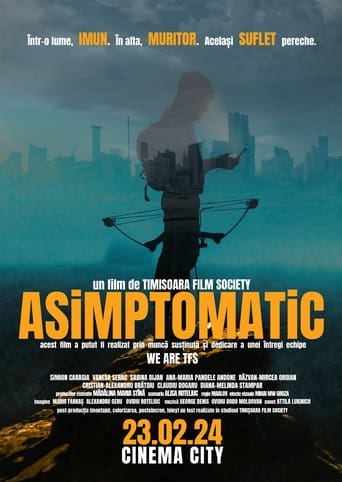
In a post-apocalyptic world, a survivor discovers love amidst the ruins, only to find himself alone in our world, facing a deadly disease and the hope of finding the same person in this uncertain reality.
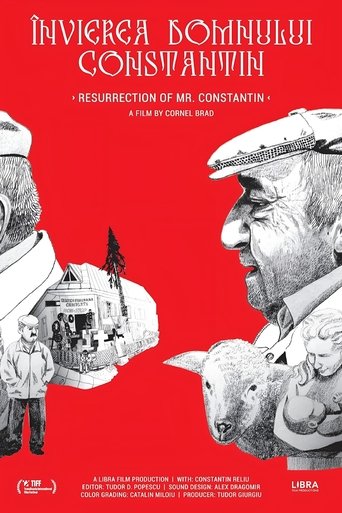
Self-exiled in Turkey since 1999 and recently expelled, Mr. Constantin discovers that he had been declared dead by the Romanian authorities, at the request of his wife.
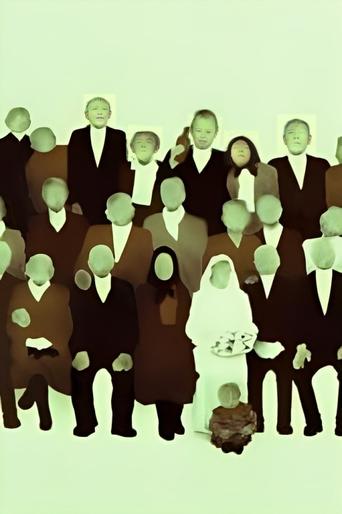
Time passes by quickly for a young, small family: soon it will no longer be that small, the children grow up, the parents get older, and this reality in constant motion, erased and diffused, sometimes stops itself in front of the camera.
A landscape is a landscape is a landscape. But in her view of the ambiguity of reality, Wanda Mihuleac composes an infinite landscape of reflections and lights.

In an unusual spaghetti western setting, a man - played by Ilarion Ciobanu - returns to his home village after spending time at the front. He finds his wife in the company of another man - played by Anușavan Salamanian - who is also raising his son. The confrontation between the two is at its most intense when they exchange glances that, in Ciobanu's case, seem to be a textbook study in Clint Eastwood's taciturn protagonist from Sergio Leone's famous trilogy. In many ways, People Aren't Goats stands out among all the other student films of the period. But the point where it proves most particular is its belonging to a genre - spaghetti western - at that time still new worldwide, whose national exponent will remain Ilarion Ciobanu, through the roles he played in the singular western trilogy, released a few years later, in which the people of the Ardennes go through all sorts of adventures.
The film is a classical process-film that describes the making of commercial products, from initial manufacturing of raw material to final selling.

There's disagreement between heart and reason. While trying to find common ground, they quarrel like blind.

Night after night, two friends keep getting in a fight over which movie they are going to watch.
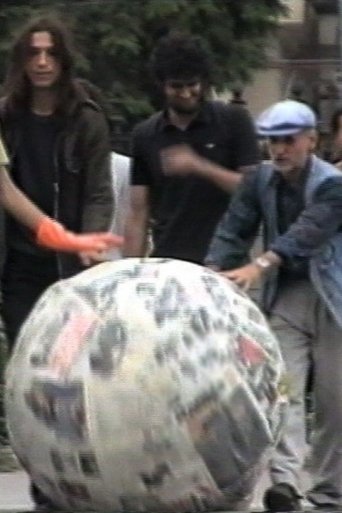
A happening made by students from the Art Academy, inspired by one of Michelangelo Pistoletto’s sculpture-objects. The sculpture crosses the city of Bucharest and enters into dialogue with its inhabitants, against the backdrop of the 1990s.
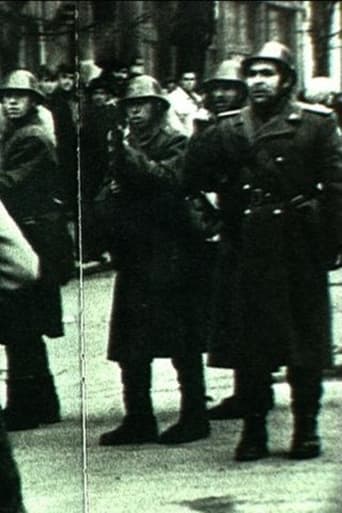
A portrait of the actor Călin Nemeș, who bravely faced the soldiers sent to suppress the demonstrations during the 1989 Revolution, in Cluj. Disillusioned and alone, Nemeș committed suicide in 1993.
