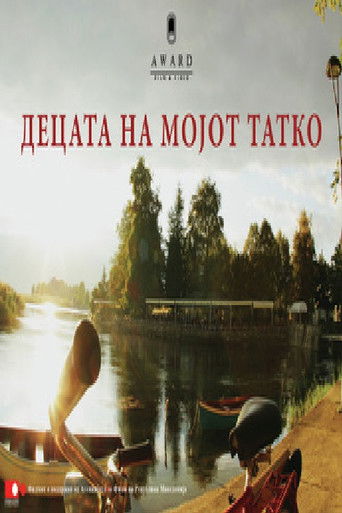
The Children of My Father 2015
A story about life of Sureya Imami - the first Albanian music teacher in Macedonia.
A story about life of Sureya Imami - the first Albanian music teacher in Macedonia.

Short animated film created in Akademia e Animacionit - Gen 7 (2024)
When his car breaks down in a desolate rural area, Noir, an emotionally lost actor, accidentally meets Anna, an enigmatic girl who walks through the landscape as if he doesn't exist. Following her, he is drawn into a strange and poetic journey, where Anna's pauses and the landscape awaken hazy memories of a lost love. As reality and memory intertwine, Anna leads Noir to an old cemetery, where he discovers that she is long dead. Confronting her grave becomes his moment of awakening, realizing that the journey was a spur to accept the pain and restore meaning to his life.
The story of some girls in a colossal moment
Primary school student Lani knows the value of money, but he values education above all. As part of the Roma minority, he tries to follow his own path, apart from the community around him. When the petty gangster Balja refuses to pay him and his friend Keno for their labour at his scrapyard, they take matters into their own hands, forcing Lani to confront his morals and choices.
Women of Liberty is a testimony and a chronology of war, resistance and great sacrifice of Kosovo women as a crucial part of Albanians’ movement for freedom and independence.
This documentary shows high school students in the place where they poof their problems away, the place where they enjoy breaking the school rules.
“Six More Days of Bread” is a conceptual short film that revisits Albania’s centennial celebration in 2012, when a 500m² cake was placed in Skanderbeg Square, causing a surreal and chaotic public spectacle.
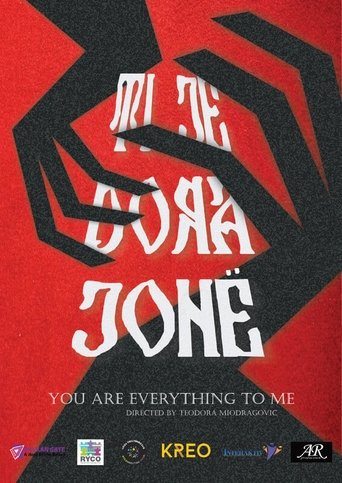
When people asked me about my trip to Tirana and the situation in Kosovo, I was drawn to explore more. Arriving in the city, I was intrigued by a Funeral Home and wanted to understand its significance and religious background. Tirana is home to three major religions living side by side, and I wanted to capture this coexistence. In my search for answers, I found that the feeling of loss is universal. Despite our differences, the shared experience of mourning connects us all, and this common thread is at the heart of my work.

Berna, a young woman weighed down by unspoken trauma, moves through the neon-lit streets of Prishtina, haunted by a menacing spectre from her past. As she attempts to navigate her bleak existence, a series of violent encounters forces her to confront her deepest fears.
In a crumbling Balkan home, The Attic offers a nostalgic farewell to forgotten treasures. This intimate documentary explores the memories hidden in dusty books, flickering TVs, and mysterious relics, revealing how ordinary objects quietly connect generations. With warmth, humor, and a touch of sadness, it shows that even forgotten places hold meaningful stories.
This film is dedicated to the girl who died in June 2016 in Prizren, Xheneta Gashi. This film is about the kids living in the same circumstances as Xheneta did, and also it’s about the miserable economic situation of Kosovo.
Director Karamuço ponders the notion of national identity as freezing Kosovars, taped during the recent cold snap, give wildly differing opinions about their country’s controversial blue, white and gold national symbol. Funny and telling, the film brilliantly threads an extraordinary sequence of a teacher explaining the flag to her wide-eyed kindergarten students.
Moving, personal doc captures the filmmakers fifty-four year old immigrant Kosovo mother as she attempts to pass an all-important German language test. Painter and video artist Zeqiri frames a cold and unforgiving Austria through the window of his mother’s apartment as she struggles through the difficult words and phrases.
A chronicle of the parallel school system in Kosovo during the 1990’s when Albanians were expelled from learning institutions by the occupying Serbs. The filmmaker Bukoshi interviews former students who vividly recall the extraordinary and often dangerous lengths they went to pursue a basic education.
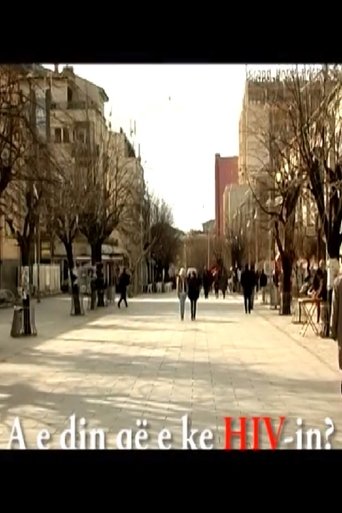
Dardana meets an interesting DJ in a party, and she spends the night with him. The next day she meets her friend that tells her that the DJ is infected with HIV. Her weeks and months pass and she finds out the truth when it’s late…
A pianist infected with HIV, falls in love with a young ballerina with whom he wants to have a serious relationship. They decide to spend the night together, but with the girl insisting to have non protected sexual relations the pianist has doubts about the right choice…
The film’s title “Are You Everybody?” was a common expression, and first greeting to fellow Kosovan people, when they saw each other for the first time after the war. It was a quick way of finding out whether there was anybody lost from their family. In June 1999 Lala Meredith-Vula (whose father is from Kosova) was invited by the British Red Cross to go in to Kosova shortly after the liberation and end of the NATO bombing. She witnessed the country torn and desolate gradually come back to life again. It is an artist’s deeply personal study about people surviving adversity and carrying on. The film shows the indomitability of the human spirit.
The story takes place during the time of the last war in Kosovo, within the basement of a house, which turns out to be the home of a Serbian policeman. He holds isolated an Albanian doctor called Agron. Agron`s only goal is escaping from the basement and joining his family. But he will be faced with staggering psychological challenges from the Serbian policeman who keeps Agron within the basement through violence, for a very special reason.
Surrounded by problems, Agim suddenly has an idea for survival. But his morbid idea is his doom…
