Same Name

Same Name 1970

1

Same Name is an American reality television series in which an average person swaps lives with a celebrity with the same name. The series premiered on July 24, 2011 on CBS, however, after just 4 episodes, CBS pulled the low-rated series from its Sunday night line-up.

1970

Give-n-Take

Give-n-Take 1970

1

Give-n-Take is an American television game show which ran on CBS from September 8 to November 28, 1975. Jim Lange hosted, with Johnny Jacobs announcing. The series, which replaced Spin-Off, ended after 60 episodes.

1970

Reversible Errors

Reversible Errors 1970

1

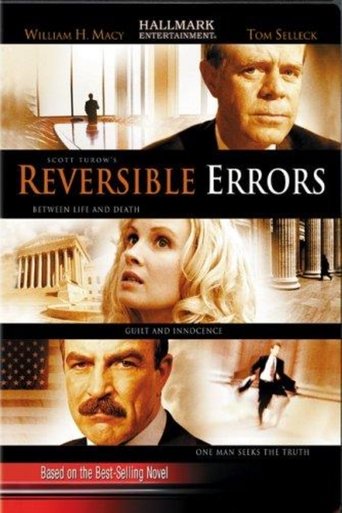
Reversible Errors is a 2004 television film based on the novel of the same name by Scott Turow. It was directed by Mike Robe, who previously directed Scott Turow's The Burden of Proof, and stars Tom Selleck and William H. Macy. Filming was done in and around Halifax, Nova Scotia, and featured shots of Halifax City Hall and Angus L. Macdonald Bridge. The film was first shown by CBS in two parts on May 23 and 25, 2004. Channel 5 in the United Kingdom has chosen to show it as a single 173 minute film.

1970

Bicentennial Minutes

Bicentennial Minutes 1970

8.00

Bicentennial Minutes was a series of short educational American television segments commemorating the bicentennial of the American Revolution. The segments were produced by the CBS Television Network and broadcast nightly from July 4, 1974, until December 31, 1976. The segments were sponsored by Shell Oil Company. The series was created by Ethel Winant and Louis Friedman of CBS, who had overcome the objections of network executives who considered it to be an unworthy use of program time. The producer of the series was Paul Waigner, the executive producer was Bob Markell, and the executive story editor and writer was Bernard Eismann from 1974 to 1976. He was followed by Jerome Alden. In 1976, the series received an Emmy Award in the category of Special Classification of Outstanding Program and Individual Achievement. It also won a Special Christopher Award in 1976. The videotaped segments were one minute long and were broadcast each night during prime time hours, generally at approximately 8:57 P.M. Eastern time. The format of the segments did not change, although each segment featured a different narrator, often a CBS network television star. The narrator, after introducing himself or herself, would state "This is a Bicentennial Minute," followed by the phrase "Two hundred years ago today..." and a description a historical event or personage prominent on that particular date two hundred years before during the American Revolution. The segment would close with the narrator saying, "I'm, and that's the way it was." This was an offhand reference to the close of the weeknight CBS Evening News with Walter Cronkite, who always ended each news telecast by saying, "And that's the way it is."

1970

Circus of the Stars

Circus of the Stars 1970

1

Circus of the Stars was an annual television special, broadcast by the CBS network in the United States, in which celebrities performed circus-type acts. There were 19 shows in total, the first being broadcast in 1977 and the last in 1994. Over the years the series featured many leading movie and television stars. Towards the end of its life the program title was changed slightly. In 1992 it was Circus of the Stars and Sideshow, in 1993 it became Circus of the Stars Gives Kids the World and in 1994 it was Circus of the Stars Goes to Disneyland. Although the show has ceased in the United States, the concept has been emulated in other countries where similar programs continue to be made, notably Stars in der Manege in Germany.

1970

CBS Sports Spectacular

CBS Sports Spectacular 1970

1

CBS Sports Spectacular is a sports anthology program produced by CBS Sports. The series began on January 3, 1960 as The CBS Sports Spectacular, and has been known under many different names, including CBS Sports Saturday, CBS Sports Sunday, Eye on Sports and The CBS Sports Show. The program continues to air on an irregular basis on weekend afternoons, especially during the late spring and summer months. Normally it airs pre-recorded "time-buy" sports events produced by outside companies, such as supercross or skiing competitions, or sponsored documentaries.

1970

Place the Face

Place the Face 1970

1

Place the Face is an American game show that aired on CBS and NBC from 1953 to 1955. The series was hosted by Jack Smith, Jack Bailey, and then Bill Cullen. Jack Narz was the announcer.

1970

The Pat Sajak Show

The Pat Sajak Show 1970

3.67

The Pat Sajak Show is an American late-night television talk show which aired on CBS from January 9, 1989 to April 13, 1990.

1970

Truth or Consequences

Truth or Consequences 1970

1

Contestants must perform an embarrassing stunt if they fail to answer a question correctly.

1970

Video Village

Video Village 1970

1

Video Village is an American television game show produced by Heatter-Quigley Productions which aired on the CBS network in daytime from July 11, 1960 to June 15, 1962 and in primetime from July 1 to September 16, 1960. It was notable for the use of its unique "living board game" concept, as well as being one of the first new games to premiere after the quiz show scandals.

1970

The Magic Land of Allakazam

The Magic Land of Allakazam 1960

1

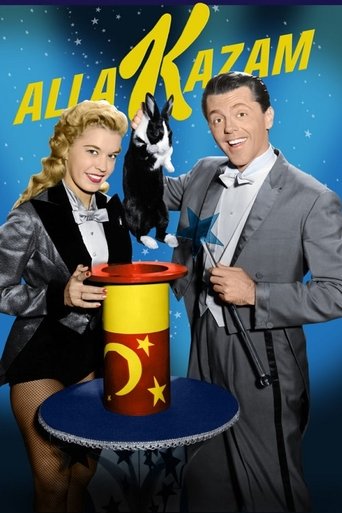
The Magic Land of Allakazam was the name of a groundbreaking series of network television shows featuring American magician Mark Wilson. It ran from 1960 to 1964 and is credited with establishing the credibility of magic as a television entertainment.

1960

The Harlem Globetrotters Popcorn Machine

The Harlem Globetrotters Popcorn Machine 1970

1

The Harlem Globetrotters Popcorn Machine is a Saturday morning variety show featuring players from the basketball team the Harlem Globetrotters singing, dancing, and performing comedy sketches. Broadcast in 1974, it was produced by Funhouse Productions and Yongestreet Productions for CBS Productions.

1970

The Body Human

The Body Human 1970

1

The Body Human was a series of specials produced by the National Geographic Society and telecast by CBS, between 1977 and 1984. They were produced and directed by Alfred R. Kelman, who was nominated for an Academy Award in 1966 for The Face of a Genius. Unlike most National Geographic specials, this series did not concentrate on exploring nature or the origins of man, but, as the name implied, on aspects of the human body, from plastic surgery to sexual function. Alexander Scourby was the narrator. The series was nominated for and won Emmy Awards.

1970

This Is Show Business

This Is Show Business 1970

1

This Is Show Business is an American panel discussion program about the entertainment industry, hosted by Clifton Fadiman, which aired on CBS Television from July 15, 1949 to March 9, 1954, and then again as a summer series on NBC Television from June 26 to September 11, 1956.

1970

Go Toward The Light

Go Toward The Light 1970

7.50

Go Toward the Light is a 1988 television film starring Linda Hamilton, Joshua Harris and Richard Thomas. The film first aired on CBS on November 11, 1988.

1970

Marlo and the Magic Movie Machine

Marlo and the Magic Movie Machine 1970

1

Marlo and the Magic Movie Machine was a children's television show originating from WFSB-TV in Hartford. The storyline involved Marlo Higgins who is a mustachioed and frizzy-haired computer programming genius working for the L. Dullo computer company. He was banished to the "sub-sub-basement" by his boss, Leo Dullo. By day Marlo works for L. Dullo. At night he builds, programs, and interacts with his Magic Movie Machine built using L. Dullo hardware. The waveform from a real-time audio oscilloscope was displayed on the Magic Movie Machine's screen whenever it talked and it played short clips. The two traded tips and quips. Marlo sat at a console with a slight resemblance to master control consoles of the time. He would call up the various film clips featured on the show by entering codes using a numeric keypad with round, yellow number buttons and pressing an orange rectangular Start button to start the selected film. In earlier episodes, a split-flap display mounted on the console showed the code entered on the keypad. In later episodes, this was changed to an LED display, and the buttons were made to sound like the DTMF tones made by a touch-tone telephone as Marlo pressed them. Most of the time, Marlo used a small keypad consisting of two columns of buttons flanking a CRT, located in front of him when he was sitting at the console of the Magic Movie Machine. However, a similar but larger keypad located on the wall was sometimes used.

1970

Bill

Bill 1970

1

Bill is a 1981 CBS TV movie starring Mickey Rooney and Dennis Quaid. The film is based on the life of Bill Sackter. A sequel, Bill: On His Own, was released in 1983.

1970

Wacko

Wacko 1970

1

Wacko is an American half-hour children's television series that aired on CBS on Saturday mornings. The show was a live action variety show featuring skits and musical numbers. The show only had 10 episodes, from September 10, 1977 through November 12, 1977.

1970

The Eddy Arnold Show

The Eddy Arnold Show 1970

1

The Eddy Arnold Show is the name of three similar American network television summer variety programs during the 1950s hosted by Eddy Arnold and featuring popular music stars of the day. It was also the name of a radio program starring Arnold.

1970