
Choose Up Sides 1970
Choose Up Sides was a children's television game show that aired on NBC Saturday mornings from January 7 to March 31, 1956. It was hosted by Gene Rayburn and announced by Don Pardo and produced by Goodson-Todman Productions
Choose Up Sides was a children's television game show that aired on NBC Saturday mornings from January 7 to March 31, 1956. It was hosted by Gene Rayburn and announced by Don Pardo and produced by Goodson-Todman Productions
Aladdin was a 1958 musical fantasy written especially for television with a book by S.J. Perelman and music and lyrics by Cole Porter, telecast in color on the DuPont Show of the Month by CBS. It was Porter's very last musical score. Columbia Records issued both monophonic and stereophonic LP's of the songs with members of the original TV cast, which included Cyril Ritchard, Dennis King, Basil Rathbone, Anna Maria Alberghetti, Geoffrey Holder, and Sal Mineo. Sony Records has digitally remastered the stereo recording for release on CD. As far as is known, the original telecast was never repeated, nor has it been issued on VHS or DVD. A kinescope of the 1958 broadcast survives and can be viewed at both the New York City and Beverly Hills, California branches of The Paley Center For Media. The musical was later presented on stage in London, premiering on December 17, 1959 at the Coliseum. Bob Monkhouse, Doretta Morrow, Ian Wallace & Ronald Shiner starred. The Musical Director was Bobby Howell.
Time Bomb is a 2006 television movie starring David Arquette, by CBS Television.
Joey Faye's Frolics is an American comedy/variety show that aired on CBS Wednesday night from 9:30 to 10:00 pm Eastern time for two weeks from April 5, 1950 to April 12, 1950.
Information Please was an American radio quiz show, created by Dan Golenpaul, which aired on NBC from May 17, 1938 to April 22, 1951. The title was the contemporary phrase used to request from telephone operators what was then called "information" but is now called "directory assistance". The series was moderated by Clifton Fadiman. A panel of experts would attempt to answer questions submitted by listeners. For the first few shows, a listener was paid two dollars for a question that was used, and five dollars more if the experts could not answer it correctly. When the show got its first sponsor, the total amounts were increased to five and ten dollars respectively. A complete Encyclopædia Britannica was later added to the prize for questions that stumped the panel. The amounts went up to ten and twenty-five dollars when Lucky Strike took over sponsorship of the program.
It Pays to Be Ignorant was a radio comedy show which maintained its popularity during a nine-year run on three networks for such sponsors as Philip Morris, Chrysler, and DeSoto. The series was a spoof on the authoritative, academic discourse evident on such authoritative panel series as Quiz Kids and Information Please, while the beginning of the program parodied the popular quiz show, Doctor I.Q. With announcers Ken Roberts and Dick Stark, the program was broadcast on Mutual from June 25, 1942 to February 28, 1944, on CBS from February 25, 1944 to September 27, 1950 and finally on NBC from July 4, 1951 to September 26, 1951.
Video Village is an American television game show produced by Heatter-Quigley Productions which aired on the CBS network in daytime from July 11, 1960 to June 15, 1962 and in primetime from July 1 to September 16, 1960. It was notable for the use of its unique "living board game" concept, as well as being one of the first new games to premiere after the quiz show scandals.
That's Just the Woman in Me is a one-off American television special by the Canadian singer Celine Dion that was broadcast by CBS on February 15, 2008n and was recorded at the Wiltern Theatre in Los Angeles, California. The show celebrated her return to performing after five years in Las Vegas and was a promotion for her latest studio album, Taking Chances. The show was quickly put together after the success of An Audience with Celine Dion in the UK. The program featured Celine performing a few of her memorable hits along with new tracks from the album. Special guests included: ⁕Olivia Trinidad Arias ⁕Joe Walsh ⁕David Foster ⁕Halle Berry ⁕Caroline Rhea ⁕Corbin Bleu ⁕will.i.am ⁕Josh Groban ⁕Jennifer Love Hewitt ⁕Ross McCall The show's format was similar to An Audience with..., where Dion was asked questions by the audience. Dion began the show with the triumphant "River Deep Mountain High". Next, she sang the first single from Taking Chances. She dedicated "The Power of Love" to the engaged couple Jennifer Love Hewitt and Ross McCall. The show continued with Dion singing "The Prayer" with Josh Groban. She did a little beatboxing before she performed an unreleased remix of "Eyes on Me" with will.i.am. She also performed the Beatles song, "Something", with Joe Walsh on guitar and dedicated the song to George Harrison's widow. Dion said that the song had a special place in her heart because it was the first song her son, Rene Charles, learned to play on the piano. She sang "Alone", a song written by Billy Steinberg and Tom Kelly and popularized by Heart. She closed the show with a song she wanted to record over 15 years ago, "That's Just the Woman in Me".
Finding John Christmas is a 2003 television movie that first aired on CBS. The film is a sequel to the 2001 television movie A Town Without Christmas.
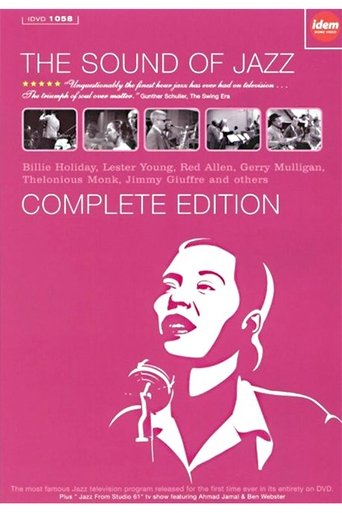
"The Sound of Jazz" is a 1957 edition of the CBS television series Seven Lively Arts, and was one of the first major programs featuring jazz to air on American network television.
Raggedy Ann and Andy in The Great Santa Claus Caper, a.k.a. simply The Great Santa Claus Caper, is a 1978 animated American television special featuring Raggedy Ann and Raggedy Andy.
The Hoober-Bloob Highway is an animated musical special written by Dr. Seuss and produced by DePatie-Freleng Enterprises for CBS in 1975. The special is a musical, and features several songs written by Dr. Seuss and composed by Dean Elliott. Mr. Hoober-Bloob, a dispatcher of newborn children from some location in space, is preparing to send a new child down his highway to Earth, but first, he gives the child a chance to decide for himself whether he wants the life of a human. Mr. Hoober-Bloob shows him the realistic problems and pleasures that people face in life. The story suggests that while things may be pretty bad, there's always something to be thankful for.

