Manon

Manon 1949

6.85

Port of Marseille, France, recently liberated from the German yoke. Caught as stowaways aboard a ship, Manon, a young woman who was accused of collaborating with the Nazis, and Robert, a freedom fighter who saved her from reprisals, tell the captain about the many challenges they have had to face in order to survive.

1949

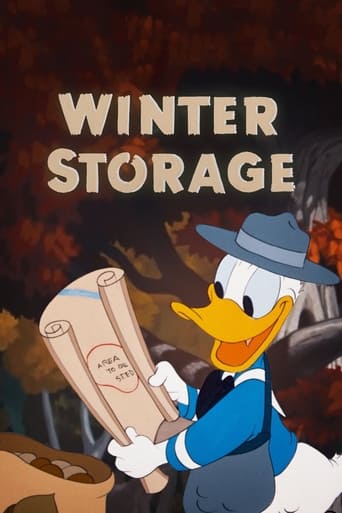
Winter Storage

Winter Storage 1949

6.82

It's October 7th and Chip is working industriously to store enough acorns in the tree for the winter. Dale would rather sleep in his matchbox, but an angry kick from Chip gets him working furiously. But there's only so much they can do. Their tree is nearly out of acorns. Luckily, the two semi-intelligible chipmunks happen to see the half-unintelligible Donald Duck, a park ranger, planting acorns. They immediately set to steal his bag of the precious nuts. Donald soon realizes what they are up to, and sets out a box propped up with a stick. It's a crude trap, with an acorn as bait; but it's not too crude to fool Dale, who upsets it and traps Chip. Soon, Donald finds he can have fun instigating a fight between these two quarrelsome chipmunks, but he underestimates their friendship and their ability to work as a team against a common enemy: in this case, a bad-tempered duck.

1949

Pinky

Pinky 1949

7.12

Pinky, a light skinned black woman, returns to her grandmother's house in the South after graduating from a Northern nursing school. Pinky tells her grandmother that she has been "passing" for white while at school in the North. In addition, she has fallen in love with a young white doctor, who knows nothing about her black heritage.

1949

Big Jack

Big Jack 1949

6.00

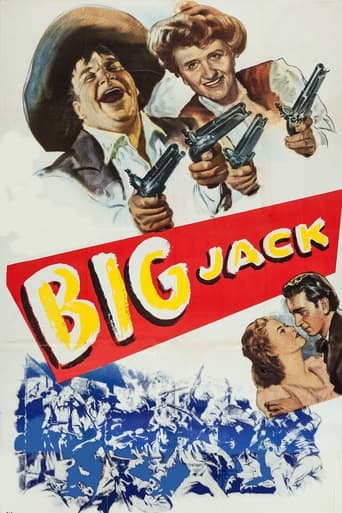
Wallace Beery, in his final film, plays a bandit in this period drama set in Colonial America.

1949

Prison

Prison 1949

7.10

A filmmaker sets out to create the greatest film in history, but finds out that human abilities have limits.

1949

Hornankoski

Hornankoski 1949

4.00

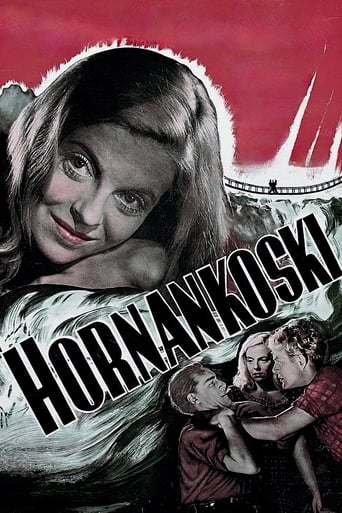
The brothers of Yli-Koskela farm fall for the same woman. Then Aarne believes he has killed a man. Artturi sees the case and saves the man from drowning to the rapids. He takes advantage of the situation and tells the woman, Lea, that his brother is a murderer.

1949

Little Women

Little Women 1949

7.40

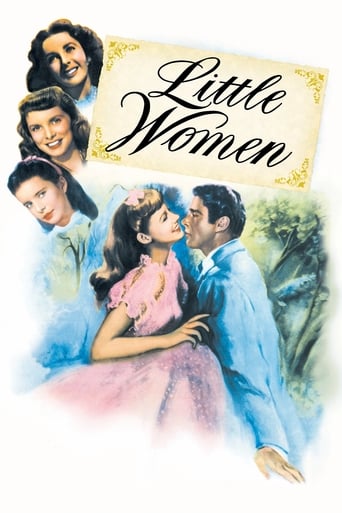
Four sisters come of age in America in the aftermath of the Civil War.

1949

Ringside

Ringside 1949

4.20

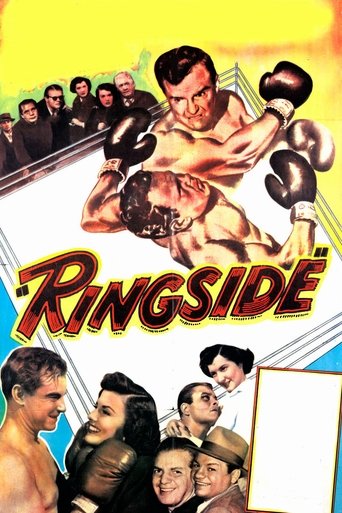
Joe O'Hara finds out he has a damaged optic nerve just before a boxing match for the title. He needs the money badly, so he doesn't delay the fight. The opponent discovers Joe's weakness and pounds on his eyes, causing him to go blind.

1949

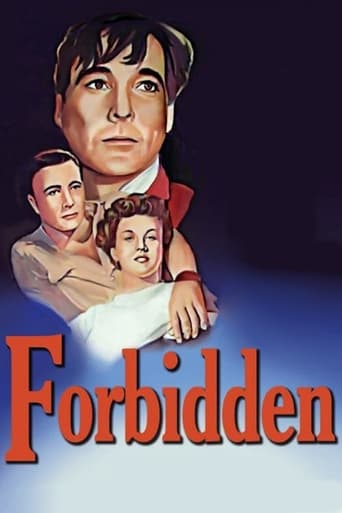
Forbidden

Forbidden 1949

6.90

Set on Blackpool’s Golden Mile, Jim (Douglass Montgomery), a once promising scientist, sets up in business as a patent medicine man selling hair tonic at the fair with his ex-army colleague Dan (Ronald Shiner). Following a fight with local hoods over pitch spaces, Jim falls for Jane (Hazel Court), the girl on a nearby candy floss stall. The two begin dating but Jim fails to mention he is already married.

1949

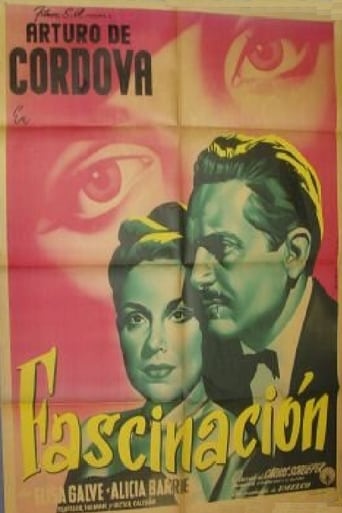
Fascination

Fascination 1949

6.00

The wife of a hypnotist lives in a state of uncertainty over whether she's with her husband out of love or if she's been a victim of his influence.

1949

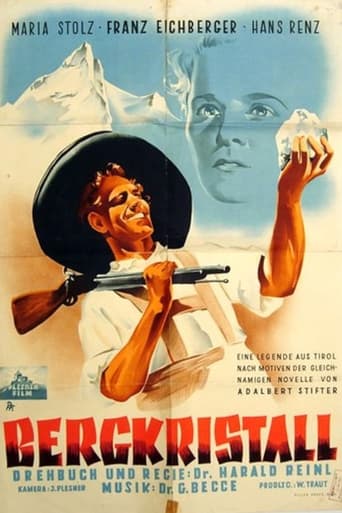
Bergkristall

Bergkristall 1949

5.00

Franz, a Tyrolean mountain farmer's son and passionate poacher, loves the beautiful Sanna. A hunter, who is also interested in her, catches Franz poaching, shoots him and leaves him alone. On the way back to the valley, he falls into a crevasse and dies. When Franz returns home seriously injured by the shot, he is mistaken for the murderer of the missing hunter and is put on trial. Although he is acquitted for lack of evidence, the village community cannot prove his innocence. Everyone turns away from Franz, only Sanna sticks by him. They live in seclusion with their two children on a farmstead. Only when the children get lost in the mountains at Christmas time years later can the supposed murder case be solved.

1949

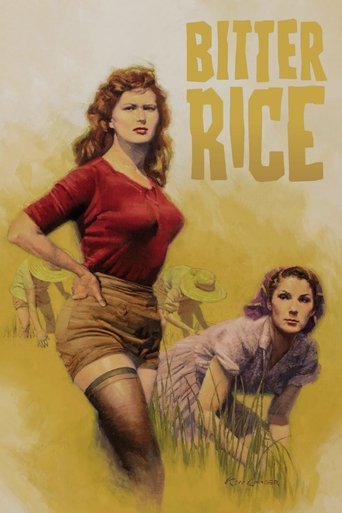
Bitter Rice

Bitter Rice 1949

7.48

Francesca and Walter are two-bit criminals in Northern Italy, and, in an effort to avoid the police, Francesca joins a group of women rice workers. She meets the voluptuous peasant rice worker, Silvana, and the soon-to-be-discharged soldier, Marco. Walter follows her to the rice fields, and the four characters become involved in a complex plot involving robbery, love, and murder.

1949

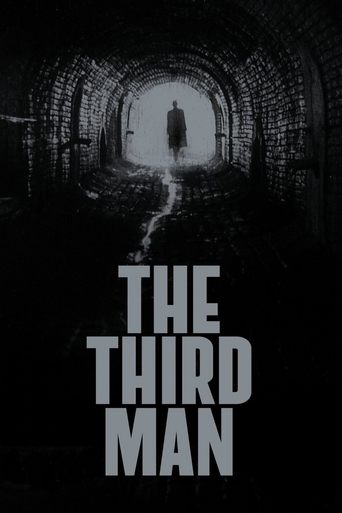
The Third Man

The Third Man 1949

7.90

In postwar Vienna, Austria, Holly Martins, a writer of pulp Westerns, arrives penniless as a guest of his childhood chum Harry Lime, only to learn he has died. Martins develops a conspiracy theory after learning of a "third man" present at the time of Harry's death, running into interference from British officer Major Calloway, and falling head-over-heels for Harry's grief-stricken lover, Anna.

1949

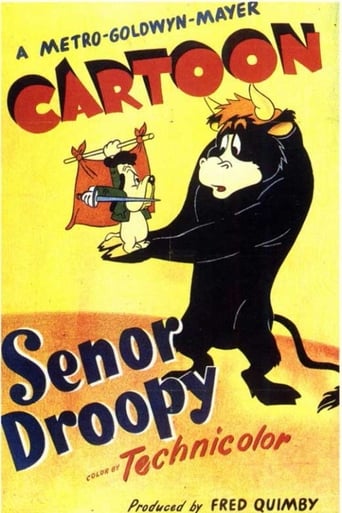
Señor Droopy

Señor Droopy 1949

6.79

The wolf, the champion toreador, and Droopy, the challenger, are competing to see who is best in the bullring in the hopes of winning the hand of actress Lina Romay (who appears in a live action shot).

1949

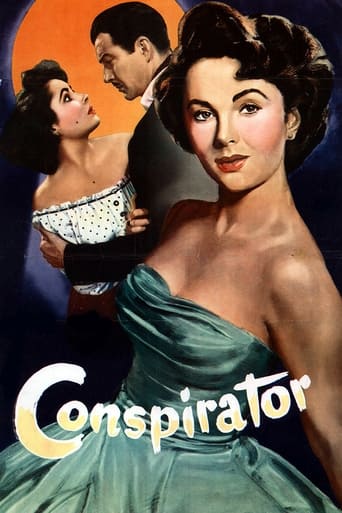
Conspirator

Conspirator 1949

5.65

A newlywed suspects her husband of being a Communist spy.

1949

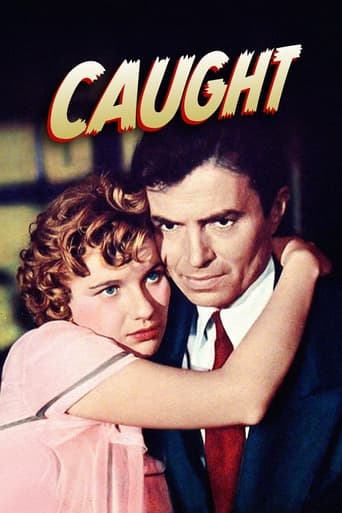
Caught

Caught 1949

6.55

Wide-eyed and poor young Leonora weds an obsessive millionaire named Ohlrig, but the marriage is loveless. Even worse, Ohlrig seems to have manic, violent tendencies. Eventually, young Leonora escapes her unhappy life and begins working with New York City doctor Larry Quinada, who she soon falls for. Unfortunately, Ohlrig refuses to grant his wife a divorce, and things get even darker for Leonora when she realizes she's pregnant with his child.

1949

Charmides

Charmides 1949

5.50

Based on Plato's dialogue Charmides.

1949

Münchnerinnen

Münchnerinnen 1949

1

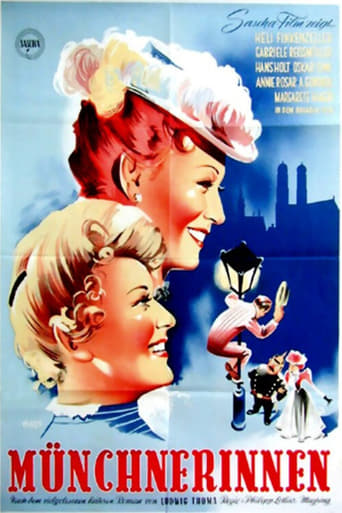
The love between a noble student and the daughter of a coffee house owner, set against clichéd images of Munich at the turn of the century.

1949

Åsa-Nisse

Åsa-Nisse 1949

3.60

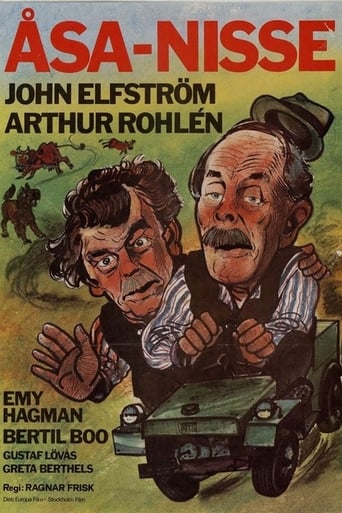
At a parish meeting Åsa-Nisse suggests that they should hire a common home help, who could give their wives some relief by staying one week at each household. The meeting assents and decides that the order of her rotation should be established by lot. The two bachelors of the village claim their right to the home help as well, arguing that they are also taxpayers. When Elsa Haglund arrives from Gothenburg she starts her first week of work at one of the two bachelors, the village shop-keeper Sjökvist. He is immediately infatuated by her and begins a flirtation. At the end of the week Elsa happens to meet the other bachelor, Eric Broo, called "the singing farmer". She falls in love with him, but doesn't know how to hook him, as he is very shy and unskilled in courting women. In the meantime Åsa-Nisse, the village rogue, carries out some of his pranks.

1949

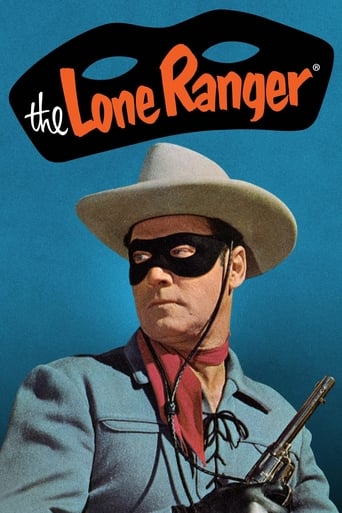
The Lone Ranger

The Lone Ranger 1949

6.80

The Lone Ranger is an American western television series that ran from 1949 to 1957, starring Clayton Moore with Jay Silverheels as Tonto. The live-action series initially featured Gerald Mohr as the episode narrator. Fred Foy served as both narrator and announcer of the radio series from 1948 to its finish and became announcer of the television version when story narration was dropped there. This was by far the highest-rated television program on the ABC network in the early 1950s and its first true "hit".

1949

The BAFTA Awards

The BAFTA Awards 1949

10.00

BAFTA presents awards for film, television and games, including children's entertainment, at a number of annual ceremonies across the UK and in Los Angeles, USA.

1949

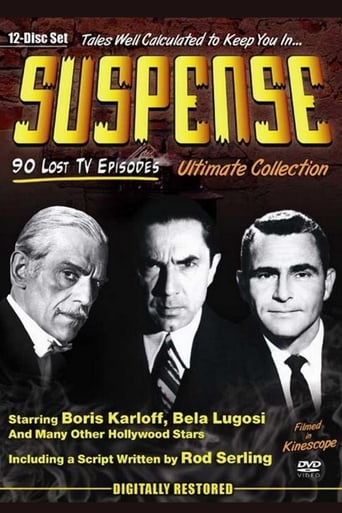
Suspense

Suspense 1949

4.90

An anthology series adapted from the radio program of the same name. Like the radio program, many scripts were adaptations of literary classics by well-known authors. Classic authors such as Edgar Allan Poe, Agatha Christie, and Charles Dickens all had stories adapted for the series, while contemporary authors such as Roald Dahl and Gore Vidal also contributed.

1949

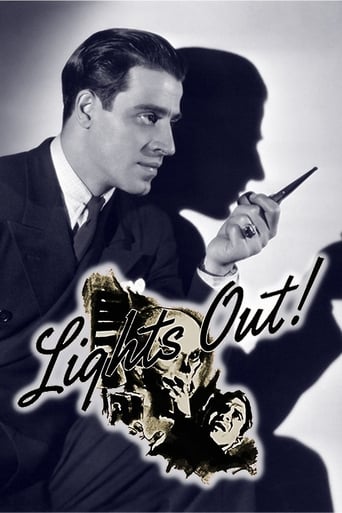
Lights Out

Lights Out 1949

5.80

Lights Out was an extremely popular American old-time radio program, an early example of a network series devoted mostly to horror and the supernatural, predating Suspense and Inner Sanctum. Versions of Lights Out aired on different networks, at various times, from January 1934 to the summer of 1947 and the series eventually made the transition to television. In 1946, NBC Television brought Lights Out to TV in a series of four specials, broadcast live and produced by Fred Coe, who also contributed three of the scripts. NBC asked Cooper to write the script for the premiere, "First Person Singular", which is told entirely from the point of view of an unseen murderer who kills his obnoxious wife and winds up being executed. Variety gave this first episode a rave review ("undoubtedly one of the best dramatic shows yet seen on a television screen"), but Lights Out did not become a regular NBC-TV series until 1949.

1949

The Emmy Awards

The Emmy Awards 1949

7.90

An annual awards ceremony honoring the best in U.S. prime time television programming as chosen by the Academy of Television Arts & Sciences.

1949

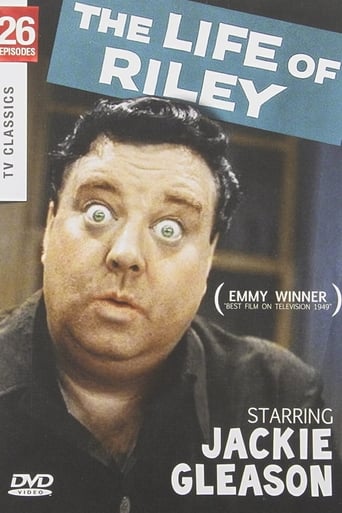
The Life of Riley

The Life of Riley 1949

7.50

Riley worked in an aircraft plant in California, but viewers usually saw him at home, cheerfully disrupting life with his malapropisms and ill timed intervention into minor problems. His stock answer to every turn of fate became a catch phrase: 'What a revoltin' development this is!"

1949

Man Against Crime

Man Against Crime 1949

6.00

Man Against Crime, one of the first television programs about private eyes, ran on CBS, the DuMont Television Network and NBC from October 7, 1949 to August 26, 1956. The show was created by Lawrence Klee and Paul Alter and was broadcast live until 1952. It was also directed by Paul Alter. The series was one of the few television programs ever to have been simulcast on more than one network: the program aired on both NBC and DuMont during the 1953-1954 television season.

1949

The Big Story

The Big Story 1949

6.70

Based on a popular radio series, each show tells a different reporter's Big Story, a true story selected from newspapers across the United States. Comments from the actual reporter open and close each show but the permanent narrator drives the plot line and a featured actor dramatizes the reporter's role.

1949

Fireside Theater

Fireside Theater 1949

7.20

Fireside Theater is an American anthology drama series that ran on NBC from 1949 to 1958, and was the first successful filmed series on American television. Stories were low budget and often based on public domain stories or written by freelance writers such as Rod Serling. While it was panned by critics, it remained in the top ten most popular shows for most of its run. It predated the other major pioneer of filmed TV in America, I Love Lucy, by two years.

1949

The Admiral Broadway Revue

The Admiral Broadway Revue 1949

1

The Admiral Broadway Revue is an American variety show that ran from January 28 to June 3, 1949. The show was broadcast live on Fridays, 8-9 pm Eastern Time. and was broadcast simultaneously on both NBC and the DuMont networks.

1949

A Woman to Remember

A Woman to Remember 1949

1

A Woman to Remember is a soap opera which ran on the DuMont Television Network from February 21, 1949 to July 15, 1949. The show initially ran in daytime, but starting May 2, aired Monday through Friday from 7:30 to 7:45 pm ET. John Haggart served as creator and writer, and Bob Steele was producer and director. The show followed Captain Video and His Video Rangers and had no sponsor.

1949

Martin Kane, Private Eye

Martin Kane, Private Eye 1949

6.00

Martin Kane, Private Eye was an early radio series and television crime series sponsored by United States Tobacco Company.

1949

The Silver Theatre

The Silver Theatre 1949

6.30

The Silver Theatre is a television series that was broadcast on the CBS television network from 1949 to 1950. It was a live anthology series consisting of dramatic teleplays about romance. It was sponsored by the International Silver Company.

1949

The Clock

The Clock 1949

1

The Clock is a 30-minute American anthology television series based upon the American Broadcasting Company radio series which ran from 1946–48. The half-hour series mostly consisted of original dramas concerning murder, mayhem or insanity. Series narrator Larry Semon was the only regular; each week a new set of guest stars were featured. The title of the series was derived from a clock which was a major plot element in each story. The show's musical theme was "The Sands of Time". Ninety-one episodes aired from 1949 to 1952, most of them on NBC, except for the final season which aired on ABC. Courtesy of Wikipedia.

1949

Family Affairs

Family Affairs 1949

1

Family Affairs was the first television serial broadcast by BBC Television.

1949

The Plainclothesman

The Plainclothesman 1949

1

The Plainclothesman was an American crime drama series broadcast on the now defunct DuMont Television Network.

1949

Let There Be Stars

Let There Be Stars 1949

1

Let There Be Stars was an early television series which aired on the ABC television network in 1949. It was a high-budget show for its time, and used new production techniques such as "Teleparencies", transparencies which could be displayed in the background, faded in or out or dissolved, and changed on the fly. The idea of the program was to highlight up-and-coming actors and actresses who had been found by a talent scout working to cast new performers in Broadway shows. The first program got a rave review from Variety magazine, but quality dropped off, and the show only lasted a little more than a month, from October 16, 1949 through November 27. The 1st, 2nd, 3rd, 4th, 5th, 6th and 7th episodes are stored at the Paley Center for Media. The archive also has a "rough rehearsal kinescope" of one of the episodes.
1949