What Mary Jo Wanted

What Mary Jo Wanted 1982

1

Mary Jo wants a puppy more than anything in the world. At first her parents, seemingly made of stone, flatly refuse their youngest daughter's heartfelt pleas and Mary Jo is openly mocked by her older siblings. Finally, when the little girl seems to be devoting every waking moment to dreaming about dogs, the parents relent. Some difficulties ensue, but Mary Jo and her dog Teddy meet them head on.

1982

Soliloque 2 / La Barbarie

Soliloque 2 / La Barbarie 1982

1

The film articulates raw pieces of painful reality, taken from individual and collective spheres. Three clippings from newspapers which descibe the absolute horror of barbarity practised in certains corners of the world, personal letters read in off voices and city images bestow on this film a seriousness and evident emotional weight. A live memory against a world which institionalizes forgetting.

1982

Five Year Diary, Reel 23: A Breakdown (and) After the Mental Hospital (September 1–December 13, 1982)

Five Year Diary, Reel 23: A Breakdown (and) After the Mental Hospital (September 1–December 13, 1982) 1982

1

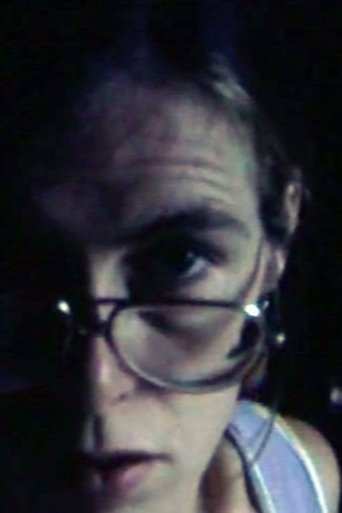
Introduction; paranoia about root vegetables; esoteric sign language; searching for hidden significances; crush on Tom Baker ("Doctor Who" from BBC Television); my cats Amy and Buddy; vegetarian cooking; the compost heap; my mother and her house; driving into Boston; unemployment; television hypervigilance; hiding inside; exorcism with tea and mirror and lamps; too much wine; my friend the painter Susan Brown; the movie The Turning Point; experiences in a mental hospital; psychiatric session recording; autumn street and garden scenes; the mental day-hospital; domestic still-lives; bingeing; self Gestalt-therapy; school; groceries; winter; my garden; a series of self-portraits. (ACR)

1982

Red Sea

Red Sea 1982

1

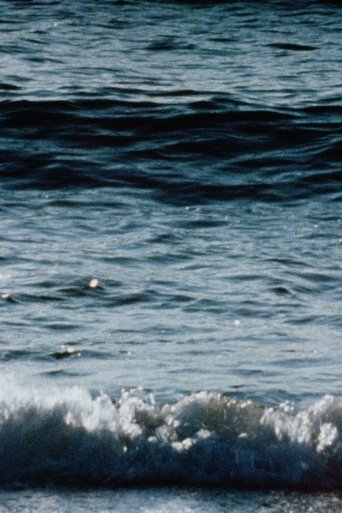
Spring tides at Ynys Llanddwyn at the full and new moon are compared to the filmmaker’s own ‘body tides’ from dark to light and back again. Like other films by Judith Noble (formerly Higginbottom), The Red Sea is concerned with the menstrual cycle, and its relationship to lunar cycle. Higginbottom and other feminist artists such as Catherine Elwes, Carolee Schneemann and Judy Clark were trying to reclaim menstruation from its negative image and assert it as a source of creative energy. The Red Sea is made of 16mm film and 35mm still images, re-worked and over-printed.

1982

Snig

Snig 1982

1

A young woman shakes eels out from between the sheets of a bed. She sews the eels on to a sheet, then cuts them away and they fall to the ground. A dilemma. Jayne Parker discovered film as a medium when she was a sculpture student at Canterbury College of Art (1977-80). In early works, objects, performance and gesture were combined by the camera to explore space, duration and the physical body. The images in these early films were both literal and metaphoric, depicting exact events but also creating physical and personal associations for the viewer. Ideas are evoked in images rather than words; ordinary actions are also enigmas.

1982

Holon

Holon 1982

1

"Christian Lebrat said he thought of Monet, who painted with the series Water Lilies colors ‘at the edge of the visible;’ those of Holon indeed display colors so intense, so enraged with energy that they release in a pure way the performative, exclamative character, the character of act which, in a more or less underground way, informs every image." Nicole Brenez

1982

Vistasound

Vistasound 1982

1

A film that raises questions about the associations between song lyrics and particular places.

1982

Lie Back & Enjoy It

Lie Back & Enjoy It 1982

1

Lie Back & Enjoy It is a dialectical film about the politics of representation. Its image track consists of technologically manipulated images of women, and some printed titles. Its soundtrack consists of a dialogue between a Man (a filmmaker) and a Woman (of whom he's going to make a film).

1982

Too Young

Too Young 1982

1

Taking off where Brooke Shields left us in her Calvins, this film takes a hard, humorous look at the pressures and frustrations girls feel as they rush out to explore their sexuality with all the taboos and fears that entails.

1982

Mysteries

Mysteries 1982

1

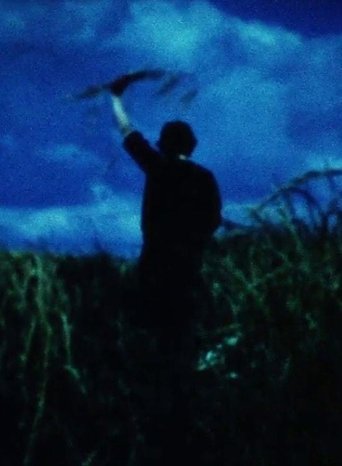
Mysteries is a photomontage film, shot at Penmon, Anglesey and Whiteknights Farm, Hampshire. Beginning with a quotation from a dream, it becomes the filmmaker's interpretation of the harvest and the old mystic theme of the Mysteries: “The women are celebrating the Mysteries on the beach at Penmon... No-one is watching... The sound of the general waves crashing against the bank of pebbles; the sound of the barley waving... Someone holds out her hand, holds it open against the sea. Perhaps it is my hand, the hand holds three ears of barley...”.

1982

Tehching Hsieh: One Year Performance, Outdoor Piece 1981 - 1982

Tehching Hsieh: One Year Performance, Outdoor Piece 1981 - 1982 1982

1

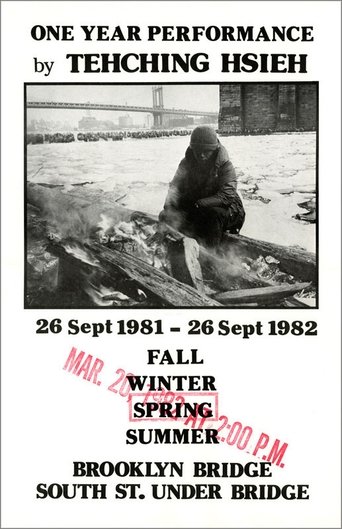
In his third one-year performance piece, from 26 September 1981 through 26 September 1982, Hsieh spent one year outside, not entering buildings or shelter of any sort, including cars, trains, airplanes, boats, or tents. He moved around New York City with a packbag and a sleeping bag.

1982

Sto pervyy

Sto pervyy 1982

1

Senator Fromm called to deal unjustly like it became known how much he was involved in the Bobbi Beykera, the Secretary of the Democratic majority in the Senate. He is accused of stealing money from the fund of the party of bribing senators, of blackmail, of evasion through tax and other fraud. Disassemble the case of Senator Fromm leads the FBI.

1982

Transitions

Transitions 1982

1

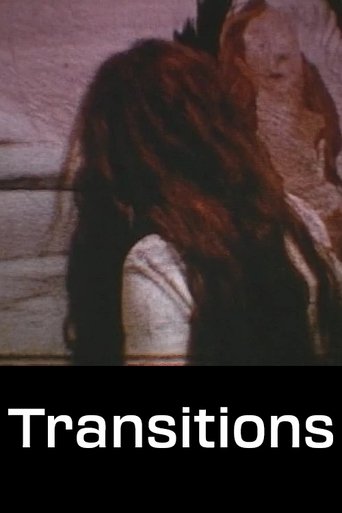
Transitions is a film of inner life and speaks of time, reality, power. It depicts the disquieting sensations of being in-between-between falling asleep and being awake, between here and there, between being and non-being. These metaphysical themes are evoked by the central image of a woman in white over which layers of images and sound (voices) are superimposed.

1982

In Need of Space

In Need of Space 1982

1

Inspired by Steve Reich’s music, a cube rotates with the same dimensions as the film frame.

1982

Wind in Reserve

Wind in Reserve 1982

1

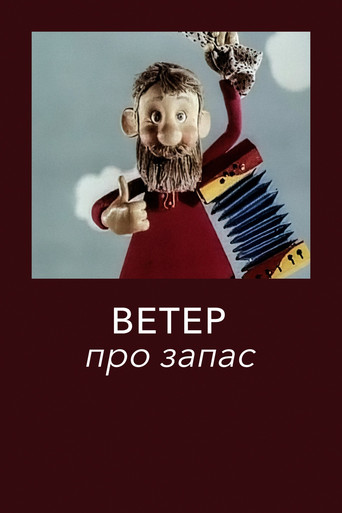
About how Senya Malina managed to tame the wind.

1982

Once Again

Once Again 1982

3.00

A sad looking man wanders the earth after it has been destroyed by a nuclear war.

1982

Waterworx (A Clear Day and No Memories)

Waterworx (A Clear Day and No Memories) 1982

1

The waterworks in the beaches area of Toronto is the source of an image, perhaps eidetic, from my early childhood. It always had an enigmatic quality, and even after returning years later to shoot this film. I was still not satisfied that it was merely a filtration plant - its architecture functioned more metaphorically. Wallace Steven's ironic and equally enigmatic poem 'A Clear Day and No Memories' was brought into the film later to address these issues, and to provide an interruptive graphic function for the same reasons the style of editing is interruptive, that is, to both underscore the alluring nature of the image, and to force an intellectual distancing. Just as the supposedly clear air is used as the protagonist in Steven's poem, the Precisionist clarity of the imagery is foreground in Waterworx, while the soundtrack develops the air's subtext.

1982

Just Another Girl

Just Another Girl 1982

1

With the single-minded attention to detail of a teenager preparing for the prom (or an actress preparing for an award) but augmented by the boisterous camaraderie of friends, a group of San Francisco men pluck, primp and transform themselves into women for a performance (or perhaps an evening on the town). Rock Ross described this sped-up snapshot, which he set to a mash-up/spoken word slice by Malcolm McLaren, as "made for a time capsule." Was he referring to the poignant fact that youth and beauty don't last forever or something else altogether? - Michael Fox

1982