
Palermo illustrata 1908
Here's a travelogue that takes its audience to Palermo and shows them the big sights, and the hidden ones. It ends with a slow but impressive panorama shot of the skyline.
Here's a travelogue that takes its audience to Palermo and shows them the big sights, and the hidden ones. It ends with a slow but impressive panorama shot of the skyline.

Rempailleur is the French word for the person who repairs the wicker seat in chairs, and that's the central joke in this short comedy. A rubber-legged clown carries around more chairs than he can hold, has them stolen and steal other chairs.
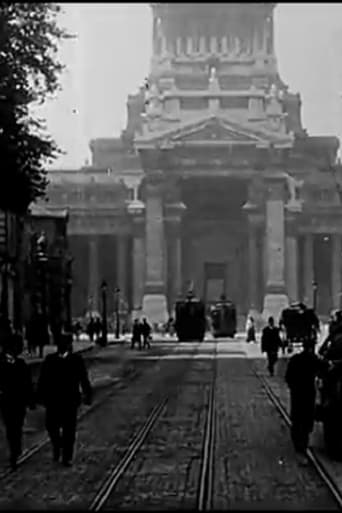
Brussels in the Belle Epoque, recorced on film in a straightforward way. Camera work and editing are purely functional. The film observes busy everyday life in the metropolis as it happens on the street (including Boulevard Anspach, Rue de la Loi, Boulevard Emile Jacqmain), in the parks (Brussels Park and Parc du Cinquantenaire) and on the markets (including Grand Place). The iconic buildings feature extensively, buildings such as the Bourse, the Law Courts, St. Michael and St. Gudula Cathedral, Brussels' City Hall and the Parliament. After the tram ride through the Forêt de Soignes to the Congo Museum in Tervuren, the film ends with panoramic images of the city.
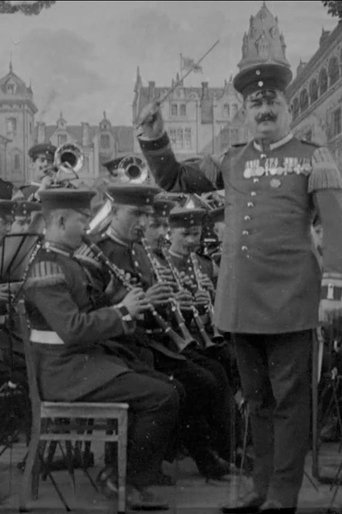
German Tonbild.
These extraordinary views of life and landscape in Beijing were filmed during the last years of China's Qing dynasty, before the 1911 Xinhai Revolution overthrew imperial rule. The focus is on everyday life, and the views of hawkers, laborers, traders, and artisans reveal the city’s vibrant street culture. Especially striking is the shot of a barber preening his client’s 'Manchu queue' hairstyle.
1908 Vitagraph Company one-reel short film.

Recording of the voice of an African man.

Footage of a Milan carneval in 1908
A jungle travelogue looking for monkeys.
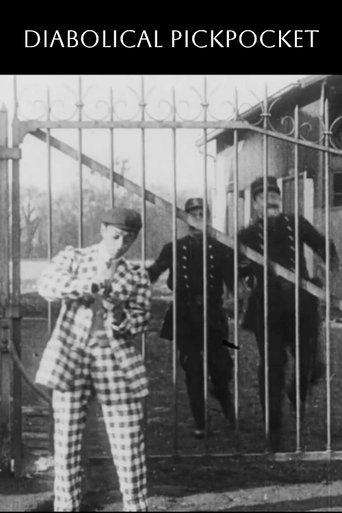
A pickpocket manages to escape the police through a series of fantastic tricks. The director is this film is unknown.
The Germans were not far behind when if came to experimenting with sound and the surviving discs seem like a curious anachronism because they closely resemble the Vitaphone discs from the mid-1920s: about sixteen inches in diameter and the track started from the center and the needle moved out.

A performer lipsync sings “La Donna e Mobile” from the opera Rigoletto.
Funeral Pomps of Admirals Saldanha and Barroso; tribute from the Brazilian Navy. Views "of the Avenue, full of people"; "army and armada officers, ladies, etc."
Actuality of Crown Princess Margareta’s 2 June 1908 visit to Lund: arrival at the station, carriage procession along Klostergatan past the Grand, scenes at the Cathedral, crowds along Kyrkogatan, and stops in the Botanical Garden and at Kulturen.
Actuality film showing King Gustaf V of Sweden and Queen Victoria (of Baden) on a visit to Berlin. Scenes likely include public ceremonies, military or civic honors, crowds, and royal arrival. Intended for newsreel-style exhibition in Sweden.
Topical actuality documenting the aftermath of the Lisbon Regicide on 1 February 1908, when King Carlos I of Portugal and Crown Prince Luís Filipe were assassinated in Lisbon. The film would have shown funeral processions, national mourning, or reconstructed scenes, circulated internationally as part of Pathé’s newsreel-style series. Preserved in Sweden’s 1908 film catalog, it represents one of the earliest cinematic records of a European royal assassination.
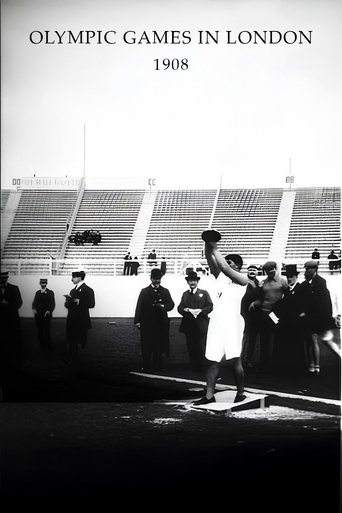
Actuality coverage of the London 1908 Olympic Games, issued by Pathé and released in Sweden as Olympiska spelen i London 1908. The reel includes ceremonial scenes in the royal box and events at the White City Stadium. The Games were officially opened by King Edward VII on 13 July 1908, and surviving Pathé footage shows the royal arrival and stands alongside athletics highlights.
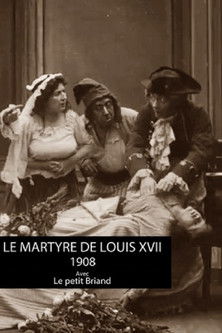
This richly colored picture revives an interesting incident in French history and shows us some of the famous events connected with the overthrow of the power of Louis XVI and Marie Antoinette. (MPW Vol.4 Num.16)
Journey of a camel caravan encountering a tribe of Bicharyn Arabs who perform and offer a glimpse of their children.
