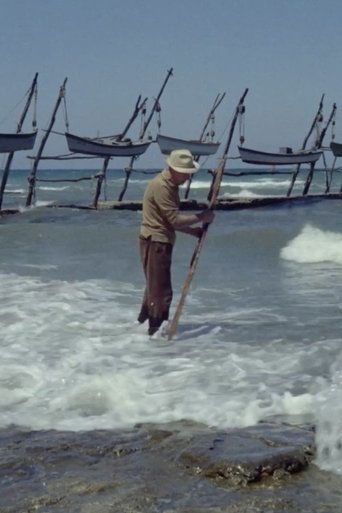
The Colour of Memory 1967
Paintings and graphic works of Slovenian artist Spacal. An attempt to break into the humanitarianism, synthesis and rhythm of his arts.
Paintings and graphic works of Slovenian artist Spacal. An attempt to break into the humanitarianism, synthesis and rhythm of his arts.
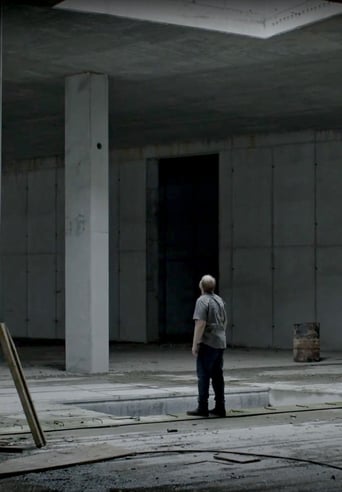
A man wanders through his life. Everything seems the same, but signs of life appear in the most unexpected places.

Peter, whose father was a member of the Home Guard collaboration forces and a political emigrant, returns from Argentina to Slovenia, his father’s homeland. In Slovenia, Peter makes the acquaintance of an architect, but their friendship is fraught with ideological conflicts.
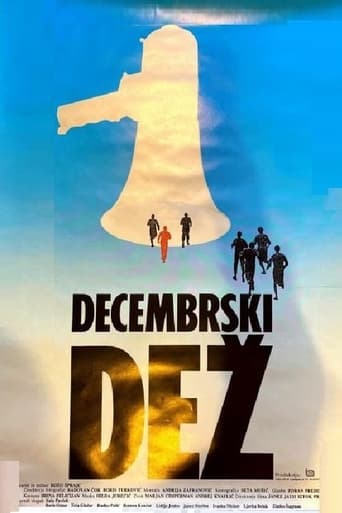
In the revolutionary year of 1968, Stane is an active rebel student. Mojca is a freshman, has a boyfriend named Vid, whom she met at the carnival party. There she also met her later husband Stane. Vid leaves for military service, while Stane successfully avoids it. During the glorification of this event, Mojca and Stane come together intimately. Upon his return from the army, Vid discovers this love triangle. Stane and Mojca get married. The death of the child and the awareness that Stane is cheating on her, leads Mojca to divorce.
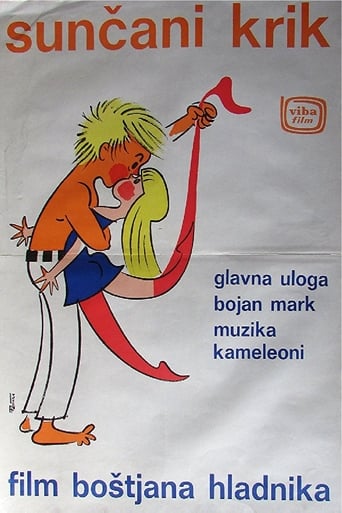
Gangsters hide the stolen money in the refrigerator, which is committed to the school for the arrangers on the seashore. In the same school, a young man responses the advertising for the photographer, so he could provide a free holiday for himself and his friends. Gangsters come there as well, accompanied by detectives. On top of all that, the school is full of girls who try to win the confused young man's heart. This generates a series of comic complications in which the young man finally discloses the gangsters from prosecution, while at the same time being rescued from girls by his friends who have now arrived on holiday.
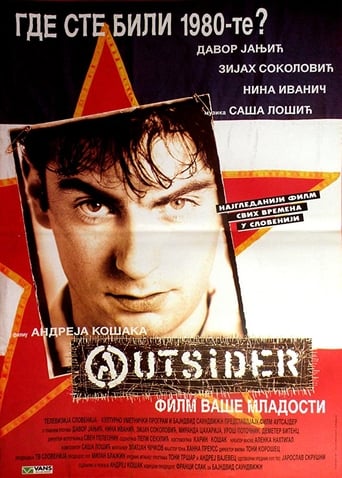
A teenager, son of an army officer moves with his family to Ljubljana in the fall of 1979. In the new surroundings, he'll fall in love, make friends and discover the world of punk rock. The latter will put him into the troubles with his strict father.
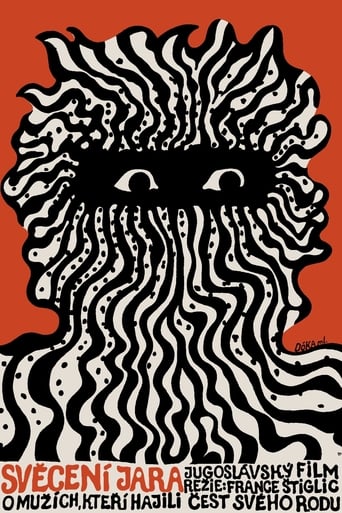
In 18th century Slovenia ruled by the Habsburg dynasty, a troop of soldiers are ordered to prevent the Shrovetide carnival by force and two youngsters are killed in the fight that ensue.
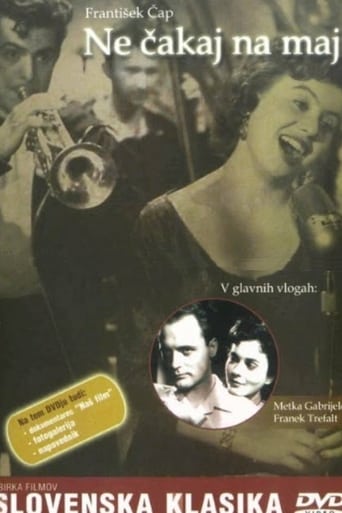
A young girl, Vesna, goes on a skiing vacation to Slovenian Alps, where she is being looked after by her aunt. Her family gets worried when they meet Vesna's boyfriend, and try to marry the couple, thinking that she may be pregnant with him.
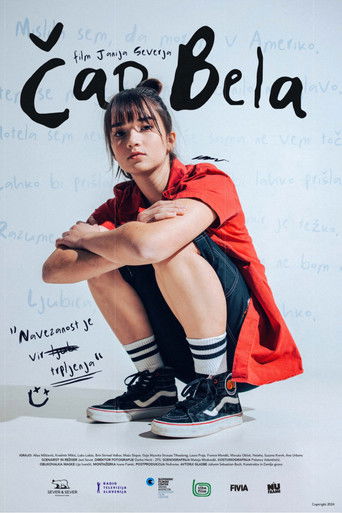
Bela plays the piano, writes songs and trains in taekwondo. She lives with her father, who is a music producer. Her mother left for USA in the hope of an acting career. At the beginning of her first year of high school, Bela learns that her mother wants to come back into her life. In search of meaning and self-expression, Bela forms a band that represents freedom and a confession of her worldview.
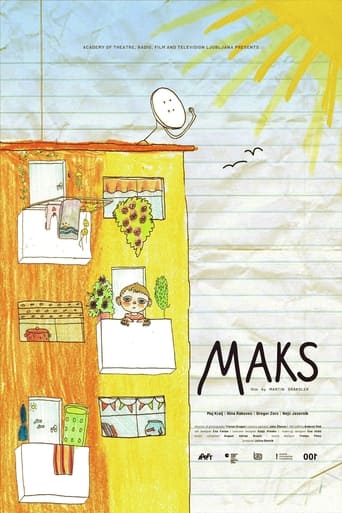
In the absence of his mother, the seven-year-old Maks decides to find company at the basketball court. The lack of warmth and attention forces him to take matters into his own hands.
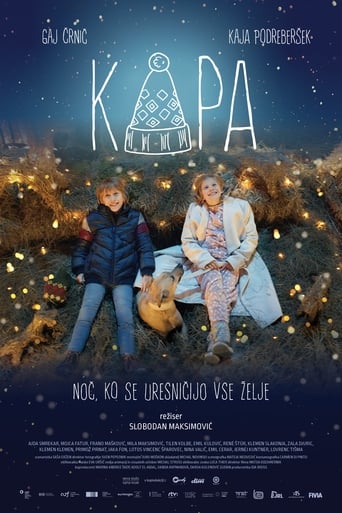
A boy who has nothing and a girl who seems to have everything embark on an adventure following fake Santa in the middle of the night. That night all of their Christmas wishes come true, but not quite the way they've each expected.
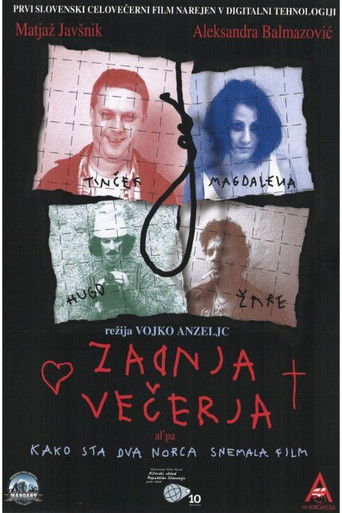
Two "dumb-bells", Hugo and Tincek, steal a camera from a lunatic.
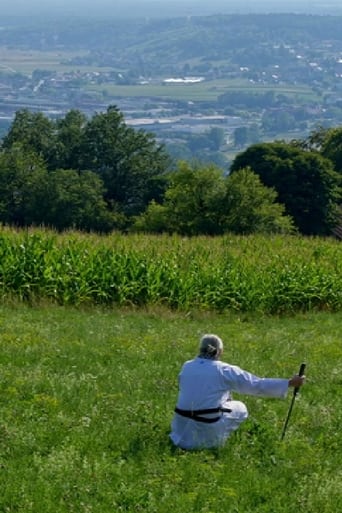
An Irishman finds out he is part Slovene and also Japanese. On the way to coming closer to his roots and finding out his family's heritage the man faces the rough reality.
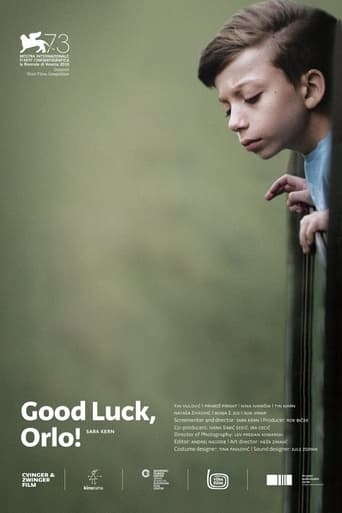
A baby has died. Orlo's parents are consumed with grief. In an attempt to make them happy and his family whole again, Orlo does something unexpected.
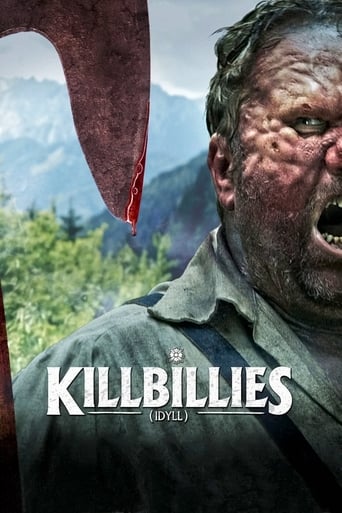
After a night of carousing, the amateur photo model Zina heads for a fashion shoot in the nature, accompanied by the ambitious Mia, apathetic Dragica and snobby photographer Blitcz. On the idyllic location, a supposedly ordinary fashion shoot soon turns into a fierce fight for survival.

We were following the term of US First Lady, Melania Trump, for four years in her hometown in Slovenia. Her former friends and people who knew her remember her with admiration and in a critical way. Some even want to meet her. Who is this enigmatic and elusive person?
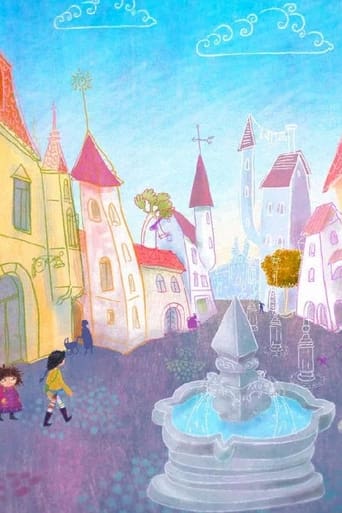
One Monday morning Messy and Ruffles unanimously agreed they would rather go on an adventurous search for their lost magic cat Spotty than to boring school and fearful dentist Dr. DeCay. On zippity-zappity path through time and space, they come across a nerdy neighbor Smarty, a great connoisseur of magic potions, who is brewing his newest potion according to an ancient recipe. Smarty joins the two little witches after the unpredictable course of events and unforgettable "zippity-zappity" journey full of challenges and complexities that arise in the Ljubljana city streets begins. The world of magic is governed by different rules than the normal world: if you do not like Monday, you can easily jump into Tuesday, put a spell on an evil neighbor, shorten the stretched road and even kick out the crankiness. But even great witches can not avoid dentists forever, not even with magic.
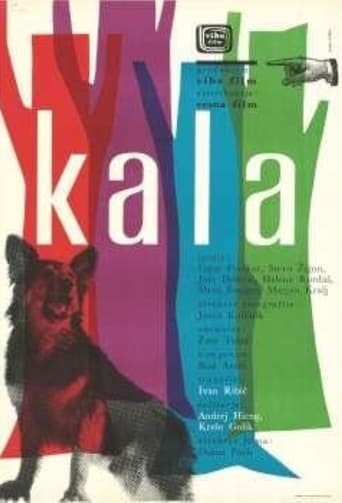
The only true friend he had was an wolf. Or was it a dog?

Following her mother's injury, 11 year-old Rana is determined to protect her younger sister from an untrusty uncle who's stepping in to help the family.
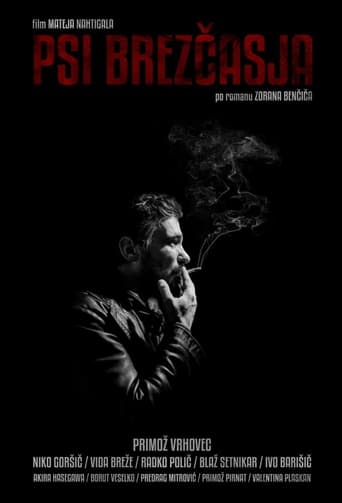
After being away for four years, Rok Osterberg returns to his home town to investigate the murder of his younger brother Maks. As Maks was involved in illegal business, nobody seems to care about his death. The only person willing to help is a family friend, Inspector Kramer. Back home, Osterberg must face people from his past.
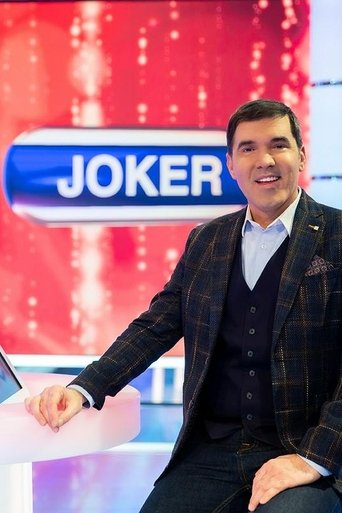
Ščuke pa ni, ščuke pa ne is a Slovenian television comedy series, created by Slovenian writer Tone Partljič and directed by Jože Babič. The original show was aired in 1980 on first channel of RTV Ljubljana. Screenplay by Tone Partljič and music was composed by Krunoslav Cipci.
Teater Paradižnik is a Slovenian television comedy series, created and directed by Branko Đurić. Screenplay was written by Marko Pokorn and Branko Đurić. This show lasted from 1994 to 1997 and was a huge hit in Slovenia. It was broadcast on first channel of RTV Slovenija, a Slovenian national television. The story was set in theater. There was a lot of comic situations between workers behind the scenes; and a part on a stage with public and Slovenian music performances on the other side.