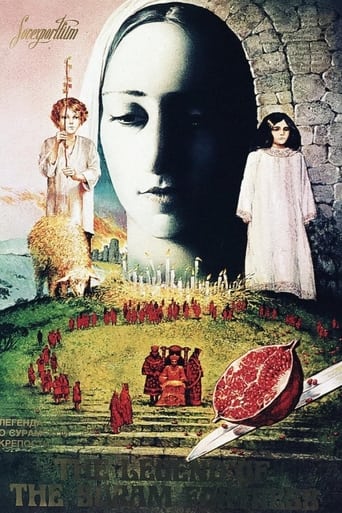
The Legend of Suram Fortress 1985
A film version of a well-known Georgian folk-tale. A young boy has to be immured into the walls of a fortress in order to stop it from crumbling to pieces.
A film version of a well-known Georgian folk-tale. A young boy has to be immured into the walls of a fortress in order to stop it from crumbling to pieces.
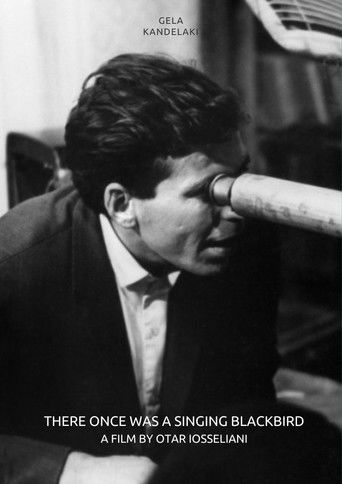
Gia is a carefree young percussionist who works at a theater in Tbilisi, capital of Georgia. He lives in a small apartment with his mother. Gia spends his days flitting from friend to friend, lover to lover, avoiding any responsibility, and never staying still for five minutes. However, he always manages to arrive at the theater just in time to play the drums at the end of the ballet.
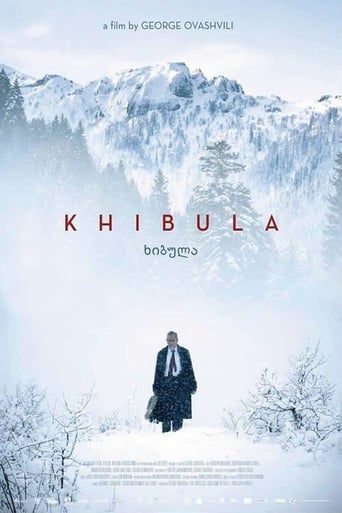
The screenplay for Khibula was inspired by the real events taking place in Georgia briefly after the country regained its independence in 1991. Zviad Gamsakhurdia, the first president of Georgia, elected by the majority of votes, was driven into exile by coup d'etat. Even though he returned to regain power soon after, political clashes once again forced him to flee into the mountains. Based on the final chapter of the first President's life, the film starts off by following his journey accompanied and pursued by both friend and foe.
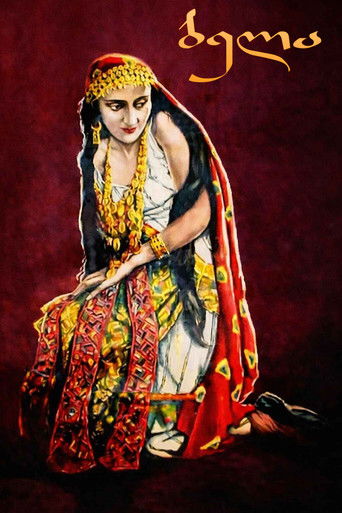
Pechorin is deprived of the officer’s rank and gets transferred to one of the mountain villages of the Caucasus. He gets bored of the everyday life and starts looking for fun. He promises Azamat to help him steal Kazbich’s horse if the former allows Pechorin to marry his sister Bela. Soon Pechorin gets annoyed by Bela’s presence. Kazbich, insulted by the theft of his horse kills Bela. Coldblooded Pechorin is hardly moved by this news.
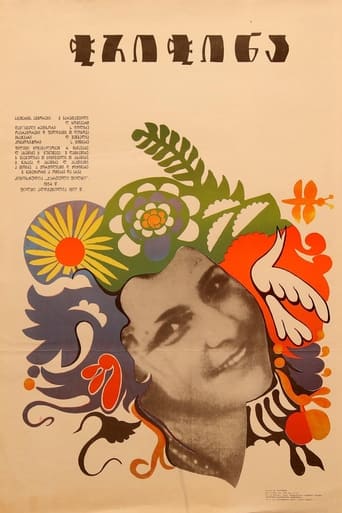
A young, funny, lovely, kind girl from country-side is named Marine but she is nicknamed as Chrichina (Dragonfly). She is very popular in her village because of her happy-go-lucky temperament and singing songs. She lost a chance to study at University, fell in love with handsome, intelligent architect from the city. She must prove to everyone that she is useful for something, and not only for singing "aba deli dela..." every day. Everyone realizes that they are not very suitable for each other, but the young architect can't get her out of his head.
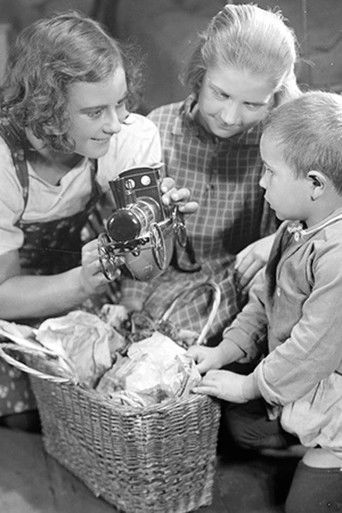
The film tells the story of a Soviet girl who wishes to work in an enterprise.
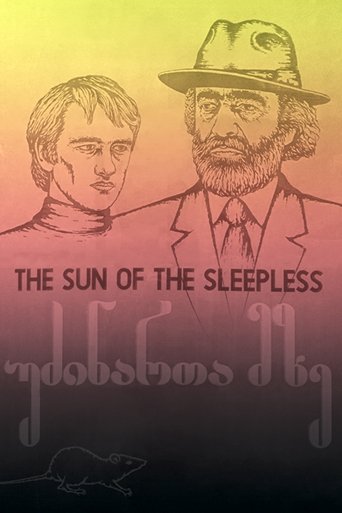
The director dedicated this lyrical, epic film-confession to the memory of his father who was a doctor. The film’s protagonist, an ambulance doctor, conducts dangerous experiments in search of a vitally important vaccine. His wife believes in his work, though his daughter would not understand him. His son, who is absolutely unlike his father in character, is trying to protect him. But self-denial in the name of science proves too high a price. Just when he is on the verge of discovery, the doctor loses everything he has gathered as a result of his twenty-year-long work. This loss brings him even closer to his son. The shooting of the film continued for seven years (1985-1992), making it a metaphorical culmination of the Soviet cinematography and the Soviet way of life as a whole.
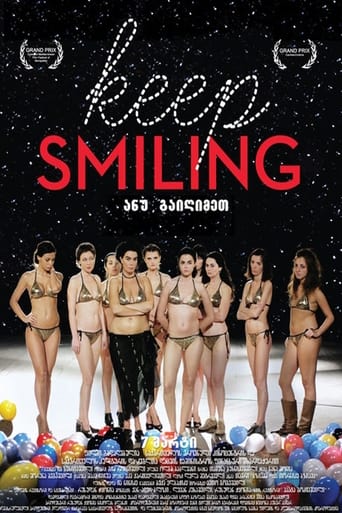
10 women, seven of them belonging to the poorest population, are desperately trying to win a beauty contest for mothers who have more than 3 children. The winner will get an apartment and $25000

Georgia’s former prime minister has found a unique hobby. He collects century-old trees, some as tall as 15-story buildings, from communities along the Georgian coast. At a great expense and inconvenience, these ancient giants are uprooted from their lands to be transplanted in his private garden.
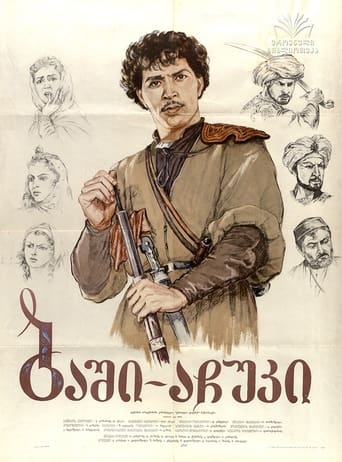
The 17th century rebellion in Kakheti masterminded by Bidzina Cholokashvili gets about the whole Georgia. An Imeretian youth nicknamed as Bashi-Achuk is a real exterminator of the Persians. He attacks the Persian escort and sets free the Georgian women who were supposed to be locked up in the Shah’s harem. Bashi-Achuk’s twin sisters are among the rescued captives. Abdushahil, a Persian warrior who was defeated by Bashi-Achuk in wrestling, falls in love with Mzisa, Bashi-achuk’s sister. Mzisa brings Abdushahil to the camp of the Georgian rebels. Abdushahil learns that he is a Georgian too. As a child he was kidnapped and brought up in Persia. Abdushahil’s army gives up and the Georgians win the battle.
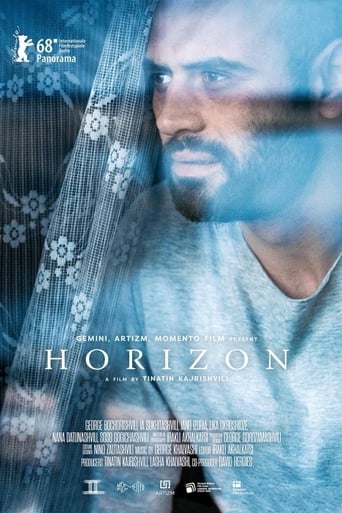
The change in Giorgi’s life could not be more radical. The city, art, his regular, middle-class existence and his marriage to Ana are all behind him. Now he is alone. Giorgi goes into isolation on a small barren island in a simple hut by the sea. In an inhospitable environment, surrounded only by a handful of strangers, between chicken farming and duck hunting, he is trying to pick up the pieces of his life. But his wounds are deep, and the shadows of his happy past repeatedly catch up with him.
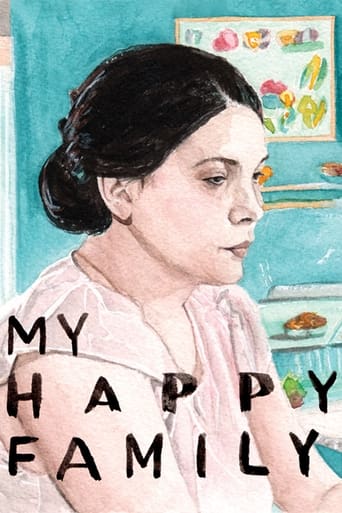
In a patriarchal society, an ordinary Georgian family lives with three generations under one roof. All are shocked when 52-year-old Manana decides to move out from her parents’ home and live alone. Without her family and her husband, a journey into the unknown begins.
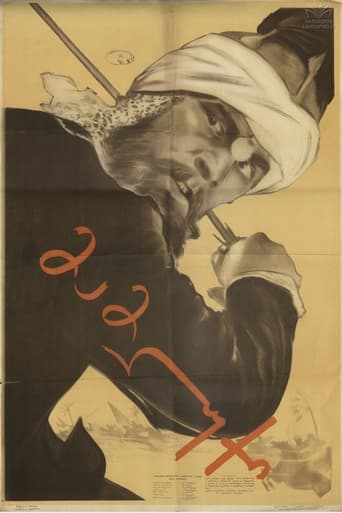
In Arabic, “mameluke” means a white slave, a prisoner. In Egypt, this name was given to prisoners of war who had been sold into slavery from Georgia and other countries of the Caucasus. The action of this drama starts in Georgia in the late 18th century. Two friends are abducted and sold into slavery. One ends up in Egypt, the other - in Venice. Years later, they meet by the ancient pyramids, in the desert where a battle is going on between the armies of Bonaparte and Ali-bey, the ruler of Egypt. In a combat with a French officer, the Mameluke injures him. Falling from his horse onto the sand, the officer exclaims in Georgian: “Vai, nana!” (“Oh, mother!”). And the Mameluke recognizes in him a mate of his childhood games.
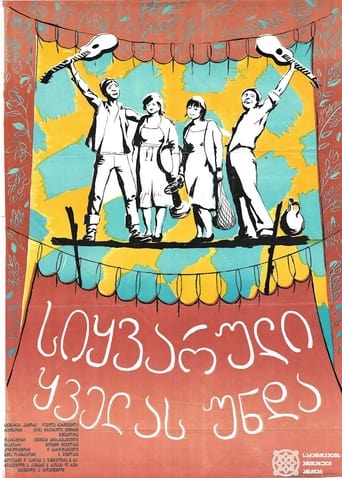
A graduate of a sewing school arrives in a Kakhetian village. Insisting on opening a fashion house there, the energetic and good-natured Makvala makes the life of the villagers much more lively.
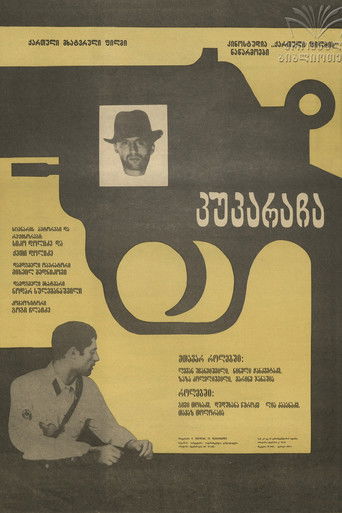
A screen adaptation of the novel of the same name by the well-known Georgian writer Nodar Dumbadze. This story about love and loyalty, bravery and betrayal, began shortly before the Patriotic War of 1941-1945. Georgy Tumurashvili, a militia man, was affectionately called “Cucaracha”, by both the kids and the adults. He was a conscientious divisional inspector investigating various incidents, calling to order local hoodlums and settling family arguments. Once he helped out Inga who fell prey to Murtalo, a bandit and murderer. The young people fell in love with each other. But Murtalo decided to take revenge on Kukaracha…
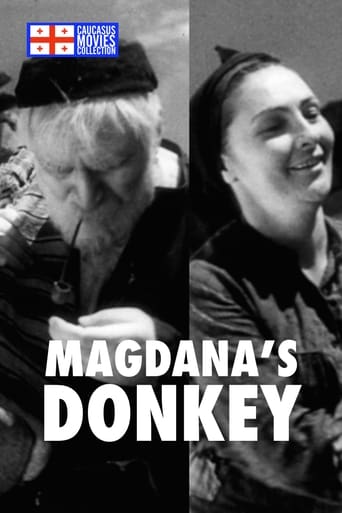
This chamber drama is set in Georgia on the turn of the 19th and 20th centuries. A simple peasant family makes its living by selling yogurt which the Magdany widow takes every morning to the town market. Once, in their mother’s absence, the children – six-year-old Mikho and three-year-old Kato – found an abandoned donkey on a road leading to their village. The foundling was fed, tended, and the moment the donkey opened its big, tender eyes, it was named “Lurdja”, which means “blue-eyed”. Surrounded by love and care, the donkey became a big help in the poor household. But this idyll was not to last long…
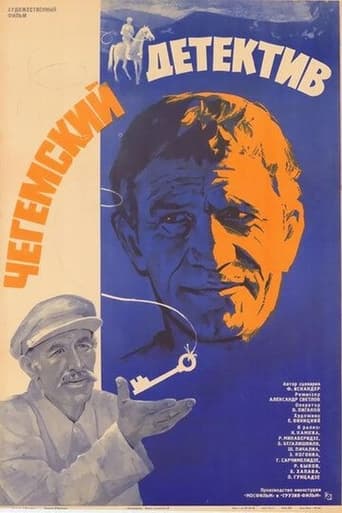
A story about a countryside detectivean his hunt for the kolkhoz money thief. Based on the Fazil Iskander's novel.
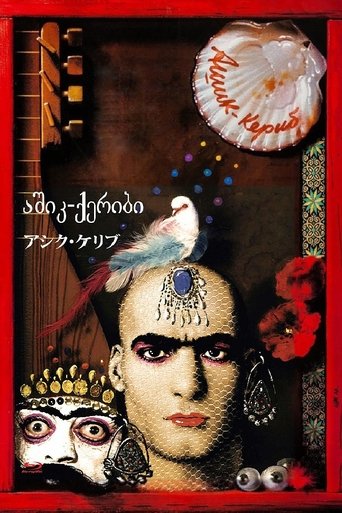
Wandering minstrel Ashik Kerib falls in love with a rich merchant's daughter, but is spurned by her father and forced to roam the world for a thousand and one nights. Now presumed dead by those he loves, he performs for the poor and unfortunate on his journeys through the wilderness. Parajanov's visually ravishing 'tableaux vivants' tell Lermontov's romantic tale while Turkish and Azerbaijani folk songs transport us into its mystical landscapes.
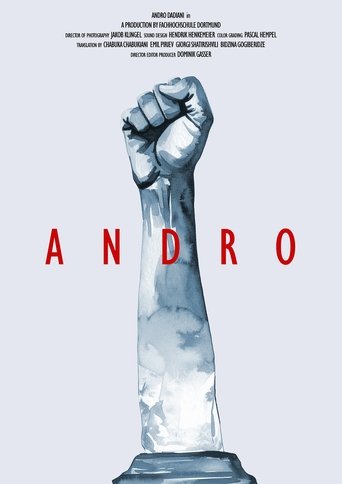
ANDRO DADIANI's political performances dissect the oppression by state and church in Georgia and conquer Tbilisi's urban spaces. As a queer, non-binary protest and performance art figure, their identity remains a secret. The danger of open resistance is too great.
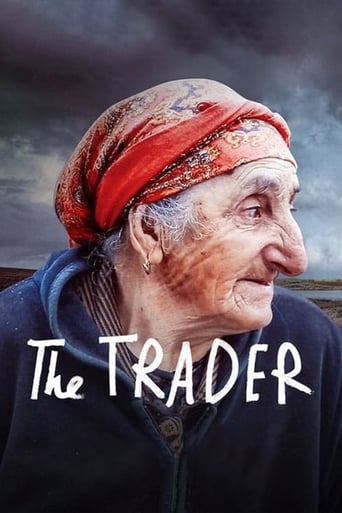
A traveling trader provides a window into rural life in the Republic of Georgia, where potatoes are currency and ambition is crushed by poverty.

In Tbilisi, Georgia, a publisher's life is turned upside down when the fictional story in a new novel eerily mirrors the real-life disappearance of a popular blogger with amnesia. The lines between reality and fiction blur as the characters in the book find themselves entangled in a mystery that could rewrite their own fates.

Georgian filmmaker and political activist Goga Khaindrava finished work on the documentary TV series, which is titled Herocratia and deals with prisoner torture and other government crimes against the population during the nine years Mikheil Saakashvili's National Movement was running the country. Also former political prisoners attended the premiere of the new series, which will be aired on Imedi and GDS starting from September 6. "The main idea of this film is for people to really acknowledge what kind of disaster we went through," Khaindrava told journalists. "People don't know what kind of hell some people went through."







A Georgian animated television sitcom "bearing more than a passing resemblance" to the United States animated television sitcom The Simpsons.
Night with Shorena — Shorena Begashvili's erotic show on the Imedi channel. It first aired in late 2009.



"Facing the closure of his beloved team, legendary football manager Ramaz Razmadze strives to build a championship-winning squad in a race against time, aiming to secure his final title and leave an enduring legacy."

Every program consists of five video, all videos are modified parody of famous videos, the goal of the video, within having fun, is to express the actual life of the society, as well to show the people with the parody real life.
