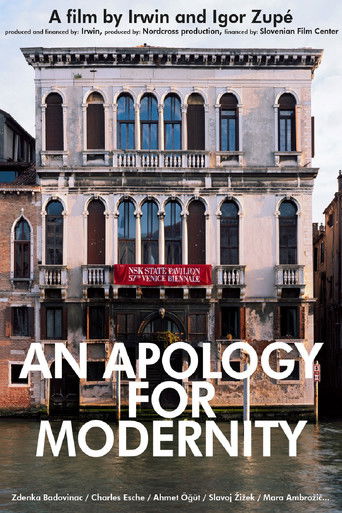
An Apology for Modernity 2021
An art-doc in which commissioners, curators, artists, delegates and visitors to the NSK State Pavilion ask themselves questions about the meaning of European cultural and political heritage, its past and future.
An art-doc in which commissioners, curators, artists, delegates and visitors to the NSK State Pavilion ask themselves questions about the meaning of European cultural and political heritage, its past and future.

A day after an incident during a school production of a play called Again, lead actor Aljaž turns up in school. In the hallways, he is confronted with questions about the previous night, and forced to deal with his popularity, his love interest, his mistakes on stage, his friends' jokes, and his fear of failure. His love of acting and the positive attitude of his friends help him find the way to bring the schoolday to a happy close.

Scenes of the International Film Congress held in Berlin in April-May 1935, with famous film actors from all over the world.
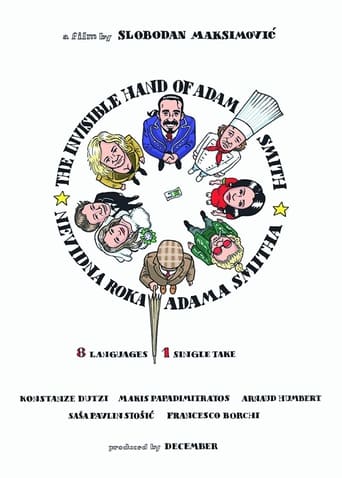
Somewhere in Europe a Greek owes to a French, who owes to a Slovenian and she owes to an Italian, who owes money to the Greek. A German owes no one, she just wants to get a good night's sleep. The Brit is looking for an exit. The film is shot in one take with a crew and actors coming from over ten countries. Everyone speaks their language and they all understand each other.

A short experimental documentary about human senses – what happens when one of them is missing and all others merge to replace it? The film will explore the intensity of these senses through the perception of a disabled dancer.
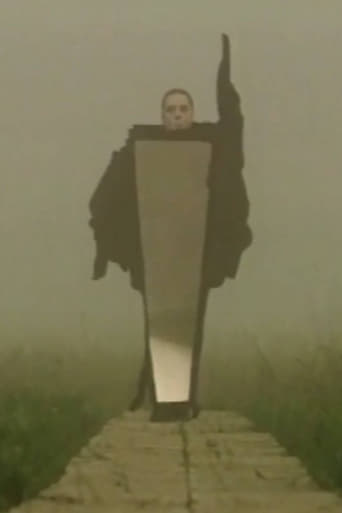
In the video works of Ema Kugler, mythology is inscribed in the rituals of everyday life, this time it is the theme of Hydra with many faces. It is illustrated by individual scenes with actors in leather costumes (the author's creations), which restrict their movement and thus already emphasize the separation of man from nature. The last trace of connection - the ritual relationship between man and bull, which is again based on human cruelty to animals - ends with blood, which on a symbolic level also pervades the whole image.
A short silent film about mountaineering expedition on Triglav during winter.
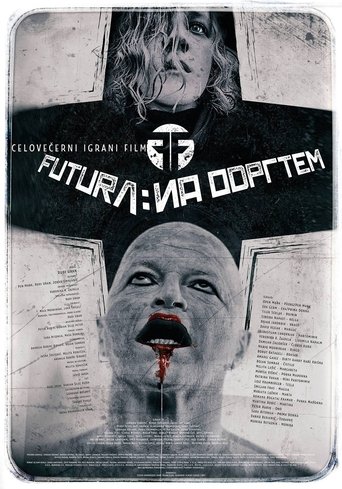
I, PADRE. The fiIrst man, Creator and Dictator of all dictators rules the promised land of the future, the FUTURE country, where People Hens with the memory of fish follow the Instinct like sheep; and when the first woman, Eve, assumes power, this is above all an opportunity for the Opposition to make a fool of themselves! What more could you possibly want?
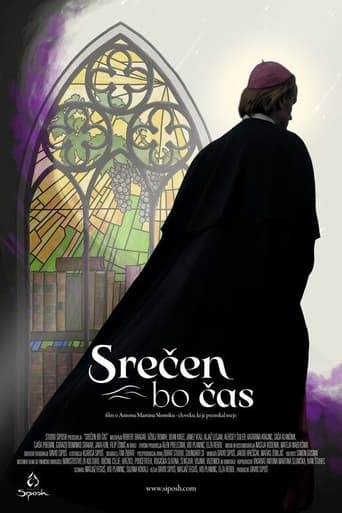
A modern film portrait that reveals the background of the visionary work of Anton Martin Slomsek. A story woven from many threads about a man who deeply respected the environment in which he grew up and later worked. With his determination and great efforts, he moved the domestic cultural space alongside other European nations, which were experiencing their renaissance in the middle of the 19th century. The Dawn is Near is an inspiring story about a man who knew the Slovenian soul and dedicated his entire life to it.
Well, Bizgeci are feathery people and live in the area of dry steppes. Their homes are neat and quite lofty cages. Bizgeci are the link between primates and birds. They keep a domesticated cat and one human being - the professor. Of course, they are not those funny and stupid people you meet with every day in school, at home or during your various activities.
After a few days of a close-knit life, a wealthy family splits, and everyone goes their own way - the parents take a cruise ship trip, and the son goes to his grandmother's on vacation, where he meets a new love. An unusual relationship develops between the grandmother and the grandson, which he does not like, but the grandmother seems to enjoy the inappropriate connection. The grandson, in love, spends his days happily with his new girlfriend, enjoying a youthful life, which his grandmother finds disturbing. As weeks pass, the grandson's life turns into a nightmare in which unusual moments of domination between the grandmother and his new girlfriend take place.

Oskar is sent to spend a few days with his grandfather Viktor in his old, quiet home. While exploring the property, he stumbles upon a forgotten garage filled with relics from the past. As he begins to uncover long-buried family secrets, Oskar is forced to confront truths that challenge his understanding of his family and himself. The deeper he digs, the more he realizes that some secrets were meant to stay hidden. But uncovering the past comes at a price-one that may change his life forever.

On the one side Vertigo Bird reveals completely personal attitude of Kovač toward the real ambience of his native town, while on the other the artistic articulations give his attitude broader connotations and develops it into a poetical structure of perception of the real world. Kovač places a group of dancers in this space of man’s activity, whose decline is a historical necessity.
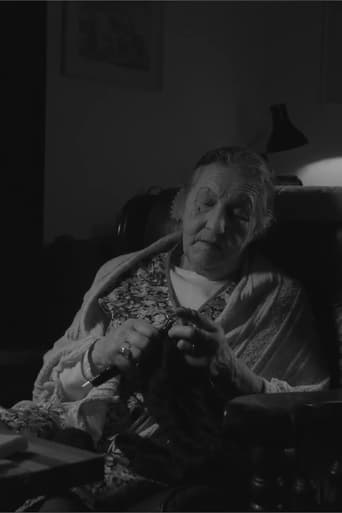
Passing the time knitting socks, doing crosswords and watching TV home shopping ads, lonely Grandma has her routine disturbed by an annoying fly. After a short conflict, Grandma befriends the creature and her lonely days become full of joy and life.

6 stories from 6 people living in 6 different places in Russia. Black and white documentary film is about simple Russian people and their simple everyday stories. All the stories are being told in the protagonists kitchens, since kitchen in Russia represent the heart and the soul of every house. The goal of the film is to break common stereotypes that west world have about Russian people. Main protagonists were given total freedom regarding choosing the topic for their story. Their topic selection and the way stories were told shows a lot about Russian society and about the way people live in today's mother Russia.
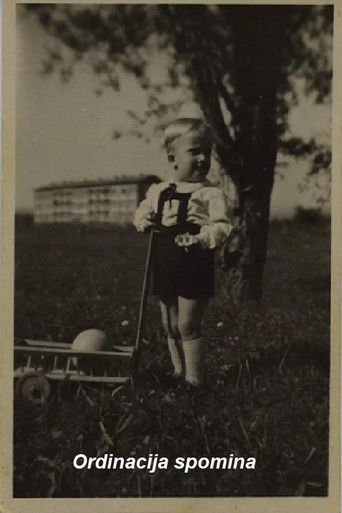
On December 10, 2009, the second memory-sharing campaign from the series Cross-border memory-gathering campaigns: Ordinacija spomina / Corsia dei ricordi was organized in the house of the former border crossing between Nova Gorica and Gorizia. Citizens of both cities were invited to select a few photos taken in this border area from their home albums and share their memories of a frozen moment.
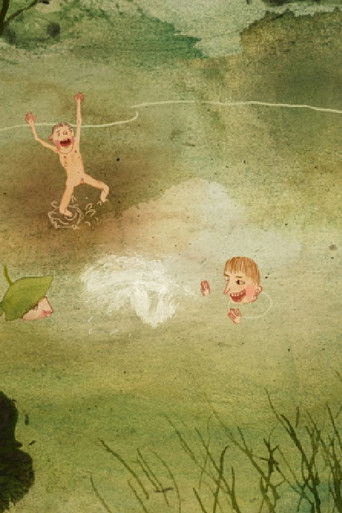
Fragments of memories from our grandparents take us back to a time when the world smelled of rivers, forests, and freshly fertilized fields. People were resilient, cows and horses were loyal companions, and children were full of curious freedom and inventive solutions, always ready to get up to mischief while working.
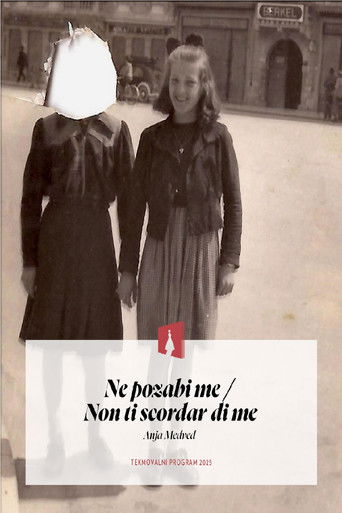
In this feature-length documentary film essay, archival footage weaves together childhood memories from once-opposing sides on the Gorizia border to rethink—80 years after WWII, and amid renewed calls for rearmament—the meaning of home and belonging.
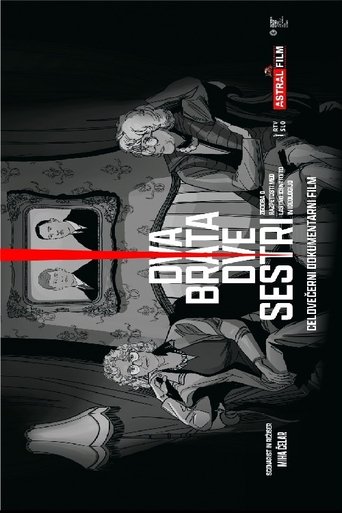
At the beginning of the 20th century, the Žagar family in Notranjska region developed an international timber industry. The timber concern was inherited by young brothers Line and Franci. Line, impressed by the then Soviet idea of a just society, became a communist, while Franci tried to preserve the family fortune. World War II divided the world and also put the Žagar brothers on opposite sides. Eighty years later, Franci's daughters - sisters Monika and Barbara Žagar - explore in the film what happened to their uncle and father. The animated documentary about the Žagar family is a story about the tension between one's own identity and ideology.
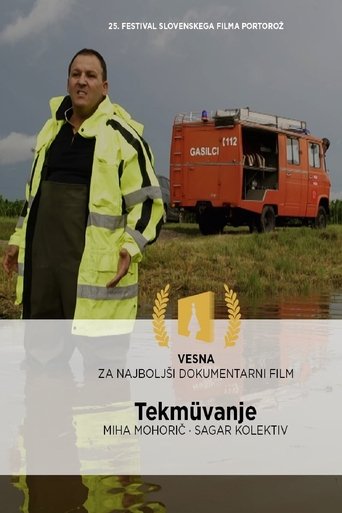
Showcases a village in Slovenia named Roma where first and only firefighters struggle to become one of many Slovenian firefighters and try to integrate into the Slovenian tradition.
