Power of 10

Power of 10 2007

1

Power of 10 is an international Sony Pictures Television game show format featuring contestants predicting how a cross-section of local people from the host broadcaster's country responded to questions covering a wide variety of topics in polls conducted by the broadcaster and production company.

2007

You're On Your Own

You're On Your Own 1956

1

You're On Your Own was an American game show that aired on CBS from December 22, 1956 to March 16, 1957. Actor Steve Dunne was the emcee, with Hal Simms as the announcer and Joann Jordan was the commercial spokesperson for sponsor Hazel Bishop. You're On Your Own was broadcast from CBS Studio 59, also known as the Mansfield Theatre, in Manhattan.

1956

The Brighter Day

The Brighter Day 1970

1

The Brighter Day is an American daytime soap opera which aired on CBS from January 4, 1954 to September 28, 1962. Originally created for NBC radio by Irna Phillips in 1948, the radio and television versions ran simultaneously from 1954-1956. Set in New Hope, Wisconsin, the series revolved around Reverend Richard Dennis and his four children, Althea, Patsy, Babby and Grayling. The Brighter Day was the first soap opera to air on network television with an explicitly religious theme. Another soap opera created by Phillips, The Guiding Light, initially had a religious theme as a radio show but dropped it by the time the series moved to television.

1970

Gambit

Gambit 1972

5.00

Gambit is an American television game show based on the card game blackjack, created by Wayne Cruseturner and produced by Heatter-Quigley Productions. The show originally ran on CBS from September 4, 1972 to December 10, 1976. A slightly retooled version, Las Vegas Gambit, aired on NBC from October 27, 1980 to November 27, 1981, originating from the Tropicana Hotel and Casino in Las Vegas. The 1972–1976 version changed taping locations at CBS Television City, taping episodes in Studios 31, 33, 41 and 43 at various times. Both versions were hosted by Wink Martindale and announced by Kenny Williams. Elaine Stewart was the card dealer for the CBS version, while Beverly Malden filled this role for the first half of Las Vegas Gambit, and was later replaced by Lee Menning. The program was retooled as Catch 21, which began airing on GSN in 2008.

1972

Douglas Edwards with the News

Douglas Edwards with the News 1948

7.00

On May 3, 1948, Edwards began anchoring CBS Television News, as a regular 15-minute nightly newscast on the CBS television network, including WCBS-TV. It aired every weeknight at 7:30 pm, and was the first regularly scheduled, network television news program featuring an anchor.[5] (WCBW/WCBS-TV newscasts prior to this time were local television broadcasts seen only in New York City.) NBC's offering at the time, NBC Television Newsreel, which premiered in February 1948, was simply film footage with voice narration.

1948

Wheel of Fortune (Daytime)

Wheel of Fortune (Daytime) 1974

4.30

The original version of Wheel was a network daytime series that ran on NBC from January 6, 1975, to June 30, 1989, and subsequently aired on CBS from July 17, 1989, to January 11, 1991; it returned to NBC on January 14, 1991, and was cancelled that year, ending on September 20, 1991.

1974

Bedroom Buddies

Bedroom Buddies 1992

1

Married couples compete to see how much they really know about each other.

1992

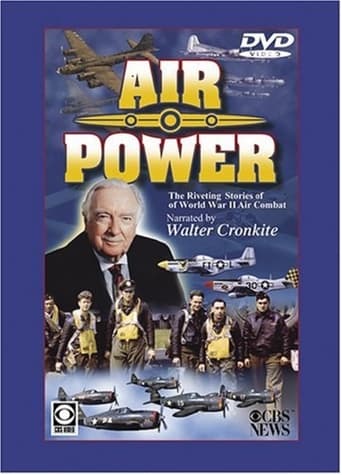
Air Power

Air Power 1956

5.00

Air Power is a historical educational television series broadcast during the 1956-1957 television season over the CBS television network dealing with the rise of aviation as a military weapon. It starred Walter Cronkite as the narrator and featured a musical score by Norman Dello Joio.

1956

Ivan the Terrible

Ivan the Terrible 1970

1

Ivan the Terrible is an American sitcom that aired on CBS for five episodes during 1976. The short-lived series parodied American attitudes toward the Soviet Union during the height of the Cold War. Set in Moscow, the sitcom starred Lou Jacobi as a Russian hotel waiter named Ivan Petrovsky, and the day-to-day misadventures of Ivan's family and their Cuban exchange student boarder, all of whom live in a cramped, one-bedroom apartment. Also appearing in this series were Christopher Hewett, Phil Leeds, Alan Cauldwell and, in her TV series debut, Nana Visitor. Harvey Korman appeared as a Soviet bureaucrat in an uncredited cameo at the close of each episode. The executive producer of this series was noted comic Alan King.

1970

Arthur Godfrey and His Friends

Arthur Godfrey and His Friends 1949

6.50

Arthur Godfrey and His Friends is an American television variety show hosted by Arthur Godfrey. The hour-long series aired on CBS Television from January 1949 to June 1957, then again as a half-hour show from September 1958 to April 1959. Many of Godfrey's musical acts were culled from Arthur Godfrey's Talent Scouts, which was airing on CBS at the same time. Among the more popular of his singers were Frank Parker, Marion Marlowe, Janette Davis, Julius La Rosa, Haleloke, The McGuire Sisters, Carmel Quinn, Pat Boone, Miyoshi Umeki and The Chordettes. The show was live, and Godfrey often did away with the script and improvised. He refused to participate in commercials for products he did not believe in.

1949

The Gray Ghost

The Gray Ghost 1970

1

The Gray Ghost is an American historical series which aired in syndication from October 10, 1957, to July 3, 1958. The show is based upon the true story of Major John Singleton Mosby, a Virginia officer in the Confederate Army, whose cunning and stealth earned him the nickname "Gray Ghost".

1970

Blackout

Blackout 1970

1

Blackout is an American game show that aired on CBS from January 4 to April 1, 1988. The pilot was hosted by former Entertainment Tonight anchor Robb Weller, but he was replaced for the series by Bob Goen. Johnny Gilbert was announcer for most of the run, with Jay Stewart taking over for the last two weeks. The show was a Jay Wolpert production.

1970

Cartoon All-Stars to the Rescue

Cartoon All-Stars to the Rescue 1990

10.00

Cartoon All-Stars to the Rescue is an American animated drug prevention television special starring many of the popular cartoon characters from American weekday, Sunday morning and Saturday morning television at the time of this film's release. Financed by McDonald's and Ronald McDonald Children's Charities, the special was originally simulcast on April 21, 1990 on all four major American television networks: ABC, NBC, FOX and CBS, and most independent stations, as well as various cable networks. McDonald's also distributed a VHS home video edition of the special, produced by Buena Vista Home Video, which opened with an introduction from President George H. W. Bush, and First Lady Barbara Bush. The show was produced by the Academy of Television Arts & Sciences Foundation and Southern Star Productions, and was animated overseas by Wang Film Productions Co., Ltd.. The musical number "Wonderful Ways to Say No" was written by Howard Ashman and Alan Menken, who also wrote the songs for The Little Mermaid, Beauty and the Beast and Aladdin. The plot chronicles the exploits of Michael, a teenager who is using marijuana and stealing his father's beer. His younger sister, Corey, is worried about him because he started acting differently. When her piggy bank goes missing, her cartoon tie-in toys come to life to help her find it. After discovering it in Michael's room along with his stash of drugs, the various cartoon characters proceed to work together and take him on a fantasy journey to teach him the risks and consequences a life of drug-use can bring and save the world.

1990

48 Hours Suspicion

48 Hours Suspicion 2020

1

48 Hours: Suspicion is a limited-run series from the team at CBS News' award-winning true-crime series 48 Hours. The series features intriguing cases where people live under suspicion, but the truth is often elusive.

2020

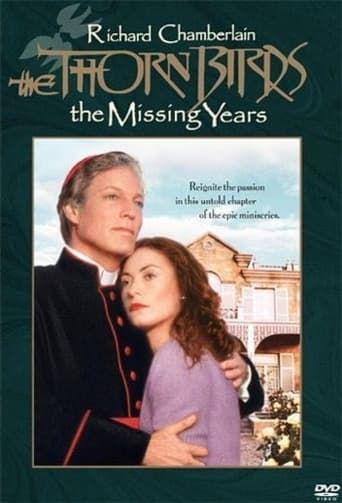
The Thorn Birds: The Missing Years

The Thorn Birds: The Missing Years 1996

7.00

The story of the 19 years that are unaccounted for between the birth of Dane and Ralph's return to Australia in the original miniseries.

1996

1775

1775 1992

1

1775 was a 1992 pilot episode for a CBS situation comedy, similar in style to the BBC situation comedy Blackadder. Set in colonial Philadelphia during the run-up to the American Revolution, the series was to follow the exploits of innkeeper Jeremy Proctor and his family. The series was not picked up by CBS. A similar idea for a situation comedy was mentioned by Andrew Alexander in a commentary track for SCTV.

1992

Name That Tune

Name That Tune 1952

1

Name That Tune is an American television game show that put two contestants against each other to test their knowledge of songs. Premiering in the United States on NBC Radio in 1952, the show was created and produced by Harry Salter and his wife Roberta. Name That Tune ran from 1953–1959 on NBC and CBS in prime time. The first hosts were Red Benson and later Bill Cullen, but George DeWitt became most identified with the show. Richard Hayes also emceed a local edition from 1970–1971, which ran for 26 weeks in a small number of markets. However, the best-remembered syndicated Name That Tune aired once a week from 1974–1981 with host Tom Kennedy. The series was revived for daily syndication in 1984, and its lone season was hosted by Jim Lange. For the last two of these series, John Harlan served as announcer. The centerpiece of each Name That Tune series was an orchestra, which would play the songs for the contestants to guess. The syndicated series' orchestras were conducted by Bob Alberti, Tommy Oliver, and Stan Worth. A second band, Dan Sawyer and the Sound System, was also featured from 1978–1981. Beginning in 1976 and continuing for the remainder of the weekly syndicated series, as well as for the entire 1984 run, the show's title became The $100,000 Name That Tune.

1952