Serpentine Dance 1900
1900 Gaumont version of the ubiquitous Serpentine dance, this one hand tinted. Filmmaker anonymous. (not to be mistaken with Alice Guy-Blaché's version with Madame Ondine, from the same year and company)
1900 Gaumont version of the ubiquitous Serpentine dance, this one hand tinted. Filmmaker anonymous. (not to be mistaken with Alice Guy-Blaché's version with Madame Ondine, from the same year and company)
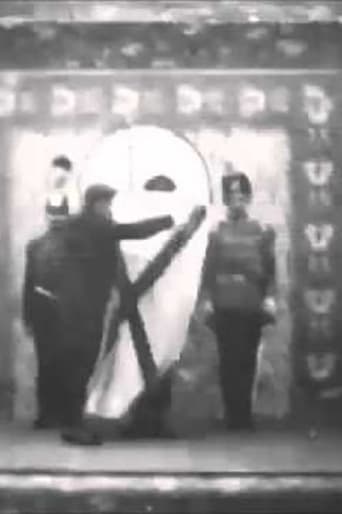
A magician steps upon the stage carrying a hoop covered with white paper. Then in quick succession the flags of Germany, Russia, Ireland, England and China are brought forth, and from each a soldier is produced corresponding with the flag of each nation. The magician adds a bit of comedy to the scene by producing a decidedly Hibernian policeman from the flag of Erin's Isle. The magician then waves his hand and the flags of all nations slowly dissolve and blend into one huge American flag.
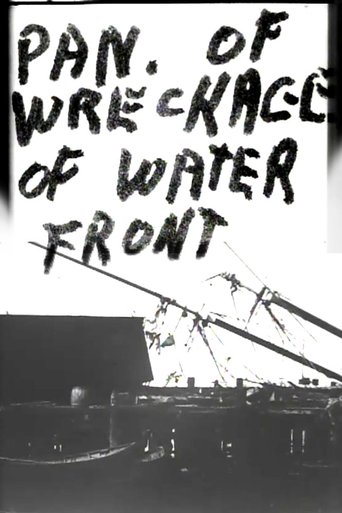
This picture shows the remains of one of the docks, several freight cars being piled one upon the other, while the most interesting part of the picture shows two schooners literally smashed one into the other, forming a most picturesque mass of wreckage.

“Same scenery as in the previous view, the sailors embark in the canoes which take them ashore.”
Singing "La Chanson du tambour-major"
This scene is laid in the parlor of a New York tenement. Two watchers at the wake are smoking and drinking, while the widow is weeping over the coffin. The attention of the three is attracted for an instant, and the supposed corpse rises up, drinks all the beer in the pitcher which is standing on a table nearby, and lies down in the coffin again. The mourners return, and seeing that the beer is gone, engage in a controversy over it. During the scrap the corpse jumps out of the coffin and takes part in the melee.
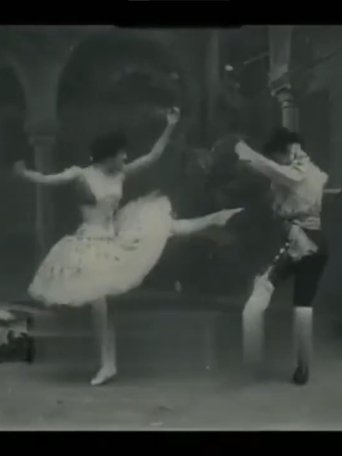
Man and woman dance.
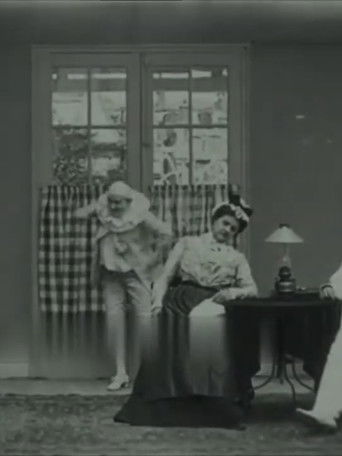
Early film adaptation of The Prodigal Son.
This striking film re-stages an episode from the Matabele wars between African natives and British infantry
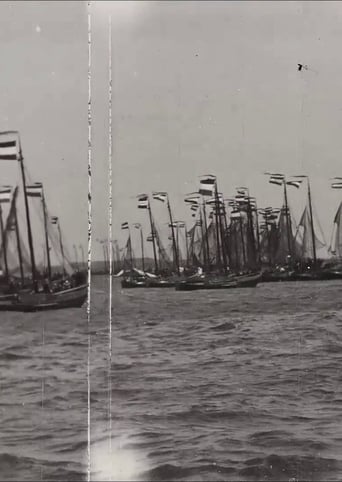
Tracking shot across a bay showing a large number of fishing boats.

First of a series of films showing visitors to the Paris Exposition 1900 standing on a mobile wooden platform.
Pedestrian traffic on a square, somewhere in Tokyo.
A slightly risqué scene. In her bedroom, a young woman, standing on a rug in front of her bed, removes her corset. Smiling, she bares her shoulders and puts on her nightgown before letting her petticoat slide down. Then she picks up a daisy, plucks its petals, and gets under the covers.

Jeanne Chasles and Achille Viscusi dances.

A ballet teacher trains a invisible group of dancers and gets angry about their incompetence. Early film with sound.

George Footit & Rafael Patodos starts fighting.
Photographed February 5, 1900.

"A series of admirable living pictures, posed by competent artists, and faithfully representing well-known art masterpieces, notably the works of Sarony. At the opening of each picture, curtains are thrown aside by two pages, the picture remains for a short interval in complete repose, and the curtains are drawn. In other words, these living pictures are shown exactly as in first-class vaudeville theatres, and were prepared with equal care." Series was finished by 1903 and the films were shown as one presentation.